


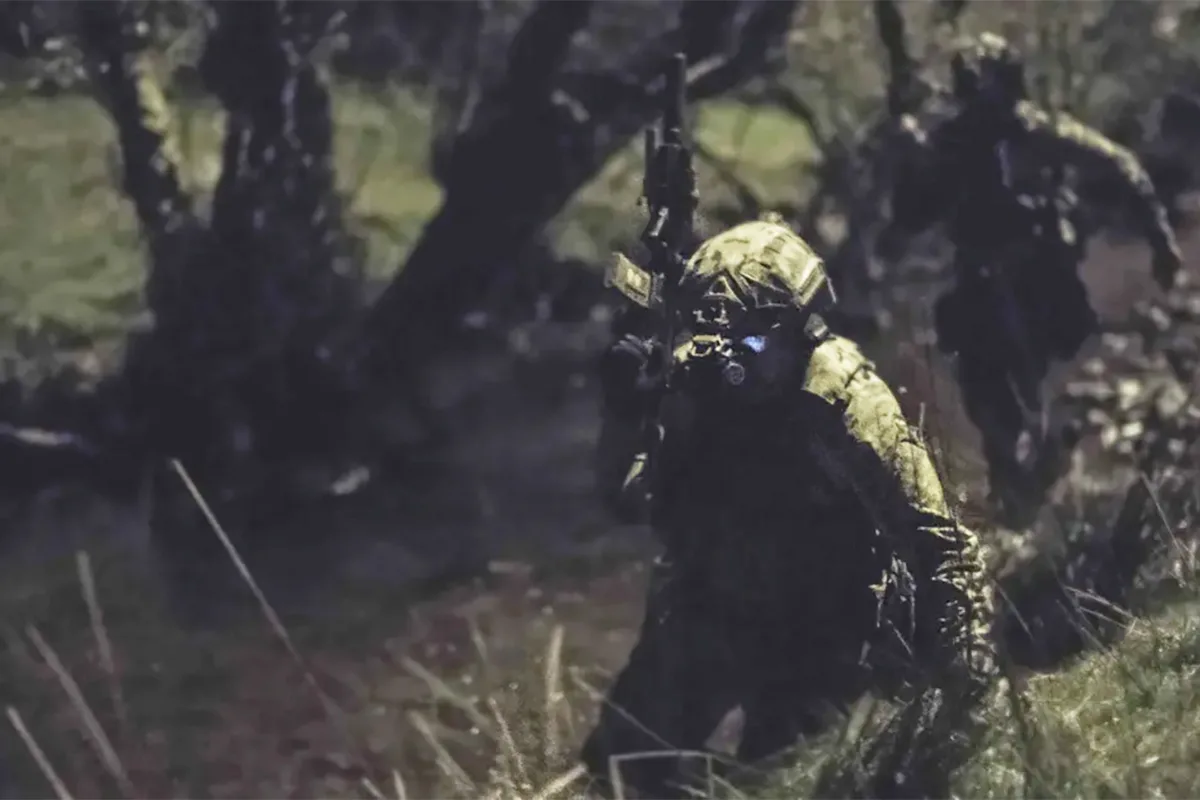

Unlike many international special forces, the 21st and 23rd SAS also accept men and women without military experience, provided they have not exceeded 42 years and 6 months at the time of application. Those who have already served in the regular forces or the reserve can apply up to 43 years and 364 days.
This openness represents one of the most innovative aspects of the British system. People who never approached the military environment in their youth, but who in adulthood have developed the necessary motivation and discipline, can now face the selection for one of the most demanding units in the world. It is a model that values personal growth, life experiences, and determination, expanding and enriching the operational potential of the special forces with unconventional but extraordinarily effective profiles.
As part of the “Future Reserves 2020” reform, effective from 2014, the United Kingdom has officially opened access to the 21 & 23 SAS (Reserve) also to civilians, provided they meet the required physical, psychological, and security requirements. This choice has allowed to intercept new mature and motivated talents, demonstrating that operational excellence can also arise from alternative life paths.
The 21 and 23 units of the Special Air Service (SAS) are an integral part of the joint group UK Special Forces (UKSF), which includes both regular and reserve units. It is one of the most prestigious and reserved formations in the world, operating on a strategic and tactical scale in complex, dynamic, and high-risk scenarios.
A selection process among the toughest in the world
Once admitted, candidates are directed to a local Army Reserve unit to complete basic training and gain experience before attempting the actual selection to enter the SAS.
The selection process is divided into five main phases, each designed to test the candidates' physical, mental, and professional capabilities to the maximum:
Phase 1: Briefing Course
A 6-day introductory course that provides an overview of the standards required within the UKSF. It includes an initial assessment of the candidates' suitability.
Phase 2: Aptitude
An intensive module designed to assess physical and mental endurance under extreme conditions. It is one of the most selective phases and determines who can continue in the process.
Phase 3: SOPTAC (Standard Operating Procedures and Tactics Course)
Advanced training on Special Forces tactics and procedures, with a strong emphasis on military skills, rapid assimilation of new competencies, and management of operational stress.
Phase 4: Reconnaissance, Survival, and Communications (SR & SERE)
A 5-week module focused on:
- Surveillance & Reconnaissance
- Signals
- SERE: Survive, Evade, Resist, Escape, meaning survival techniques, enemy evasion, resistance to capture, and escape.
Phase 5: Continuation Training
The final phase that completes the SAS reservist's training and makes them fully operational and ready for deployment.
Economic incentives and opportunities
Once basic training is completed, the SAS reserve soldier receives a salary of over 134 pounds per day, plus:
- tax-free annual bonuses (bounty)
- paid leave
- pension contributions
- possibility of overseas deployment
Support Staff: essential support roles
Those who do not wish to face the selection can join as Support Staff of the SFSG (Special Forces Support Group), provided they have already served in the armed forces and possess the required professional qualifications. Available roles include:
- Drivers, cooks, storekeepers (RLC)
- Medics and medical officers (RAMC)
- Radio operators and technicians (Royal Signals)
- Administrators (AGC)
- Analysts (Intelligence Corps)
Support staff can also be mobilized and are considered an integral part of the SAS family.
Citizenship and Nationality: who can enlist in the SAS
British Citizens
- Can enlist without restrictions, including admission to the SAS.
Commonwealth Citizens (e.g., India, South Africa, Jamaica, Fiji...)
- Admitted, but must legally reside in the United Kingdom.
- Since 2018, it is no longer mandatory to have permanent residency (settled status), but a valid and stable address in the United Kingdom is required.
Citizens of the Republic of Ireland
- Can enlist under the same conditions as British citizens, thanks to bilateral agreements.
Dual Citizenship
- Allowed, except in specific national security cases: for example, some nationalities may be excluded from access to sensitive roles like special forces, based on security criteria and the type of authorization (Security Clearance) required.
Security restrictions for roles like the SAS
To access the 21 or 23 SAS as a reservist, it is necessary to obtain a Security Clearance (SC) or even Developed Vetting (DV). This means:
- Stable and traceable residence in the United Kingdom for a certain number of years (usually 5+).
- No close ties with countries considered a risk to national security.
- Verifiable personal, family, and financial background.
A challenge for few, but with great rewards
21 & 23 SAS represent a unique opportunity to become part of a military elite, even for those who have never had a past in uniform. The commitment required is very high, but so are the pride and opportunities for personal and professional growth.
The SAS reservist model demonstrates how special forces can evolve without sacrificing excellence, opening the doors also to motivated civilians without military experience. A system that rewards merit, determination, and maturity, offering a second chance to those who discovered their vocation for service later in life.
In a world where threats are increasingly complex, the selective but inclusive access adopted by the United Kingdom represents a virtuous example, valuing human potential beyond traditional military career paths.


Comments
No comments yet. Be the first!