




In the deep waters of Sardinia, among the waves lapping the coast, lie two "lost" missiles, whose presence poses a serious danger to maritime safety and to anyone who might approach these dangerous weapons. The missiles in question are an Aster 30 and a Stinger, both equipped with explosive charges and potentially lethal.

The Ordinances and the Danger Zone
The maritime district office of Arbatax has issued two separate ordinances prohibiting any maritime activity within a radius of 150 meters from the points where the missiles are presumed to have been lost against the sea surface. The impact coordinates are defined as "approximate," but the origin of the launches is certain: the interforce range of Salto di Quirra, located at Capo San Lorenzo. The positions of the missiles, one off the beach of Murtas in Sarrabus and the other further north, off Ogliastra, suggest that the outcome of the military exercises was not as reported by the official Armed Forces bodies.

Details of the Ordinances
The ordinances were published on the official notice board by the Port Authority of Arbatax, which supervised the affected area. The first measure dates back to May 30, and concerns the Stinger missile, a weapon with a length of 1.50 meters and a diameter of 0.70 meters, gray in color. The missile was reported lost after the launch during military activities, with an impact in deep waters about 100 meters from the shore, off the beach of Murtas. Although the beach was reopened to bathers on June 1, the area remains a dangerous zone.
The second notice, issued the following day, concerns the Aster 30, a larger missile, 4.2 meters long and with a diameter of 20 cm. This missile was lost at a depth of about 600 meters, off between Monte Santu and the radar of Cuccuru Tundu Mannu. Authorities have therefore imposed access restrictions to these areas, emphasizing the risk of explosion due to the presence of still intact explosive charges.

The Launch Campaign and the Incidents
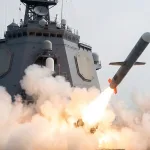
On May 29, the Army General Staff issued a press release regarding the launch campaign of the SampT and Stinger missile systems, which took place at the Salto di Quirra range. The SampT system is the launch system for Aster 30 missiles, also used for NATO defense operations. These missiles have been supplied to Ukraine to counter the Russian invasion, as part of the Rearm Europe campaign. Each Aster 30 has an estimated cost of about two million euros.
The aim of the operation was to shoot down some radio targets flying over the eastern sea of Sardinia. Although many of the missiles hit the target, at least two missiles – a Stinger and an Aster 30 – ended up in the water, creating the risk of underwater explosions.

The Threat of Stinger and Aster 30 Missiles
The Stinger and Aster 30 missiles are among the most advanced and dangerous missile defense systems, designed to counter aerial and terrestrial threats. The Stinger missile is a portable short-range missile weapon system, capable of shooting down targets such as drones, aircraft, and low-flying helicopters. It is mainly used in defense operations of critical targets, such as command posts or vital areas, and can be launched by infantry units during both land and amphibious operations. Its use is made possible by an advanced tracking system that allows the missile to be directed towards the target precisely and quickly.
The Aster 30 missile, part of the Aster family, is one of the most advanced missile defense systems in the world. With a range that can reach considerable distances, it is designed to protect both naval and terrestrial platforms from aerial threats, including ballistic missiles and enemy aircraft. Thanks to its high-speed maneuverability and active guidance system, the Aster 30 is extremely effective in intercepting enemy missiles in flight. The use of these missiles in exercises is essential to improve defense capabilities against emerging threats.
Conclusions
The incident of the "lost" missiles in the sea of Sardinia highlights the complexity of military operations, but the competent authorities are closely monitoring the situation to ensure safety. The collaboration between the armed forces and local authorities continues to be fundamental to keeping the maritime environment safe. This episode offers the opportunity to further strengthen exercise management practices, ensuring the protection of the affected areas.



Comments
No comments yet. Be the first!