




The failed start of the invasion of Ukraine in 2022 forced Moscow to a structural revision of its military doctrine. Operational experience has become the main driver of change, involving armed forces, defense industry, and academia in a single learning ecosystem.
Drones have established themselves as an essential tool for reconnaissance, target designation, and precision strikes, directly impacting the effectiveness of artillery and maneuver units. In response to initial difficulties, Russia has rapidly updated combat manuals, integrating UAVs into almost all operational functions.
This adaptation has progressively reduced the Ukrainian advantage. The combination of electronic warfare, unit dispersion, and coordinated use of drones and artillery has made the battlefield more complex and lethal, marking a clear discontinuity from the initial phases of the conflict.
From experimentation to the birth of the Unmanned Systems Forces
Between 2024 and 2025, the Kremlin made a decisive move by establishing the Unmanned Systems Forces (Voyska Bespilotnykh Sistem - VBS), an autonomous branch designed to support all combat units. Drones no longer operate as separate assets, but as integrated force multipliers with ground forces, artillery, and electronic warfare systems.
A key role was played by the Tsar's Wolves, a technical-military center led by Dmitrij Rogozin, where UAVs equipped with autonomous target recognition and prioritization capabilities were tested. Frontline experiments accelerated the transition from prototype phase to mass production.
Simultaneously, Moscow realigned the military-industrial sector, ensuring continuity of supply and rapid technological adaptation. The VBS personnel is largely composed of veterans, employed not only as operators but also as instructors and combat conduct analysts.

The future of warfare: autonomy, artificial intelligence, and swarms
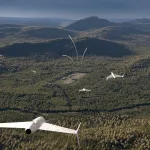
With the VBS fully operational, Russian doctrine envisions future warfare as a clash dominated by unmanned systems. The concept of swarm is at the heart of this vision, based on saturating enemy defenses and simultaneous attacks from multiple directions.
Military research centers are experimenting with the integration of artificial intelligence in decision-making processes, autonomous navigation, and platform coordination. The goal is to reduce reaction times and limit human personnel exposure.
In the medium term, Moscow aims to entrust drones with surveillance, logistics, and critical infrastructure protection tasks. Despite technological limitations and high costs, drone swarms are already a pillar of the new Russian military doctrine, destined to profoundly influence future high-intensity conflicts.



Comments
No comments yet. Be the first!