




The United States Department of Defense has embarked on one of the most radical reforms in its recent history under the leadership of Secretary Pete Hegseth. At the center of this transformation is the "Deal Team Six", an elite unit composed of professionals from the private sector tasked with managing and approving negotiations with defense contractors.
The stated goal is to dismantle the Pentagon's "broken bureaucracy", replacing government officials with negotiators skilled in maximizing capital value. This initiative aims to rewrite the rules of engagement with the industry, transitioning from the old Defense Acquisition System to a more dynamic Warfighting Acquisition System, renamed the "arsenal of freedom".
The Strengths of the Strategy
The most innovative aspect of Hegseth's vision lies in the restructuring of financial incentives for contractors. For decades, defense companies have benefited from a system that allowed them to charge taxpayers for both the costs of building infrastructure and the final product price, a practice known as "double-dipping".
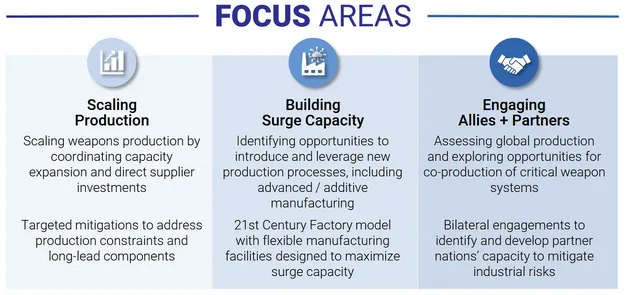
The Deal Team Six aims to end this practice, asking companies to self-finance industrial expansion and the construction of new facilities. In exchange for this initial investment by the private sector, the Pentagon offers broader and more stable long-term contracts, ensuring steady orders for weapon systems that have proven merit. This approach not only aims to stabilize prices but also seeks to drastically accelerate production times, eliminating the chronic delays and cost overruns that have been the norm in the past.
The Risks and Challenges of the New Model
However, a transformation of such magnitude is not without significant uncertainties. The primary risk concerns the potential loss of institutional oversight and process transparency. Replacing career bureaucrats with private sector specialists could raise concerns about possible conflicts of interest, given the fluid nature of careers between high finance and the defense industry. Furthermore, the strategy is based on an ultimatum: if companies do not accept the new terms based on fixed pricing and the assumption of infrastructure risk, the department will seek other partners.
This stance assumes that there is a sufficiently competitive defense market, ignoring that many sectors are dominated by a few specialized players. There is also the danger that by shifting the burden of initial costs onto companies, smaller entities may be cut out, favoring only industrial giants. Finally, the allocation of substantial funds for research and development requires rigorous monitoring to prevent operational agility from translating into a lack of accountability to the taxpayer.






Comments
No comments yet. Be the first!