




Within five years, quantum computers will radically change computing. This is stated by Julian Kelly, director of Google's Quantum AI project, indicating that the first real practical application capable of solving problems impossible for traditional systems is now near. But beyond the academic clamor, the real impact of quantum computing is manifesting today in advanced military defense.
Military quantum computing promises an unprecedented tactical and strategic revolution: greater precision, exponential computational speed, predictive capabilities, and impenetrable encryption. In an era where wars are also fought in cyber, information, and space domains, possessing quantum capabilities applied to defense represents a clear asymmetric advantage.
In 2023, with the Willow chip, Google surpassed the threshold of quantum error correction for the first time, a step comparable to the first successful flight of an aircraft. This milestone lays the foundation for building scalable, stable, and secure systems capable of integrating into the operational military field.
Cybersecurity, Information Warfare, and Quantum Defense
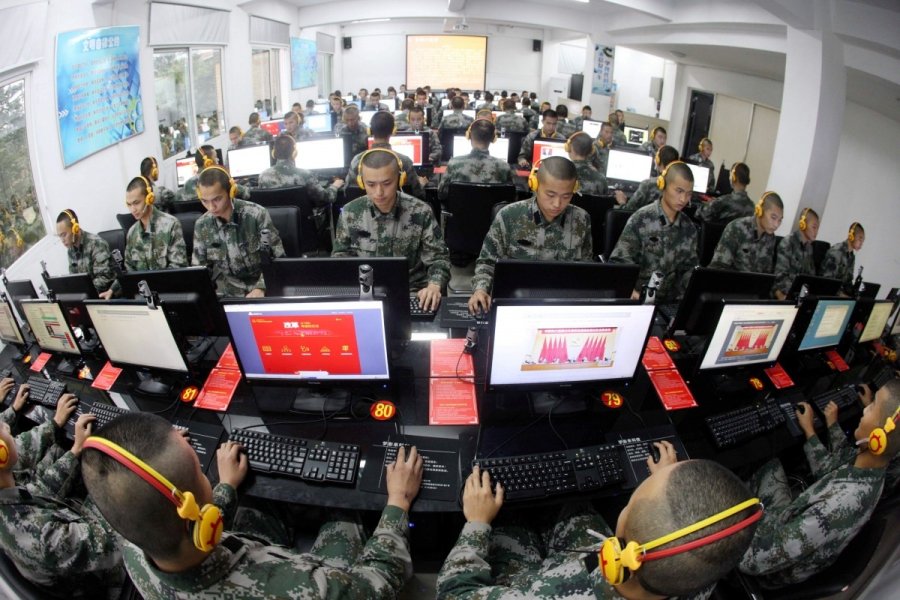
Quantum computing will redefine the very concept of military cybersecurity. The encryption technologies currently adopted, even in NATO infrastructures, could become obsolete in the face of a quantum attack. Quantum algorithms, like Shor or Grover, can rapidly break RSA and similar protocols, threatening communications, networks, drones, and satellites.

To prevent this scenario, entities like the NIST are leading the transition to post-quantum cryptography, with the support of big tech and government agencies. Kelly compares the risk to the Y2K effect: “If we prepare well, it will be a manageable transition.” But the real danger is for those who do not prepare: those who first possess quantum capabilities could decrypt enemy communications in real-time, alter operational networks, and sabotage automated decisions based on artificial intelligence.
Beyond defense, quantum computing can also be an offensive weapon, usable for generating adaptive malware, AI-driven attacks, and adversarial simulations. Predictive capabilities combined with generative AI allow anticipating enemy moves and neutralizing them before they are executed.
AI: Quantum: Battle Simulations, Intelligent Drones, and Decision Superiority
One of the most promising fields is the intersection between artificial intelligence and quantum computing. Modern armed forces operate in highly complex environments, where every second counts. AI models already support operational decisions, predictive analysis, and logistical management, but they require great computing power. This is where quantum comes in.
Quantum computing can accelerate AI model training, optimize solutions for multi-objective missions, and generate realistic synthetic warfare data. Additionally, it allows for weather and topographic simulations for planning in hostile or variable theaters, advanced fleet management, predictive maintenance of vehicles, and use in autonomous intelligent drones.
In the near future, armed forces could adopt C2 (Command and Control) systems based on Gemini AI + Quantum, capable of processing millions of sensor data in real-time, choosing the best countermeasures, and simultaneously coordinating land, air, and naval forces.
Defensive and Offensive Applications: from Underwater Navigation to Quantum Lasers
The military applications of quantum computing do not stop at cyberspace. In the physical domain, quantum technology will enhance sensors, radars, sonars, and directional weapons. Already today, naval projects are experimenting with underwater quantum navigation, essential for submarines in GPS-denied environments.
Quantum radar technologies can detect stealth aircraft. Quantum sensors improve navigation and targeting precision. But perhaps the most visionary element is the development of quantum lasers for advanced directed energy control: quantum laser-guided missiles, optimized targeting systems, and ultra-fast missile defenses.
All this converges into an advanced operational vision: quantum warfare, a new form of warfare where superiority is not measured only in the number of troops or means, but in computational and predictive capabilities. The armies of the future will not win only thanks to steel, but thanks to bits and qubits.
Conclusion
Quantum computing has now entered the strategic lexicon of the armed forces. Its integration with artificial intelligence, cybersecurity, and operational technologies will lead to a new military revolution. From unbreakable encryption to predictive simulations, from quantum radars to intelligent drones, quantum is the next frontier for those aspiring to technological superiority.
In a world where information dominance is crucial, those who control quantum computing will control the battlefield.



Comments
No comments yet. Be the first!