



The Russian invasion of Ukraine in February 2022 accelerated a shift in the scenario that had been brewing in Europe for years: thinking is no longer just in terms of “classic” deterrence, but of continuous below-threshold confrontation, where competition takes place together on land, sea, air, space, cyber, and information. It is not a semantic detail: it means that cyberattacks, sabotage, interference, and disinformation campaigns are not “background noise,” but can become early signals or even preparation for an escalation.
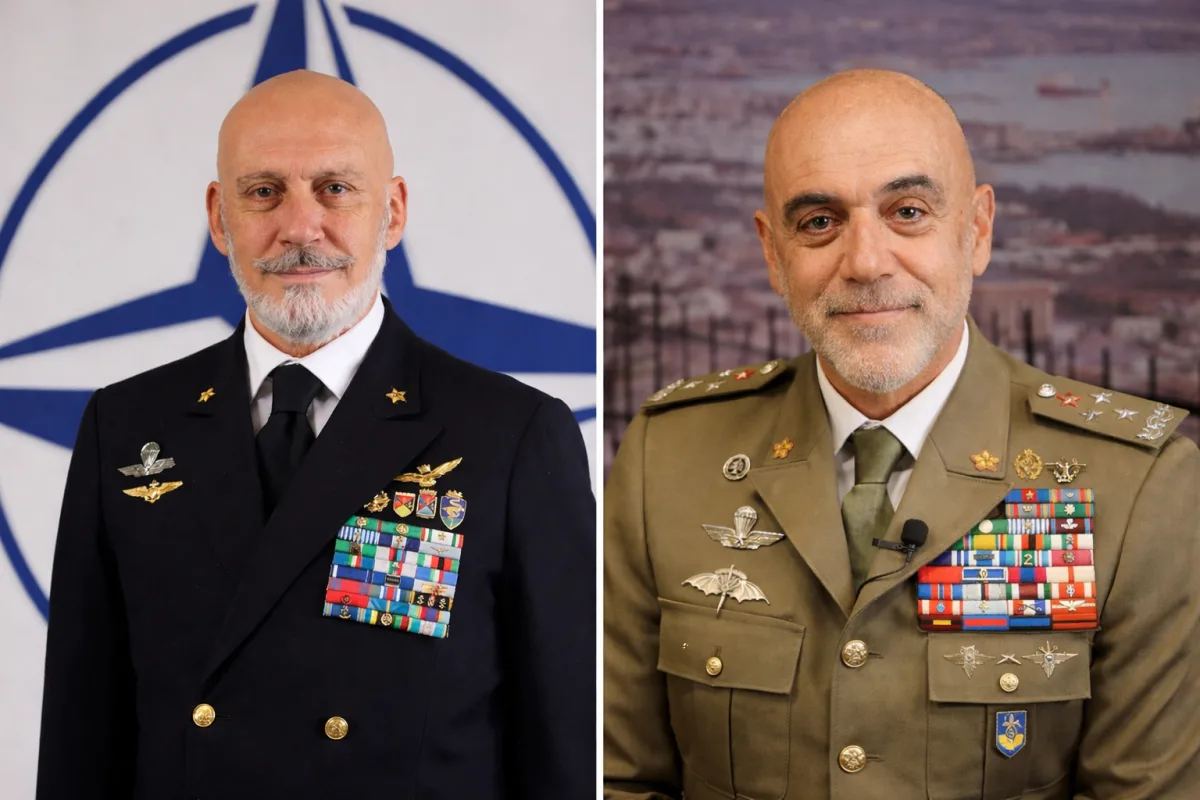
In this context, NATO openly discusses how to respond to the hybrid threat with a less passive posture. Admiral Giuseppe Cavo Dragone (Chairman of the NATO Military Committee) pointed out the vulnerability of an overly reactive approach in cyber and the need to think more in a “proactive” way against sabotage, cyberattacks, and below-threshold operations.
This is where the cognitive plan comes into play: the resilience of society (trust in institutions, cohesion, risk perception, resilience to manipulation) becomes an integral part of defense. If the adversary aims to paralyze decisions and logistics “without firing,” then protecting networks, infrastructure, and public opinion is no longer an ancillary task: it is a component of combat capability in the modern sense.

The Germany case: OPLAN, logistics as a front, and the five-phase model (with a 2029 horizon)
Germany has become a European laboratory for this change in mindset because, due to its position and role, it is the NATO logistics hub: in a crisis scenario, Berlin should ensure transit, support, and protection for the movement of allied forces. The Bundeswehr describes the Operational Plan for Germany (OPLAN DEU) as a document that integrates national and collective defense with civilian support, valid “in peace, crisis, and war” and also under conditions of hybrid threat.
In the NATO framework recalled by the Bundeswehr, up to 800,000 troops could be deployed to the Alliance's external borders within six months using Germany as a “hub”: a mission that requires a whole-of-society approach (transportation, health, energy, businesses, procurement, internal security).
According to journalistic reconstructions cited by the Wall Street Journal and picked up by multiple media, the risk horizon considered by various German officials places a possible peak of danger around 2029 (assessments, not prophecies). Reuters reported the same order of magnitude (“5-8 years,” thus around 2029) in German military analyses on the potential for Russian reconstitution.
Within this context, previews of a “light version” of the OPLAN describe a five-phase escalation model (from early detection/deterrence to national defense, NATO collective defense, and post-conflict recovery) and suggest that Germany is already working on the first phase: threat framework construction, interministerial coordination, logistics preparation, and protection.
The logic is clear: if the conflict can start with cyber, sabotage, and disinformation, then defense must be set up before Article 5 is triggered, and it must protect civilian and military infrastructure together.

Implications for Italy: “the country goes to war,” and the hybrid response must be proactive
In Italy, the point was clearly expressed by the Chief of Staff of the Army Carmine Masiello: if the extreme scenario were ever reached, it would not be “the Army alone”, but “Italy” that would have to bear the weight of defense. It is a message that directly recalls the constitutional framework: art. 52 states that “the defense of the Fatherland is the sacred duty of the citizen”.
Read through the multi-domain lens, this means three operational things:
- National multi-domain defense plan: not just armed forces, but decision-making chain, government continuity, critical infrastructure protection, supply chain, military mobility, health, energy, telecommunications. (It is the “whole-of-society” lesson that Germany is formalizing in its OPLAN).
- Hybrid threat = “internal front” and “external front” together: cyber, sabotage, influence, and interference are not separate episodes. The Bundeswehr explicitly notes how difficult it is now to separate internal and external security, precisely because of the ambiguity of the hybrid threat.
- Proactive approach and cognitive defense: here comes back the hint from Cavo Dragone: in the cyber and below-threshold domain, remaining “only reactive” risks chasing the adversary. A more proactive posture is needed (within legal, ethical, and political limits) and, above all, a cognitive resilience strategy: preventing manipulations, strengthening information literacy, credible public communication, and coordinated attribution/response capability.

In summary: after Ukraine, the point is not “if” the West should update defense models, but how to do it quickly. Germany is codifying a response that treats the hybrid dimension as part of the escalation scale; Italy, if it takes Masiello's message seriously, must think within the same perimeter: defense as a national responsibility, multi-domain, and with explicit protection of the cognitive domain.



Comments
No comments yet. Be the first!