


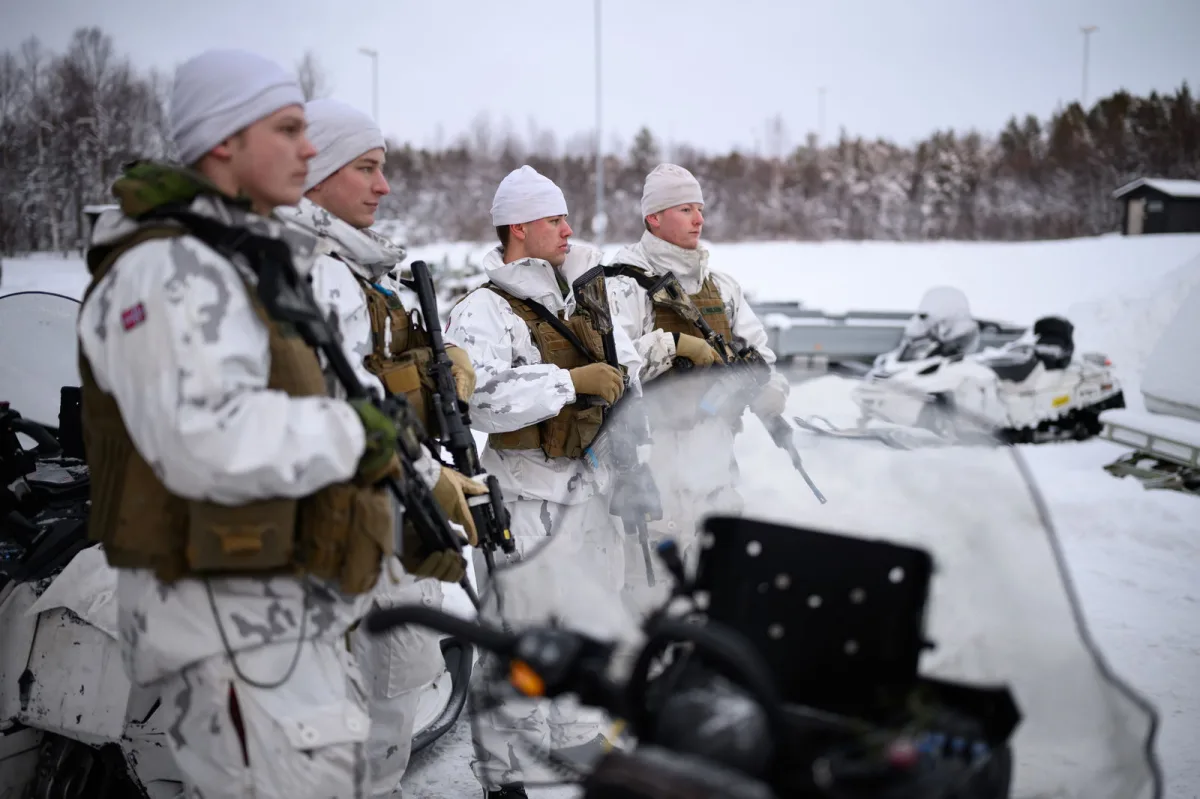

SETERMOEN, Norway — Major General Lars S. Lervik has been leading the Norwegian Army since 2020, based in Bardufoss, in northern Norway. As of the early months of 2025, the force consists of about 9,000 people, including soldiers, civilians, and conscripts, as mandatory military service applies to both men and women.

Born in 1971, General Lervik has distinguished himself as a staunch supporter of aid to Ukraine. The Norwegian Army, along with other armed forces of the country, has contributed to the training of over 6,000 Ukrainian soldiers, both at home and in the United Kingdom, as part of Operation Interflex. Before taking on his current role, Lervik commanded the Brigade Nord, the largest unit of the Norwegian Army.

The Commander of the Norwegian Army was interviewed by the portal Defense News, addressing crucial topics such as the timing to strengthen Norway's defensive posture, urgent equipment needs, cooperation with other Arctic nations, and Russian military activities in the region. Below is the translated and summarized text.
You have strongly supported the need for Norway to invest quickly and significantly in its defensive capabilities. Considering the current challenges the country faces, how quickly do you think these investments should materialize?
We have a window of opportunity — and at the same time the responsibility — to do everything possible to strengthen our capabilities, both as a country and as an integral part of NATO. The goal is to increase our combat power and strengthen the defensive posture, as quickly and effectively as possible. In some areas, such as acquiring new equipment, we have to deal with the physiological times of the process: it can take two or three years, between approval, production, and delivery. But in other sectors, such as personnel, progress can — and should — happen immediately. I would like to see an acceleration already now, both in recalling former military personnel who could return to service and in increasing the number of conscripts and officers in training.

From your perspective, what is the most urgent priority for your army today?
It is about acquiring new operational capabilities: next-generation artillery, more air defense systems, a greater number of infantry fighting vehicles — and the list goes on. But, in a broader vision, our goal is to generate greater firepower, while simultaneously investing in the development of unmanned systems and countermeasures to defend against them.

Part of the equipment the Norwegian Army relies on is American-made, but these systems are not always designed to operate in extreme Arctic conditions. Considering the recent push for European nations to buy more from European manufacturers, to reduce dependence on the United States, do you have a preference for European equipment? Is it a priority?
Our approach is quite simple: whatever is the best, we want to obtain it, provided it works effectively in our operational environment and does not come from countries from which we do not intend to purchase. We do not want, for example, to buy Chinese drones. But whether the equipment is American or European makes no difference to us. We are all part of the same alliance: NATO. From a military standpoint, my goal is to purchase the best equipment available, regardless of the nationality of the manufacturer. Whether it's Swedish, American, German, or Norwegian, what matters is quality and adaptability. Norway, for example, produces excellent air defense systems, even though they use American-made ammunition.

In recent years, Nordic nations have announced the ambition to operate as a joint air force and cooperate more closely in that domain. Are there similar aspirations to establish a joint Arctic army? What is the importance of the new defense initiative in this context?
We are not creating a Nordic command in the strict sense, but we are establishing a new NATO Land Command in Finland, officially called Multinational Land Component Command (MCLCC). This command will operate under the guidance of the Joint Force Command Norfolk, in the United States, and will include Nordic, Arctic, and other alliance members. The goal is to enable joint operations. However, it is important to emphasize that each nation will maintain its own armies while closely collaborating side by side. For example, we are considering acquiring the same infantry fighting vehicles, which would facilitate interoperability in case of joint combat.

Are there plans to create an alliance dedicated to information sharing among Arctic nations, including Canada and the United States?
In fact, we already have a form of cooperation in this regard. There is a Cold Weather Operations Centre of Excellence (Cold Weather Operations Centre of Excellence - CWO COE), active under the aegis of NATO, which brings together Arctic allies. In this context, we share best practices in many areas: from how we address climate change in extreme environments, to the type of equipment needed, to training and operational doctrines.

According to some analyses, Russia is more advanced in Arctic military presence and the number of bases in the region compared to NATO. Do you think this assessment is correct, or are Russian capabilities in the Arctic often overestimated?
We have observed that the Russians, living in that environment, are certainly very capable of operating in the Arctic. However, at the same time, we have been surprised by how poorly Russia has performed in some operational areas. On the other hand, it is evident that they are also learning: they are still fighting, and they are adapting. Therefore, we continue to closely monitor everything related to Russian activities in the Arctic.



Comments
No comments yet. Be the first!