


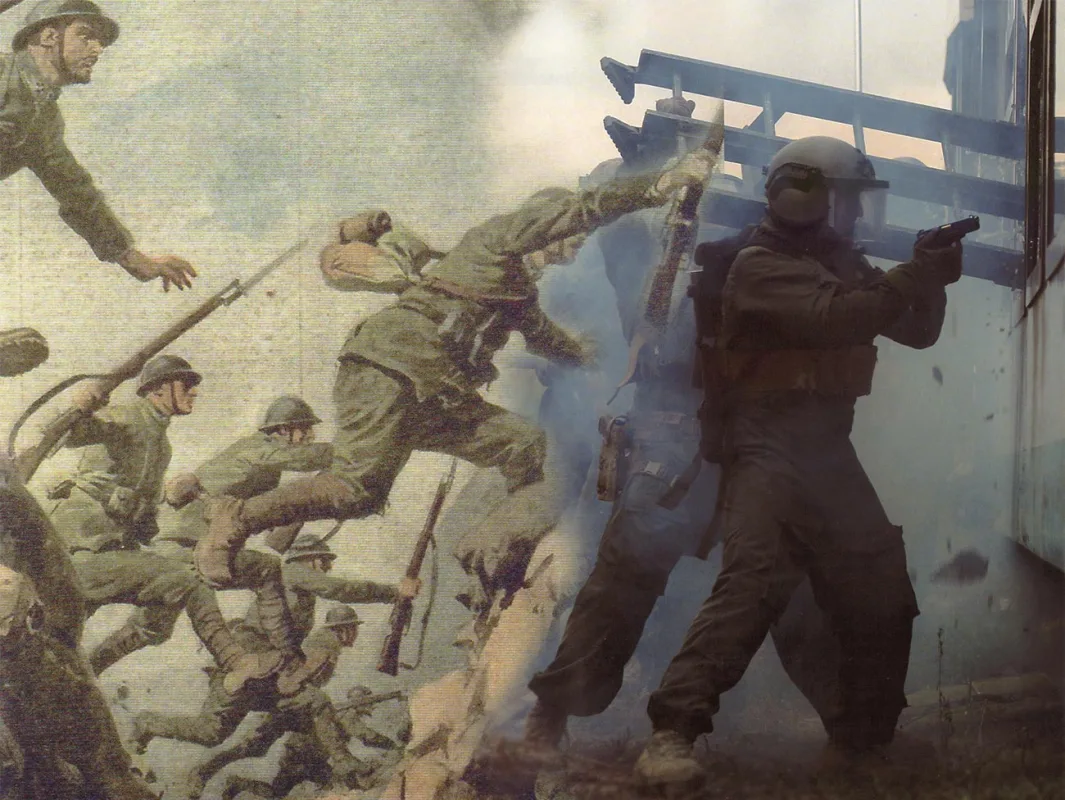
Italy was the first country in the world to experiment with elite military units, pioneers of innovative tactics and assault means, both on land with the Arditi and at sea with the daring MAS flotillas of the Royal Navy. From their origins, these units embodied courage and the ability to anticipate new operational methods, creating a tradition that would inspire modern Special Forces worldwide.
The Roman army employed special units, such as the Exploratores and the Speculatores, for exploration and reconnaissance missions. They were highly trained soldiers for advanced operations, similar to those of modern reconnaissance forces. However, to find formations that used a strategic approach oriented towards boldness and surprise, we must reach the early 20th century with the Arditi.
An entirely Italian story that would pave the way for transforming the way conflicts are approached forever, with a modus operandi aimed at consciously opening asymmetric scenarios and unconventional combat techniques.

The first Raiders in history: the Arditi
At the beginning of the 20th century, the military world felt the need to innovate assault tactics to face a modern and increasingly complex war. The first Italian special forces officially emerged in 1917, in the midst of World War I, as assault units of the Royal Army.
These units, specifically formed for breaking enemy lines, represented a strategic novelty: they were not simple infantrymen but chosen soldiers, characterized by specific training and light equipment that made them extremely mobile and suitable for hand-to-hand combat.
They were the legendary Arditi, a specialty of the Royal Army's infantry weapon, formed into autonomous assault units. Their "asymmetric" nature allowed them to influence battles through targeted and often invisible interventions, exploiting discretion and superior training instead of conventional force.

The Arditi were trained to penetrate enemy lines and carry out acts of sabotage with great speed and coordination, using surprise as the main element of their raids. Equipped with daggers, grenades, and light submachine guns, these soldiers were considered the elite of the army and were employed in extremely risky operations, often with very high losses. Unlike traditional infantry units, their tasks were not limited to capturing positions but aimed at inflicting significant damage and destabilizing enemy forces, thus contributing to the advancement of Italian lines.
Their first training center was in Sdricca di Manzano, near Udine, where they were prepared in hand-to-hand combat and rapid assault techniques. Here, intensive training was held to prepare them not only physically but also psychologically, to face missions that required absolute courage and determination.
In parallel, the Royal Navy also developed raider units, the so-called maritime assault groups, composed of specialists in underwater attacks and sabotage. These men used light boats, such as the MAS (Armed Motor Torpedo Boats) and the so-called "pigs," modified torpedoes piloted by trained operators, for sea attacks against enemy naval units. Their actions were characterized by extraordinary boldness, as they required approaching targets dangerously and carrying out missions in total isolation.
Among the maritime raiders, there are famous episodes involving courageous men and innovative means, marking the debut of the first underwater assault missions in Italian history. Thanks to these actions, the raiders of the Royal Navy laid the foundations for future Italian naval special forces units.
Experiments before 1917
Even before the official birth of the Arditi, there were attempts to develop special units within the Royal Army. In 1914, for example, the Explorer Groups were formed, soldiers trained to operate behind enemy lines and sabotage defenses, dressed entirely in black to aid camouflage. These forerunners were employed for exploratory missions, such as cutting enemy wire fences.
Another precursor of the Arditi were the so-called Death Companies, formed by special infantry and engineering patrols. These soldiers were equipped with armor and helmets, often of the "Farina" type, and trained for missions of cutting barbed wire and demolition.
In 1916, the Supreme Command established that the qualification of "bold soldier" was to be attributed to those who distinguished themselves for courage and determination, but with the explicit prohibition of creating special units. The distinctive insignia assigned was the royal monogram "VE", to be worn on the left arm, conceived as a mark of honor and a symbol of example for other soldiers. However, this mark was the genesis of the term "Ardito" in the collective imagination.
The birth of the Arditi, therefore, was not an isolated event but the result of a progressive evolution of tactics and operational needs.

The first deployment in the Battle of Gorizia
The first deployment of the "special platoons" dates back to August 1916, during the Battle of Gorizia, in the clashes between the Lambro Brigade and the Austro-Hungarian army at height 188 and the Bosnian Ridge. However, due to the inaccuracy of official reports and the difficulties of the terrain—characterized by barbed wire and heavily bombarded by Austrian artillery—it is impossible to determine precisely the effectiveness of these units on the outcome of the battle. It is supposed, however, that they were employed as breakthrough units at the mentioned positions and as scouting units once Gorizia was overcome.
Other significant actions of these platoons occurred on February 11, 1917, when two platoons reconquered the trench of the Casa dei Pini salient, lost two days earlier by the 206th Battalion of the Lambro Brigade, and on February 26, when a platoon stormed a trench near Belpoggio, managing to capture it.
The innovations of Major Giuseppe Bassi
In 1917, following the proposals and studies of some generals aware of the need to overcome the traditional strategy of frontal assault supported by artillery and some young officers dissatisfied with the useless stalemate and massacre of trench warfare, a special unit was experimented with at the 48th Division of the VIII Army Corps. This unit was commanded by Major Giuseppe Bassi, supported by Sergeant Giuseppe Longoni.
Bassi drafted an innovative note on the use of Fiat Mod. 15 / OVP (Officine Villar Perosa) submachine guns, proposing technical improvements such as the removal of the shield, the introduction of a light bipod, and the adoption of a guide to facilitate the replacement of magazines in the dark and in battle conditions. His proposal also included a new employment doctrine, which optimized the machine gun sections and indicated the specific equipment of the units, including the use of daggers and grenades alongside rifles and revolvers, to accentuate the aggressiveness of the troops.
Submitted to General Gaetano Giardino in November 1916, the note received his approval; Giardino, however, forwarded it to General Grazioli for a higher-level opinion. Grazioli, commander of the Lambro Brigade, probably adapted the new notes to his previous reflections on special platoons, and on March 7, 1917, he issued a directive to regiment commanders for the creation of attack units specialized in surprise raids, sudden counterattacks, and other operations beyond the capabilities of conventional infantry.
On March 14, 1917, the Italian Supreme Command became aware of the creation of special units in the Austro-Hungarian army, while the German army had already adopted the concept of elite troops, the Stoßtruppen, generally better trained than regular units. However, the Italian Arditi were not a mere imitation of the German and Austrian assault troops; unlike their German counterparts, the Arditi constituted true autonomous units, not limited to a support role for the infantry. The experiments of the Royal Army in this direction preceded the information on the German units and mainly served to accelerate the project of establishing Italian special units.
After witnessing an exercise conducted by Bassi, General Cadorna gave the green light for the birth of the Arditi, issuing a circular to establish special units according to precise guidelines. On July 29, 1917, King Victor Emmanuel III officially sanctioned the creation of the Assault Units.
Thanks to this innovative approach, the Arditi were successfully employed during battles on the Italian front, becoming known for their courage and ability to penetrate deep into enemy lines.
The Baptism of Fire and Mount San Gabriele
The new Units received their Baptism of Fire during the Eleventh Battle of the Isonzo in August 1917, when they were deployed to break through the Austro-Hungarian positions on the Bainsizza plateau. These men distinguished themselves for their daring actions and ability to infiltrate enemy lines, managing to break through adversary defenses and capture strategic positions like Mount San Gabriele.
Mount San Gabriele, heavily fortified, was the scene of one of the most famous operations. At dawn on September 4, 1917, the Arditi launched an assault on the summit, capturing it after an intense battle against an initially unaware enemy. With hand grenades and flamethrowers, they overwhelmed the enemy defenses and paved the way for the Italian forces. This success earned them fame and recognition, solidifying the role of the Arditi as an elite force of the army.

The Conquest of Col Moschin
At the end of spring 1918, the imminent summer brought with it a new, desperate attempt by the Austro-Hungarian forces to break the Italian defenses on the Grappa massif, trying to penetrate the Brenta and Piave valleys and thus outflank the Italian deployment running along the Piave river. The Austrian plan involved a strategic offensive to bypass Cima Grappa, located at the center of the massif, aiming to break through the western and eastern sides of the mountain complex, near the Brenta and Piave rivers. The attack was entrusted to the XI Army, commanded by General Scheuschenstuel, reinforced by reinforcements and supported by intense artillery.
At 3 AM on June 15, a violent bombardment began, immediately countered by Italian artillery that managed to weaken the Austrian forces on the eastern side. At 8 in the morning, the Austrian infantry launched the assault; the greatest successes were recorded on the western side, where the peaks guarding the Brenta flank fell one after the other, including the fortified points of Col Moschin and the nearby peaks: Col del Miglio, Col Fenilon, and Col Fagheron. In a few hours, the Italian defenses on Grappa were on the verge of collapse, leaving the Austrians with potential access to the Venetian plain.
The Austrians, now close to victory, would have needed to immediately renew the offensive to consolidate their gains. However, their reserves were almost exhausted, while the Italian reaction was swift. Intense artillery fire hit the positions just occupied by the Austro-Hungarians, making it difficult for reinforcements to arrive. The Italian counteroffensive was rapid: in the early afternoon, the IX Assault Unit (just over 600 men), already alerted in anticipation of the attack, recaptured Col Fagheron and, by 10 PM, also retook Col Fenilon, supported by two battalions of the 91st Infantry Regiment.
The most important position remained: Col Moschin.
At dawn on June 16, the IX Assault Unit launched a lightning attack and in just ten minutes wrested control of Col Moschin from the Austrians, capturing 300 prisoners, including 17 officers, and 25 machine guns. In just 24 hours, the Austrian offensive had been neutralized. In honor of this victory, the city of Rome erected a monument on Col Moschin, built with an ancient Roman column.
The success of the IX Assault Unit was complete, with relatively low losses thanks to a maneuver conducted under optimal conditions: the enemy, exhausted and weakened by Italian artillery fire, was decisively struck by a motivated and highly trained unit.
However, a few days later, on June 24, the IX Unit was again sent to recapture an Austrian stronghold on Asolone. In this case, the preparatory artillery fire was less effective, and the recapture of Asolone cost the IX Unit a very high toll. The conquest was temporary, as an immediate enemy counterattack managed to overwhelm the exhausted Italian forces. In this action, the IX Unit lost almost 50% of its men (19 officers and 305 Arditi), demonstrating that the Italian high command had not yet fully understood how to effectively exploit the extraordinary combat capabilities of the assault units.
Subsequently, between October 24 and November 4, 1918, the Arditi were among the architects of the breakthrough of the Piave line that allowed the final victory over the Austro-Hungarian armies.

Organization of the Assault Units (World War I)
735 soldiers divided into three companies (about 200 soldiers each):
- The Assault Platoon
- First Assault Squad (a dagger and twenty hand grenades each)
- Second Attack Squad (a dagger and twenty hand grenades each plus a Villar Perosa Submachine Gun Caliber 9 Glisenti called "Pernacchia" with 10,000 cartridges)
- Third Attack Squad (a dagger and twenty hand grenades each plus a Villar Perosa Submachine Gun Caliber 9 Glisenti called "Pernacchia" with 10,000 cartridges)
- Fourth Attack Squad (a dagger and twenty hand grenades each)
- Ammunition Pair (two soldiers with four pouches of 150 hand grenades each)
- Second Assault Platoon
- First Assault Squad (a dagger and twenty hand grenades each)
- Second Attack Squad (a dagger and twenty hand grenades each plus a Villar Perosa Submachine Gun Caliber 9 Glisenti called "Pernacchia" with 10,000 cartridges)
- Third Attack Squad (a dagger and twenty hand grenades each plus a Villar Perosa Submachine Gun Caliber 9 Glisenti called "Pernacchia" with 10,000 cartridges)
- Fourth Attack Squad (a dagger and twenty hand grenades each)
- Ammunition Pair (two soldiers with four pouches of 150 hand grenades each)
- Third Assault Platoon
- First Assault Squad (a dagger and twenty hand grenades each)
- Second Attack Squad (a dagger and twenty hand grenades each plus a Villar Perosa Submachine Gun Caliber 9 Glisenti called "Pernacchia" with 10,000 cartridges)
- Third Attack Squad (a dagger and twenty hand grenades each plus a Villar Perosa Submachine Gun Caliber 9 Glisenti called "Pernacchia" with 10,000 cartridges)
- Fourth Attack Squad (a dagger and twenty hand grenades each)
- Ammunition Pair (two soldiers with four pouches of 150 hand grenades each)
- Fourth Assault Platoon
- First Assault Squad (a dagger and twenty hand grenades each)
- Second Attack Squad (a dagger and twenty hand grenades each plus a Villar Perosa Submachine Gun Caliber 9 Glisenti called "Pernacchia" with 10,000 cartridges)
- Third Attack Squad (a dagger and twenty hand grenades each plus a Villar Perosa Submachine Gun Caliber 9 Glisenti called "Pernacchia" with 10,000 cartridges)
- Fourth Attack Squad (a dagger and twenty hand grenades each)
- Ammunition Pair (two soldiers with four pouches of 150 hand grenades each)
- Fifth Specialist Platoon
- First Machine Gunner Squad (two heavy machine guns with 20,000 cartridges)
- Second Sapper Squad
- Third Signal Squad
- Sixth Flamethrower Platoon
- Complement Company (about 135 soldiers armed with a dagger, four hand grenades, and a carbine with 71 cartridges each)
- Specialist Platoon
- First Machine Gunner Squad (two heavy machine guns with 20,000 cartridges)
- Second Gunner Squad (two 65/17 cannons)
Each attack or assault squad was divided into 5-6 pairs, with a structure similar to that of modern special forces detachments (about 12 men).
The First Military Paratrooper in History: Lieutenant Alessandro Tandura
A historic moment for the Italian special forces and, in general, for military history, was represented by Lieutenant Alessandro Tandura, who was the first paratrooper in the world to perform a jump in a war action. The mission took place on the night between August 8 and 9, 1918. Tandura jumped from a Savoia-Pomilio SP.4 aircraft from the Italian sky over enemy lines, a feat made possible thanks to the support of pilots William George Barker and William Wedgwood Benn of the Royal Air Force. This action not only represented a pioneering event in the use of paratroopers in military operations but also laid the foundations for the development of airborne units in Italy.
For this act, Lieutenant Tandura was awarded the Gold Medal for Military Valor with the following citation:
Driven by the most ardent love for his country, he volunteered to carry out an extremely risky mission: from a flying airplane, he had himself dropped with a parachute beyond the enemy lines in the invaded Veneto, where, with keen intelligence and indomitable disregard for any danger, he gathered groups of our dispersed officers and soldiers, and, inspiring them with his own courage and faith, he established with them an intelligence service that proved to be of invaluable assistance to the operations. Twice arrested and twice escaped, after three months of legendary audacity, he completed his prudent and fruitful work by boldly leading his bands of rebels and with them rising in the movement which outlined the enemy's retreat, thus facilitating the victorious advance of our troops. A shining example of self-sacrifice, conscious courage, and generous complete dedication of himself to the Fatherland
Piave - Vittorio Veneto, August - October 1918
A few days later, the second jump was also executed, carried out by Pier Arrigo Barnaba, Lieutenant of the Fiamme Verdi, the Arditi of the Alpini. He was the first Alpine Paratrooper in history.
In the future, parachuting and special forces will be terms in symbiosis, united by a common vocation for rapid and incisive action, with each operator at the center of critical and high-risk missions. In Italy, on March 24, 1938, the parachuting school named "Campo scuola paracadutisti della Libia" was established at Castel Benito, by decree of Governor Italo Balbo and under the command of Major Goffredo Tonini. On October 15, 1939, the Royal Air Force Paratrooper School was founded in Tarquinia, which began training the first instructors of the Royal Army in June 1940, with the first courses for recruits started the following month.
In Tarquinia, in July 1940, the first units were formed: the I and II Paratrooper Infantry Battalion and the III Carabinieri Paratrooper Battalion (later renamed II, III, and I). On April 30, 1941, the II Paratrooper Battalion carried out the first wartime parachute drop on the island of Cephalonia. In the spring of 1941, the 1st Paratrooper Regiment was formed, and in the same year the Paratrooper Swimmers Company of the Royal Navy experimented for the first time with sea drops. On September 1, 1941, the 1st Paratrooper Division was established, which was named "Folgore" in June 1942, later becoming the 185th Paratrooper Division "Folgore."
In the epic battle of El-Alamein, the Folgore Paratroopers, also due to their numerical inferiority, found themselves acting in an asymmetric scenario, typical of special forces. Thanks to their high level of training, they conducted lightning attacks with improvised bombs against British forces, thus managing to resist beyond any optimistic expectation.
In the post-war period, the armed forces of many countries established paratrooper units, and the paratrooper license is now a prerequisite for special forces raiders.

The Fiume Endeavor
Numerous former Arditi actively participated in the Fiume endeavor under the guidance of Gabriele D’Annunzio.
In a report dated March 13, 1921, presented at the congress of the National Association of Italian Arditi (ANAI) and published in the booklet “Two Years of Arditi Passion”, Gino Coletti, secretary and promoter of the ANAI, stated: “It is worth pausing to say what the Arditi Association has done for the Fiume endeavor. It provided the best legionaries, many of whom fell during the five days. Over two thousand legionaries passed through and were supported by the Milan headquarters, for whom the sum of L. 60,000 was spent. In Fiume, the Association gave everything: money, blood, immense sacrifices. We all offered ourselves, facing and enduring treachery, hatred, prison, and persecution. We elected D’Annunzio as our Supreme Leader and always awaited his orders, ready at any moment to march with him.”
After the occupation of Fiume, the "Regency of Carnaro" was established and the Carnaro Charter was promulgated as the constitution of the new State, among whose inspirers was the revolutionary syndicalist Alceste de Ambris, also a former Ardito.
On December 25, 1920, known as "Bloody Christmas", the regular troops of the Italian Army, led by General Caviglia, ended the brief experience of the Republic of Carnaro with short but intense clashes.

During Fascism
In the period between the two wars, many former Arditi gathered in the National Association of Italian Arditi (ANAI), founded by Captain Mario Carli, a prominent figure in the "early fascism." Among the supporters of the fascist cause, several Arditi took part in the March on Rome and were active protagonists of the nascent regime, also becoming important hierarchs, including Giuseppe Bottai and Italo Balbo. However, adherence to the movement was not universal: many Arditi figures refused to align with fascism and were marginalized.
In 1922, Mussolini dissolved the ANAI, considered not fully reliable for the new regime, and founded the National Federation of Italian Arditi (FNAI), into which many former members of the previous association merged. The FNAI thus became the reference point for the Arditi loyal to fascism, also receiving important honors, such as the Torre dei Conti in Rome, granted in 1937 and transformed in 1938 into a mausoleum for Alessandro Parisi, president of the federation and a celebrated figure among the fascist Arditi.
In World War II
At the start of the war, Italy revived the tradition of the Arditi, restoring their presence on various fronts and adapting them to the new needs of the conflict.
In May 1942, the "A" Formations Group, composed of Italo-Arab personnel, and the I Special Arditi Battalion, established on May 15 with three companies, each specialized in a mode of infiltration into enemy territory: the 101st Paratrooper Arditi Company, the 102nd Swimmer Arditi Company (later landing), and the 103rd Truck Driver Company (later terrestrial).
With circular no. 40900 of July 20, 1942, the SMRE established the Arditi Regiment, based in Santa Severa, near Rome. On August 1, the I Special Arditi Battalion was integrated as the first operational unit. On August 11, training of the II Battalion began, and on September 15, the unit assumed the name of X Arditi Regiment, under the command of Colonel Renzo Gazzaniga, awarded the Military Order of Savoy and decorated with a silver and two bronze medals for military valor.
Some Arditi units, such as the "Arditi skiers", were employed in the French campaign, including the Alpini Battalion "Duca degli Abruzzi" and the "Monte Bianco" unit, while in Africa, the Saharan companies carried out special operations in the desert.
The 10th Arditi Regiment operated behind enemy lines, especially in North Africa and Sicily, until its dissolution after the armistice.
The fate of the Arditi changed drastically on September 8, 1943. The 1st Special Arditi Battalion, stationed in Sardinia, sided with the Kingdom of the South, becoming in March 1944 the IX Assault Unit of the co-belligerent army and, shortly after, the III Battalion "Col Moschin" within the 68th Infantry Regiment "Legnano", continuing to fight alongside the Allied forces.
The Regia Aeronautica also developed special units, such as the ADRA Battalion (Arditi Distruttori della Regia Aeronautica), established in 1942 to conduct sabotage operations against enemy positions and prepare the territory for invasion. After September 8, during the Italian Social Republic, the ADRA continued to operate under the name ADAR (Arditi Distruttori Aeronautica Repubblicana), based in Tradate.
In 1944, for the National Republican Air Force, the 1st Paratrooper Arditi Regiment "Folgore" (formerly Paratrooper Regiment "Folgore") and the 2nd Paratrooper Arditi Regiment "Nembo" (active only with two battalions) were established.

The MAS Flotillas
The MAS Flotillas were the precursors of the Italian Navy's special forces. Framed within the Italian Royal Navy, they have an operational history that roots back to World War I and extends to World War II. These units consisted of Armed Motor Torpedo Boats (MAS), designed for fast and lightning attacks against the enemy navy. The MAS began to distinguish themselves already in the Great War, inflicting heavy losses on the Austro-Hungarian fleet. In the second world conflict, their operations expanded thanks to the support of raider units and, with the birth of the Italian Social Republic, also of marine infantry units.

The origins
The first MAS were developed during the initial phase of World War I, starting from the project elaborated by the Venetian shipyard SVAN (Venetian Naval Automobile Society), which built the prototypes MAS 1 and MAS 2 in June 1915. The Royal Navy had already shown interest in armed motorboats since 1906, but only with the outbreak of the war did they move from projects to mass production. These vessels, designed for rapid attacks and to exploit the element of surprise, were used to launch torpedoes against enemy ships.
World War I and the Successes of the MAS
With the onset of World War I, the MAS were employed in surveillance and attack operations, demonstrating their effectiveness in missions against the Austro-Hungarian forces. These motorboats, small, maneuverable, and equipped with high speed, represented a strategic shift for the Royal Navy, which focused more on quantity and agility rather than the power of large battleships. The assaults conducted by the MAS were crowned with spectacular successes, such as the missions of Luigi Rizzo, who in 1917 sank the battleship Wien off the coast of Trieste, and in 1918 destroyed the Santo Stefano, also of the Austro-Hungarian navy.

The Sinking of the Szent István and the Viribus Unitis
On June 10, 1918, the historic feat of Premuda took place, in which Lieutenant Luigi Rizzo and Midshipman Giuseppe Aonzo, aboard MAS 15 and 21, dealt a decisive blow to the Austrian fleet. In the midst of World War I, the two MAS, under the command of section chief Rizzo and respectively commanded by Armando Gori and Giuseppe Aonzo, departed from the port of Ancona and, with audacity and precision, managed to infiltrate among the enemy units heading to the Otranto Channel.
At dawn, the MAS managed to torpedo and sink the Austrian battleship SMS Szent István (Santo Stefano), marking a decisive success for the Italian Royal Navy. This heroic act is still celebrated today every June 10 with the Navy Day.

On November 1, 1918, during the Pola operation with a "mignatta," Major Raffaele Rossetti and Medical Lieutenant Raffaele Paolucci sank the battleship SMS Viribus Unitis.
On the evening of October 31, two armed torpedo boats (MAS), escorted by as many torpedo boats, left Venice without any official act ratifying the operation by the Italians. Once they reached the Istrian waters, a few miles from the entrance to the port of Pola, the torpedo boats withdrew, leaving one of the MAS to tow the "mignatta" — a self-propelled torpedo — to a few hundred meters from the breakwater of the port. At 22:18, the two Italian officers, Raffaele Rossetti and Raffaele Paolucci, headed towards the port aboard the mignatta, while the MAS moved away to return to the predetermined recovery point after the action.
The approach to the target proved complex and risky: Rossetti and Paolucci dragged the mignatta with the engine off beyond the obstructions (an outer barrier and three orders of nets) and managed to evade the intense Austrian vigilance. They passed unnoticed by the sentinels on the breakwater, the patrol boats, and even a submarine at anchor. At 3:00 a.m., they found themselves near the anchored ships. Only at 4:45 on November 1, after more than six hours in the water, did the two saboteurs finally manage to position themselves near the hull of the Viribus Unitis. Rossetti detached from the mignatta and, approaching the battleship, attached a 200 kg explosive charge programmed to explode at 6:30. When he returned to the craft, a spotlight illuminated them, and they were immediately discovered. Before being captured, Paolucci still managed to activate the second explosive charge, while Rossetti sank the mignatta, which ran aground near the steamer Wien.
Brought aboard the Viribus Unitis as prisoners, the two Italians learned that, during the night, the Austrian command had handed over the Pola fleet to the Yugoslavs and that the ship no longer flew the Austrian flag. At 6:00, they warned Captain Vuković that the battleship could explode at any moment; he immediately ordered the evacuation and transfer of the prisoners to the sister ship Tegetthoff. However, since there had been no explosion, the crew returned on board, now skeptical about the warning from the two Italian officers. Finally, at 6:44, the explosive charge detonated, tilting the battleship to one side and causing its rapid sinking. The action ended tragically with numerous casualties and missing among the crew, including Commander Vuković, who, in an attempt to save himself by swimming, was mortally struck by the fall of a ship's mast.
The Viribus Unitis, built in 1912 in Trieste, represented the flagship of the Austro-Hungarian Navy. As the first battleship of the Tegetthoff class, it was equipped with impressive armament and advanced technologies for the time, embodying the strength and pride of the Austro-Hungarian fleet in the Mediterranean.
It was silenced forever by the heroism of the two Italians Rossetti and Paolucci.

D'Annunzio and the support for the Raiders
Among the greatest supporters of the MAS was Gabriele D’Annunzio, who was aboard the MAS during the famous Beffa di Buccari and helped spread the motto “Memento Audere Semper” (Remember to always dare). Thanks to D’Annunzio's support, the use of the MAS became a symbol of the courage and audacity of the Italian forces, earning the nation's esteem. At the end of the conflict, the Royal Navy had 419 MAS units, a sign of the success of this combat strategy based on surprise and agility.
Between the Wars: technical and strategic developments
In the years following the First World War, the MAS and other assault vehicles were not the focus of the Navy's investments, given the peaceful setup established in the Mediterranean. However, the design and planning of new raid units resumed with the Ethiopian war, starting in 1935, which reignited tensions with Great Britain and France. It was in this context that the principles of the MAS were extended to new projects, such as the explosive boats and the innovative slow-running torpedoes (SLC). The SLC, designed by Teseo Tesei and Elios Toschi, were underwater raid vehicles capable of carrying operators and explosive warheads below sea level, allowing close attacks against enemy ships moored in ports.

World War II: the birth of the Assault Men
Upon Italy's entry into World War II, the Italian Navy had formed several MAS flotillas, including the Xª MAS Flotilla, the elite unit that would become a symbol of Italian raids. Initially named 1ª MAS Flotilla, the Xª later received the specialty of "assault men", which included divers trained to swim under enemy ships and place explosives directly on the hulls. These raiders operated on slow-running torpedoes, or "pigs," and became protagonists of memorable actions against Allied naval units.

Xª MAS Flotilla: the terror of the Mediterranean
If the Xª MAS had been fully operational in June 1940, when the British did not yet have Ultra nor good surveillance systems in the ports of Alexandria, Gibraltar, and Valletta, the war would probably have had a very different outcome.
Jack Greene, English writer
The first successful action for the Xª MAS Flotilla took place on March 25, 1941: six explosive boats targeted several enemy units in Suda Bay, Crete, causing irreparable damage, including to the cruiser York, which was later stranded and used as a floating battery.
The raid, under the command of Lieutenant Luigi Faggioni, was conducted with six MTM (Modified Tourist Motorboats), which forced the bay's obstructions at night and waited until dawn, when they could clearly identify the silhouettes of the anchored targets. One of the boats hit the York directly, causing damage that prevented its participation in further war events; a second, piloted by Gunner Sergeant Emilio Barberi (who received the Gold Medal for Military Valor for this action), hit the tanker Pericles, while a third boat, missing the programmed target, crashed into a pier.
The other units failed to reach the targets due to mechanical failures and difficult operating conditions; the pilots then sank their own vehicles to prevent them from falling into enemy hands.

The operational theaters of the Xª MAS Flotilla: not only the Mediterranean, but also the Black Sea
Among the most famous missions was the attack on the port of Alexandria, Egypt in 1941, where the raiders sank the British battleships Queen Elizabeth and Valiant. With these actions, the Xª MAS Flotilla demonstrated the destructive potential of a strategy based on small means and targeted attacks.
In 1942, the Xª MAS Flotilla expanded its range of action with the deployment of special units in the Black Sea, where it operated with a MAS squadron transferred overland. Here, the Italian units faced the Soviet fleet, achieving significant victories, including the sinking of Soviet submarines and transport ships. In the Mediterranean, Italian MAS also participated in the famous Battle of Mid-August 1942, inflicting significant losses on a British convoy bound for Malta.

In the Italian Social Republic
After the armistice of September 8, 1943, the Xª MAS Flotilla split. Some of the units chose to continue the fight alongside the Italian Social Republic (RSI), operating under the command of Prince Junio Valerio Borghese. This group mainly focused on attacks against Anglo-American forces, operating both in open sea and along the Italian coasts. Other members of the flotilla opted for the Italian Co-belligerent Navy, maintaining their assault specialty active and collaborating with Allied forces until the end of the conflict.

In summary, the MAS represented a tactical revolution for the Royal Navy, demonstrating that the strategy of small assault units could confront even the most powerful fleets. Their actions remained etched in the history of the Italian navy, and the legacy of courage and innovation of the MAS flotillas continues today in the current raiding forces.
The post-war period and reorganization
After World War II, Italy began a profound reorganization of its military units, laying the foundations for the establishment of the current special forces. In 1954, within the Italian Army, the Paratrooper Saboteur Unit was born, based in Pisa, the first nucleus of the future 9th Paratrooper Assault Regiment "Col Moschin". This unit represented a new type of military force, formed for operations that went beyond the boundaries of conventional warfare and introduced Italy to the modern dimension of special operations.
In 1952, the Chief of Staff of the Navy, Admiral Corso Pecori Giraldi, entrusted Lieutenant Aldo Massarini with the task of studying the possible reconstitution of an underwater raider unit, integrating the experiences of demolition swimmers and paratrooper swimmers. Thus, with the lifting of the restrictions imposed by the Paris Treaty, the Arditi Incursori Group was established at Varignano, formalized by Order Sheet No. 44 of May 30, 1952 and placed under the direction of Maricentrosub La Spezia.
On the initiative of Admiral Gino Birindelli, commander of Maricentrosub, a reorganization of the unit was initiated, which in 1956 assumed the name MariSubArdIn. Its members, in addition to sea operations, began to be trained in mountain combat and airdrop activities starting in 1962.

In 1964, the Light Aircraft Section (S.A.L.) was established at the Alghero-Fertilia airport, under the command of the Special Units Group (R.U.S.). This unit provided air support, creating synergy between land and air means that enhanced the mobility and reaction capability of Italian special units.
In the 1970s, the growing risk of terrorist threats led the Italian government to establish specialized units. By order of the Minister of the Interior Francesco Cossiga, in 1977 the UN.I.S. (Special Intervention Unit) was founded with training focused on hostage rescue and counter-terrorism. From a detachment of the 1st Paratrooper Carabinieri Battalion, the Special Intervention Group (GIS) was born in February 1978, becoming the first Italian unit dedicated exclusively to anti-terrorism operations in the military field.
The fundamental turning point for the Italian special forces came on December 30, 1985, when, under the direction of Defense Minister Giovanni Spadolini, the Special Operational Groups (GOS) were officially established, marking the beginning of the formation of the current special forces of the Italian Republic. This project included selected elements from the 9th Col Moschin Battalion of the Army and the COMSUBIN of the Navy, two units intended to support the intelligence operations of SISMI. This represented a paradigm shift for Italy: the GOS were an exclusive force aimed at secret operations, capable of acting in hostile territories and contexts in support of national strategic interests.
Over time, highly specialized support units also emerged. In 1992, the 39th Air Cavalry Squadron Group "Drago" became the first Italian unit to use advanced night vision technologies, thus allowing greater night-time operability. The competence and experience of the personnel were essential for the success of international missions, expanding Italy's range of action. During the same period, the 26th Squadron Group "Giove", part of the "Folgore" Paratrooper Brigade, was distinguished by specific training with paratroopers and raiders, later transforming into the 26th Special Operations Helicopter Regiment (REOS), an autonomous strategic air component.
These innovations allowed Italy to deploy special forces with advanced operational capabilities, placing it at the forefront of the international special operations landscape.

The 2000s, expansion of Italian special forces and the birth of C.O.F.S.
At the beginning of the new millennium, Italy intensified the development of its special forces to face new global threats and to strengthen rapid intervention capabilities in international contexts. In March 2003, the Air Force established the A.M.I. Raiders Unit (RIAM), destined to become the 17th Raiders Wing, an essential component in aerial special operations, trained for sabotage missions, hostage recovery, and tactical support in high-criticality situations.
The following year, in 2004, Italy took another decisive step with the founding of the C.O.F.S. (Joint Special Operations Command), a central command for the coordination and planning of special operations. The creation of the C.O.F.S. represented a turning point in joint management, improving operational synergy between the Army, Navy, Air Force, and Carabinieri. In that year, the Carabinieri GIS was also recognized as a special force, consolidating its role in anti-terrorism missions and high-risk operations.
Officially established on December 1, 2004, under the leadership of Paratrooper Raider General (Italian Army) Marco Bertolini, it was already recognized in 2008 as a planning command and in 2021 was validated by NATO as a Deployable Component Command for Special Operations (SOCC) within the NATO Response Force (NRF).
In 2006, Italian special forces were engaged in Afghanistan, as part of the ISAF (International Security Assistance Force) mission. For the occasion, the Task Force 45 (TF-45) was established, a special unit intended for operations against terrorist threats. The TF-45 represents the largest deployment of special forces ever fielded by Italy since World War II.
In 2013, a detachment of Italian special forces was stationed at the Italian base in Djibouti, named after Amedeo Guillet, where they operate on a rotational basis to ensure a strategic presence and control of the Horn of Africa area.
An important regulatory innovation came in 2015, when with art. 7-bis of the law of December 11, 2015, no. 198, it was established that Italian intelligence services, such as the AISE (External Information and Security Agency), could use special forces for specific missions abroad. This regulation filled a legislative gap and aligned Italy with operational models already present in other countries, strengthening cooperation between intelligence and special units to address growing global threats.

2013, the COMFOSE, the "Special Forces Brigade" is born
In 2013, in Pisa, the Army Special Forces Command (COMFOSE) of the Italian Army was established, a brigade-level command with the aim of coordinating all special forces units of the armed force, special operations forces, and operational support units designated for special operations. This initiative is part of the broader Military Instrument Reform of 2012, desired by the then Minister of Defense, Admiral Giampaolo Di Paola.
COMFOSE coordinates the following units:
- 9th Paratrooper Assault Regiment "Col Moschin" - Special Forces unit based in Livorno.
- 185th Paratrooper Reconnaissance Target Acquisition Regiment "Folgore" - Special Forces unit based in Livorno.
- 4th Alpine Paratrooper Regiment - Special Forces unit based in Verona.
- Special Operations Training Center
- Special Operations Support Unit
Although not formally part of COMFOSE, a unit of the Army Aviation Command has been assigned as an operational support unit for special operations. For this purpose, the 3rd Special Operations Helicopter Regiment "Aldebaran" was created and is trained for specific operational needs of the special forces.

2017, a significant leap forward
In 2017, in response to the increasingly frequent deployment of Italian special forces in NATO operations, it was decided to further strengthen the operational structure by expanding the number of units qualified as first-level special forces (TIER 1). In the new configuration, the 4th Alpine Paratrooper Regiment and the 185th Paratrooper Reconnaissance Target Acquisition Regiment (RAO) Folgore were also included, two units with established experience in the Italian Army's Special Operations Forces (FOS).
The official validation of these units within the Italian special forces took place in October 2018, during the exercise “Notte Scura 2018” which tested the operational capabilities of the troops in complex and high-intensity scenarios.
The Units
The Italian Special Forces comprise seven highly trained units, each with a specific operational vocation:
- 9th Paratrooper Assault Regiment “Col Moschin” (Army - TIER 1)
- 4th Paratrooper Alpini Regiment “Ranger” (Army - TIER 1 since October 2018)
- 185th Paratrooper Reconnaissance and Target Acquisition Regiment “Folgore” (Army - Tier 1 since October 2018)
- Operational Raiders Group (Navy - TIER 1)
- 17th Raiders Wing (Air Force - TIER 1)
- Special Intervention Group (Carabinieri - TIER 1)
- 1st Carabinieri Paratrooper Regiment “Tuscania” (Carabinieri - Tier 2 from June 2024)
Support Forces
In addition to the main Special Forces units, Italy also has operational support units and completion units for special operations, which provide essential support in high-level missions and complex operational contexts. These units are distinguished by their high specialization, especially in the field of air support, communications, and exploratory operations.
Operational Support Units for Special Operations
The Operational Support for Special Operations (SOOS) requires specialized flight units, both fixed-wing and rotary, to ensure tactical transport, and also relies on units dedicated to operational communications and transmissions:
- 3rd R.E.O.S. - Special Operations Helicopter Regiment "Aldebaran" (Italian Army)
- 21st Flight Group of the 9th Wing "Francesco Baracca" (Air Force)
- Heliassault Unit of the 1st Helicopter Group (Navy)
- 11th Transmission Regiment (Italian Army)
- 28th Communications Regiment "Pavia" (Italian Army)
Completion Units for Special Operations
In mission planning, the COFS can also employ completion units, formed by exploratory and support units, drawn according to the level of operability and the degree of training required for each specific operational theater.
Among the Italian completion units for special operations (COS) are:
- Paratrooper Explorers Platoon of the 183rd Paratrooper Regiment "Nembo" (Italian Army)
- Paratrooper Explorers Platoon of the 186th Paratrooper Regiment "Folgore" (Italian Army)
- Paratrooper Explorers Platoon of the 187th Paratrooper Regiment "Folgore" (Italian Army)
- 1st Paratrooper Explorers Squadron of the "Savoia Cavalleria" 3rd Regiment (Italian Army)
- Amphibious Explorers Platoon of the "Serenissima" Lagunari Regiment (Italian Army)
- Combat Support Company of the 1st "San Marco" Regiment (Navy)
- Air Riflemen Group from the 9th Wing "F.Baracca" (Air Force)
- Stos Air Riflemen Company of the 16th Wing "Force Protection" (Air Force)
These units expand the intervention capabilities of the Special Forces, allowing strategic operational flexibility in both national and international mission scenarios.
The Operators of the Italian Special Forces
The specialties of the operators of the Italian Armed Forces Special Forces differ based on the operational environment and the vocation of each unit. In the Italian Army, the training path is divided into two main phases:
- Common Initial Phase, which includes:
- Combat Techniques Course for Special Operations: only for VFI coming from RAV
- Physical Selection: Evaluation of the candidate's physical abilities (at the CE.ADD.OS. of COMFOSE)
- Aptitude Selection: Practical internship to verify psychological and motivational suitability (2 weeks at the CE.ADD.OS. of COMFOSE)
- Military Parachuting Course: Training in automatic opening parachute jump techniques for those not from airborne troops (4 weeks at CAPAR in Pisa).
- OBOS Course: Basic Operator Special Operations (about 12 weeks at the CE.ADD.OS. of COMFOSE).
- Specialist Training Phase, with advanced training based on the assignment:
- Commando: Over 50 weeks at the 9th Assault Regiment Col Moschin
- Acquirer: Over 50 weeks at the 185th RAO Regiment "Folgore"
- Ranger: Over 40 weeks at the 4th Alpine Paratroopers Regiment
Specialties are also provided for support forces:
- Onboard Gunner for Special Operations
- STOS Operator (Tactical Support for Special Operations)
The Commando Badge
The military "Commando" badge, the quintessential special forces operator, was established by Ministerial Decree on May 2, 1984. Obtaining the badge involves a change in the military's registration and, if associated with belonging to a Special Forces unit, entitles one to significant economic benefits. These include a supplementary allowance for Commandos, equal to 180% of the basic operational allowance (provided by Law 78/1983), and an additional allowance for Special Forces of 120 euros gross per month.
The courses for obtaining the badge are organized by the main Italian Armed Forces:
- Italian Army: As seen above, like the Acquirer and the Ranger, course directed by the Army Special Forces Command (COMFOSE)
- Navy: Commando School at Varignano, with a course lasting 1 year, divided into three training phases and a final phase.
- Air Force: Basic Commando Course AM (BIAM) in Furbara lasting about 4 months and subsequently Special Forces Combat Course (PC-FS) lasting about 6 months.
- Carabinieri: Course divided into two phases, with a total duration of about 1 year. Candidates for the GIS must come from the 1st Carabinieri Paratroopers Regiment "Tuscania", and have completed at least two years of service. The maximum age allowed for access is 32 years.
These training paths ensure intensive and targeted training, preparing each operator for high-risk and highly complex operations.
The Tasks of the Italian Special Forces
The main tasks of the Italian special forces include:
- Direct Actions: sabotage, raids in enemy environments and against strategic targets, search and rescue of hostages in war zones, removal of obstacles, and preparation of the territory for the deployment of conventional forces;
- Military Assistance of various kinds;
- Special Reconnaissance.
Additional functions include:
- Anti-terrorism Operations;
- Evacuation of Nationals from high-risk countries;
- Counterproliferation of CBRN (chemical, nuclear, biological, and radiological) material.
Commands
In 2001, the Carabinieri established the 2nd Mobile Brigade Carabinieri, a unit that encompasses all forces employed in overseas operations, including the GIS.
In 2007, the Air Force established the 1st Air Brigade "Special Operations" to manage the activities of the Special Forces and Protection Forces.
In 2013, the Italian Army established the Army Special Forces Command (COMFOSE) to standardize the procedures and training methods of its special forces.
The Operational Raiders Group (GOI), on the other hand, reports directly to the Chief of Staff of the Navy.
For operations, ALL THESE UNITS, from each armed force, remain under the command of the COFS, under the Command of the Defense General Staff.
Conclusions
The Italian Arditi and the MAS Flotillas of the Royal Navy were pioneers of modern special forces, anticipating some of the techniques and operations that would later be adopted by armed forces worldwide.
The tactics and training of the Arditi and the Decima MAS laid the groundwork for the creation of special units in many countries. The British, for example, were greatly impressed by the successes of the Decima MAS and were inspired by them to create underwater units and employ unconventional assault techniques.
In summary, the Arditi and the MAS Flotillas were the first examples of modern special forces in Europe and the world.
Comments
No comments yet. Be the first!