


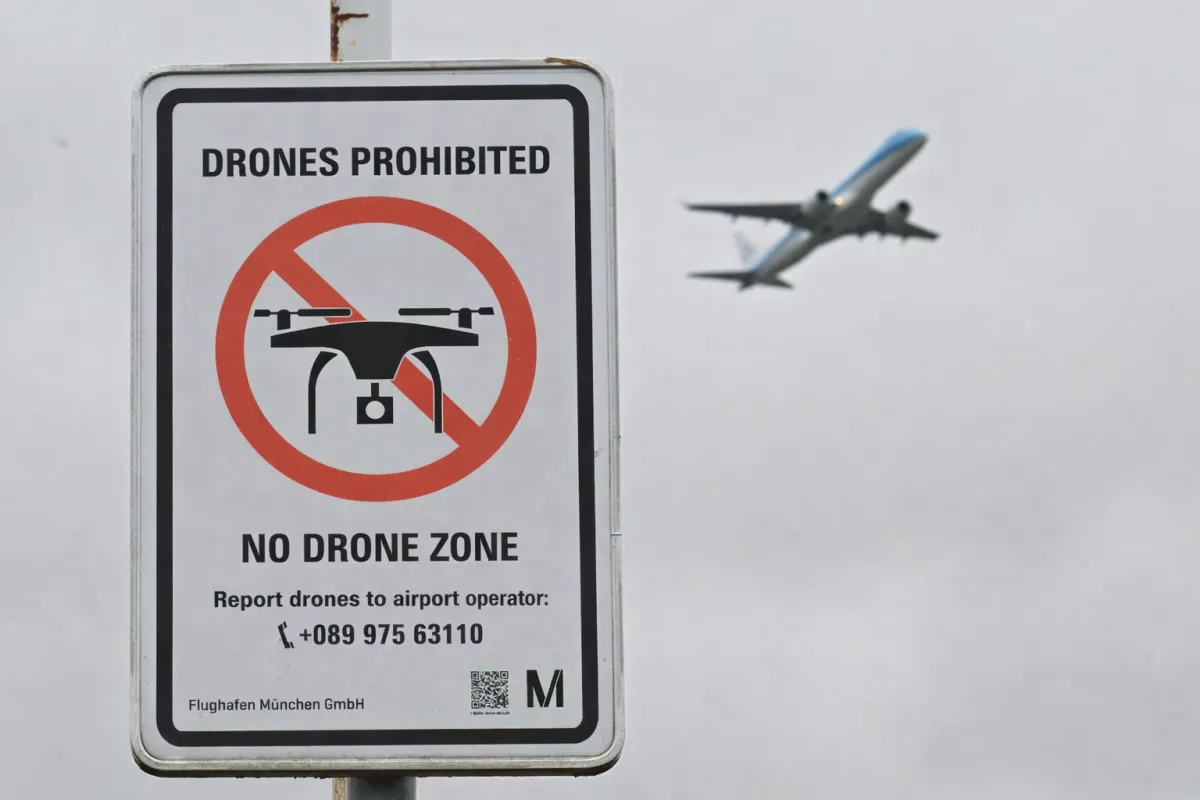

In the United Kingdom, the drone alert has become a national security issue with numbers that speak for themselves: in 2025, 266 incidents with “Uncrewed Aerial Vehicles” (UAV) were reported near Ministry of Defence sites, more than double the 126 in 2024.
Hence the political choice: strengthen the immediate reaction capability on the ground, without relying every time on police intervention.

What London is Doing
With the measures included in the Armed Forces Bill, the British government intends to grant authorized Defence personnel new powers to detect, counter, and “neutralize” drones deemed threatening near military sites, without having to wait for police assistance.
The novelty does not concern only aerial drones: the proposed framework also includes land and maritime drones (even operable “on or under water”), recognizing that the threat is no longer confined to the sky.
The context is one of “layered” security: airspace restrictions over dozens of sites, integrated surveillance and monitoring systems, investments in anti-drone technologies.
In other words: not just technology, but a clear legal perimeter that allows those defending the bases to act in a timeframe compatible with the nature of the threat.
Why This Concerns Italy (More Than It Seems)
In Italy too, the availability of increasingly efficient, affordable, and easy-to-use civilian drones has changed the risk: unauthorized overflights, demonstrative activities, hostile or “hybrid” actions, up to the hypothesis of attacks on critical infrastructure and military targets. It is no coincidence that, at the EU level, the Commission has just published an Action Plan on drone and counter-drone security, calling for strengthened prevention, detection, and coordinated response.
Italy is also already investing in capabilities: there are parliamentary and administrative programs and initiatives that mention anti-drone systems, for example in the naval sector.
But technology alone is not enough if the chain of command, competencies, and intervention powers are not precisely defined: when a suspicious drone appears, every minute counts and regulatory uncertainty risks translating into operational delay.
The Key Point: Reaction Times and Responsibilities
The British model starts from a pragmatic principle: if the event occurs inside or near a military perimeter, Defence must be able to protect its sites and operations with authorized procedures and tools, avoiding back-and-forth or “grey areas” between entities.
In Italy, however, drone risk management tends to fragment between aeronautical regulations (ENAC/UAS frameworks), public order, military needs, and the protection of civilian infrastructure: it is a mosaic that works as long as the incident is “simple”, but becomes fragile when the threat is rapid, coordinated, or deliberately hostile.

What Italy Needs: A Similar Framework, with Guarantees
Adopting similar measures does not mean militarizing public space, but making deterrence credible and protecting sensitive targets. An Italian proposal should include at least five pillars:
- Clear and circumscribed powers for Defence personnel specifically authorized to act against UAS near military sites and operations (aerial, land, and maritime), with defined intervention thresholds.
- “Approved” technical rules on the tools that can be used (jamming/neutralization, interception, capture, etc.), in line with European standards and with traceability of use.
- Chain of command and interforce coordination (Defence–Interior–ENAC–intelligence), with rapid alert protocols and an integrated operations room for complex cases.
- Dynamic perimeters and “restricted zones” (also temporary) around bases, arsenals, ranges, military ports, and logistical hubs, with real enforcement and applicable sanctions.
- Oversight and transparency: intervention registers, periodic audits, protection of rights (privacy and proportionality), to avoid abuses and ensure public trust.
This approach is perfectly consistent with the European trajectory: the Commission's Plan calls for better detection and response capabilities, as well as a more coordinated framework among member states.
Conclusion: It's Not “If”, It's “When”
The United Kingdom has chosen to respond to the numbers and the evolution of the threat with a clear response: operational powers to Defence + investments + procedures.
Italy is not starting from scratch on the technological and industrial front, but today the priority is to fill the decision-making void that can emerge in the crucial minutes of an alert.
A law (or a regulatory package) is needed that clearly states who can do what, where, with what tools, and under what controls. Because drones do not wait for circulars: they enter, observe, disturb, or strike. And a modern state must be able to respond with the same speed, without ambiguity.



Comments
No comments yet. Be the first!