


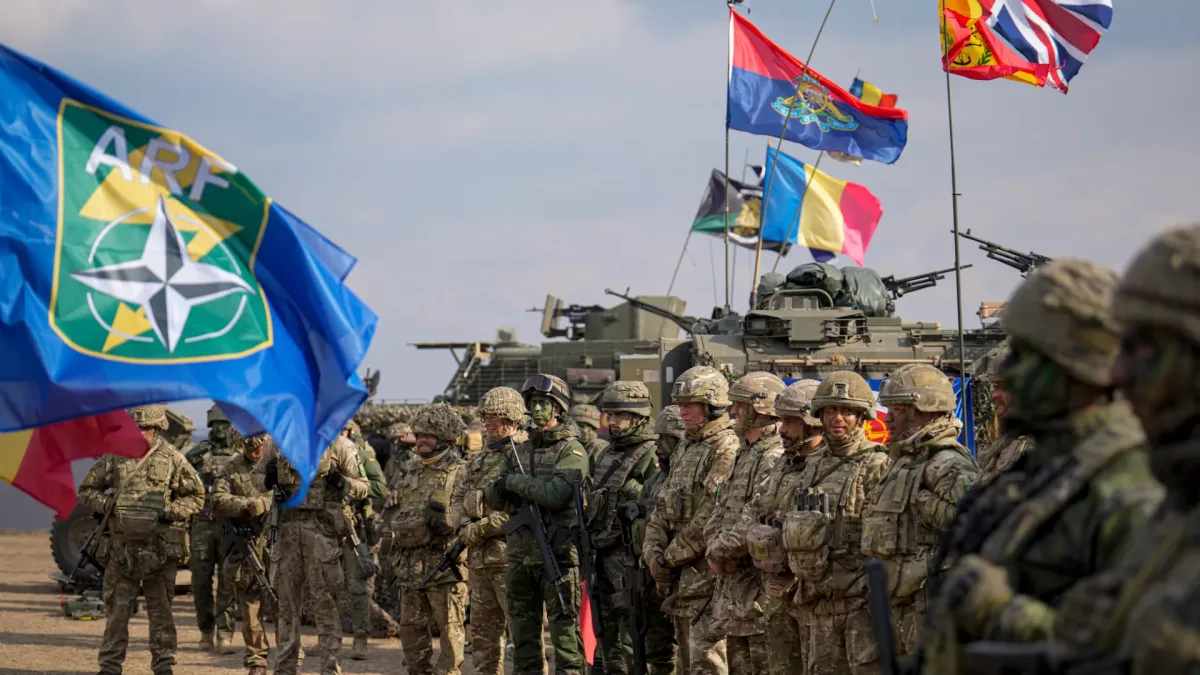

The landscape of military recruitment in Europe has entered a phase of profound transformation. After the Russian invasion of Ukraine in 2022 and amid a general worsening of strategic competition, many European governments have increased defense spending, accelerated modernization programs, and set more ambitious goals for the growth of the armed forces. The problem, however, is that means, ammunition, and platforms are not enough: people capable of using them are needed. And it is precisely on personnel that one of the most evident fault lines of European security is opening.
For over twenty years, most European countries have reduced their personnel. The end of the Cold War, budget constraints, the belief that technological superiority could compensate for mass, and widespread political reluctance towards the use of military force have resulted in smaller armies, fewer reserves, and a reduced capacity to absorb losses or sustain prolonged conflicts. The war in Ukraine has challenged this model, but the recovery of military mass requires long times, especially where service remains entirely voluntary.
The International Institute for Strategic Studies has succinctly summarized the problem: most European armies struggle both to meet recruitment targets and to retain trained personnel, with direct effects on operational readiness and the ability to build credible reserves. In other words, the crisis concerns not only those who enter but also those who stay.

Germany: high ambitions, stagnant numbers
Germany represents one of the most emblematic cases. Berlin has confirmed the goal of bringing the Bundeswehr to about 203,000 soldiers by 2031, but the results remain far from the ambitions. According to the parliamentary commissioner for the armed forces, at the end of 2024 the active personnel was 181,174, without any real progress towards the target; at the same time, the average age of the personnel has also increased. Already in 2023, the Ministry of Defense had reported a 7% drop in new recruits compared to the previous year.
The causes are known: demographic decline, competition from the civilian market, a not always attractive perception of the military career, and a complex relationship of German society with the theme of defense. For this reason, in Germany, the issue of mandatory registration of eighteen-year-olds and, more generally, a possible form of national service that broadens the recruitment pool has returned to the center of the debate.

United Kingdom: a professional force under pressure
The United Kingdom, despite its long tradition of professional forces, continues to record structural shortages. Official data show that as of April 1, 2024, the total strength of the British forces had dropped to 183,230 units, a 3% decrease year-on-year; regulars were 138,120, while voluntary reserves were also declining. The trend has particularly affected the Army, but also the Royal Navy and RAF.
The picture is also confirmed by the British Parliament: as of April 1, 2025, the total full-time personnel had dropped to about 147,300, continuing a downward trajectory that began years ago. The British difficulty is therefore not episodic, but chronic: entries do not compensate for exits, and the pressure from the private sector, along with issues of relative pay, quality of life, and retention, continues to erode the recruitment base.
France: more incentives, but the problem remains
Even France, traditionally considered one of the continent's most solid military powers, has had to acknowledge that the human dimension has become a critical factor. In 2023, the Ministry of the Armed Forces closed the year with about 3,000 vacancies, prompting Minister Sébastien Lecornu to launch an extraordinary retention plan, with interventions on salaries, career progressions, and service permanence.
On the political level, Paris then announced in November 2025 a new formula of 10-month voluntary military service, with the aim of involving 3,000 young people in 2026, reaching 10,000 by 2030, and up to 50,000 a year by 2035. The message is clear: France does not want to return to universal conscription but recognizes that the professional model alone faces increasing limits.

Netherlands: growth yes, but insufficient
In the Netherlands, the situation is different in tone, not in substance. The Hague has set the goal of reaching 100,000 people by 2030, including military personnel, reservists, and civilian defense staff. However, by 2025 the growth rate was already deemed insufficient compared to the target, while in 2026 the overall strength was around 79,000 units, indicating that the path remains challenging.
The Dutch case is interesting because it shows a very pragmatic approach: expanding reserves, seeking personnel even for support roles, and increasing integration between defense and civil society. But this precisely demonstrates how difficult it is to rapidly expand an armed force in a dynamic and highly competitive labor market.
Italy: below the safety threshold
Italy is not immune. In 2024, the Chief of Defense Staff, Admiral Giuseppe Cavo Dragone, described the Italian armed forces as absolutely undersized, indicating a strength of 165,564 military personnel, below what has been described as a “survival threshold” of 170,000 units. This is a particularly significant assessment because it comes from an institutional summit and directly links the issue of personnel to the country's ability to fulfill its operational tasks.
In Italy, too, well-known structural factors weigh heavily: an aging population, reduction of youth cohorts, the attractiveness of the civilian market, and difficulties in making a military career competitive in terms of salaries, stability, and professional prospects. The issue, moreover, has already entered the political agenda, as demonstrated by the measures adopted in 2025 to review careers and recruitment.

Southern Europe and small states: silent vulnerabilities
Investigations by EUROMIL show that recruitment and retention problems are widespread across the continent and do not only concern the great powers. Greece, Portugal, Malta, and other smaller countries have been reporting difficulties for years in maintaining their ranks and making the military profession sufficiently attractive compared to civilian alternatives. In some cases, the problem does not make the news due to smaller absolute numbers, but the operational impact can be even greater.
Eastern Europe and Nordic countries: conscription mitigates, but does not eliminate the problem
In Eastern Europe, the picture is more complex. Some countries, like Poland, have shown a superior ability to mobilize personnel, also thanks to a strategic context perceived as more threatening. But in other areas of the region, issues of staffing, retention, and competition with the civilian labor market continue to emerge. Meanwhile, in the Baltic and Nordic countries where forms of conscription or selective service exist — such as Finland, Estonia, Latvia, Lithuania, Denmark, and Sweden — the numerical base appears more stable, though still exposed to demographic pressure.
Why recruitment remains so difficult
The underlying issue is that the European recruitment crisis has deep roots. The first is demographic: in many countries, the number of young people is decreasing, narrowing the potential pool. The second is economic: with relatively high employment rates, a military career competes with civilian offers that are often better paid, less burdensome, and more predictable. The third is cultural: in large segments of European public opinion, military service no longer enjoys the appeal or social prestige it once had.
Added to these are factors internal to military institutions: slow selection procedures, complex family life, frequent transfers, personnel burnout, perception of low appreciation, and difficulty in communicating with new generations using appropriate languages and tools. In essence, the problem is not just “how many young people there are,” but “how many young people really want to join” and “how many military personnel decide to stay.”
Possible Responses
The responses on the table today are four. The first is the return, in different forms, to conscription or hybrid models of national service. The second is the increase of economic and career incentives. The third is the strengthening of reserves, considered by many governments a more sustainable mass multiplier than permanent personnel alone. The fourth is a broader cultural re-education of the relationship between society and defense, without which any advertising campaign risks remaining superficial.

The Real Test of European Defense
Today, Europe has understood that deterrence is not built solely with new industrial programs or increased budgets. The decisive point is to transform spending into real military capability. And without men and women in uniform, that transformation remains incomplete.
Recruitment is therefore the real test of European strategic ambitions. Germany, the United Kingdom, France, the Netherlands, Italy, and many other states are experiencing, with varying intensity, the same limitation: hardware can be acquired relatively quickly, human capital cannot. For this reason, the personnel issue risks becoming the main discriminating factor between a more robust European defense on paper and one truly ready to face a prolonged phase of instability.



Comments
No comments yet. Be the first!