




The NATO decision to deploy the Merops (Multispectral Extended Range Optical Sight) aerial surveillance system, developed by the Turkish company Aselsan, in Poland and Romania marks a turning point in the defense of the eastern flank. The Atlantic Alliance no longer intends to merely respond to threats but aims to prevent them through enhanced detection and reaction capabilities.
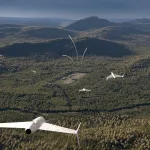
Violations of Polish airspace by Russian drones have highlighted the vulnerability of traditional surveillance tools. Radars and interceptors are useful but not always adequate against small unmanned aircraft capable of flying at low altitudes and evading conventional detection. In this scenario, Merops represents a strength: its multispectral technology allows observation through clouds, smoke, and dust, complementing radars and providing a clearer and more precise picture of incoming threats.
The adoption of the system in two strategic countries like Poland and Romania is not only operationally significant but also symbolic. NATO demonstrates unity and readiness in strengthening the security of the most exposed states, reaffirming its commitment to protecting the eastern flank from the instability generated by the war in Ukraine. Furthermore, Ukraine's involvement in training highlights how the direct experience gained in conflict is now a shared asset within the Alliance.
Javelin, the Backbone of Polish Defense
Alongside technological strengthening on the aerial front, Poland has decisively chosen to enhance its ground capabilities. Warsaw has signed an agreement with Washington for the purchase of 2,506 FGM-148 Javelin anti-tank missiles and 253 launchers, for a total value of 780 million dollars. With this new supply, the country will bring its arsenal to over 3,000 units, one of the largest in Europe.
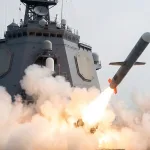
The Javelin is a weapon that has already proven its effectiveness in the Russo-Ukrainian conflict. Thanks to its “fire-and-forget” technology, the missile requires no further commands after launch, allowing the operator to take cover immediately. Additionally, the “top attack” trajectory allows it to hit tanks at their most vulnerable points, overcoming the toughest defenses. These features have turned the Javelin into a key element of Ukrainian resistance and, by extension, a reference point for NATO's defensive doctrines.

For Poland, the investment goes beyond mere military enhancement: it represents a strengthening of the strategic bond with the United States and a step towards greater defensive autonomy. Warsaw thus positions itself to play a leading role in European security, presenting itself as a credible bulwark against potential aggression and at the same time as a reliable partner in the Atlantic architecture.
The Javelin thus becomes not only a weapon but also a political symbol. It indicates Poland's willingness to take on greater responsibilities in collective defense and to demonstrate that Eastern Europe is no longer just a vulnerable boundary line, but an advanced front equipped with modern and effective tools.
A Balance Between Deterrence and Innovation
The introduction of Merops systems and the acquisition of Javelin missiles produce a dual strategic impact. On a collective level, NATO updates its surveillance and response capabilities, integrating advanced technological solutions to counter the hybrid threats characterizing the current context: drones, low-altitude air incursions, cyber operations, and disinformation campaigns. On a national level, Poland consolidates its position as a central player in European security, while also strengthening its ties with Washington and its path towards autonomous defense.
The message is clear: the security of Eastern Europe relies on the adoption of Emerging & Disruptive Technologies, now considered the foundation of modern deterrence. It's not just about increasing the number of weapons, but investing in systems capable of anticipating the adversary's moves, neutralizing threats before they materialize.

In this framework, the integration between technological innovation and the consolidation of alliances becomes decisive. NATO shows it can evolve, adapting its strategy to a rapidly changing context, while Poland emerges as a model of resilience and commitment. The combination of the two choices – Merops for air dominance and Javelin for ground dominance – forms a coherent mosaic, destined to strengthen the deterrence capability of the eastern flank for years to come.
Ultimately, the deployment of these systems is not just a technical-military act, but a clear political message: the Alliance is united, ready, and determined to defend its members. Eastern Europe, long perceived as vulnerable, is taking on the face of a secure and well-equipped frontier, capable of withstanding any external pressure.



Comments
No comments yet. Be the first!