

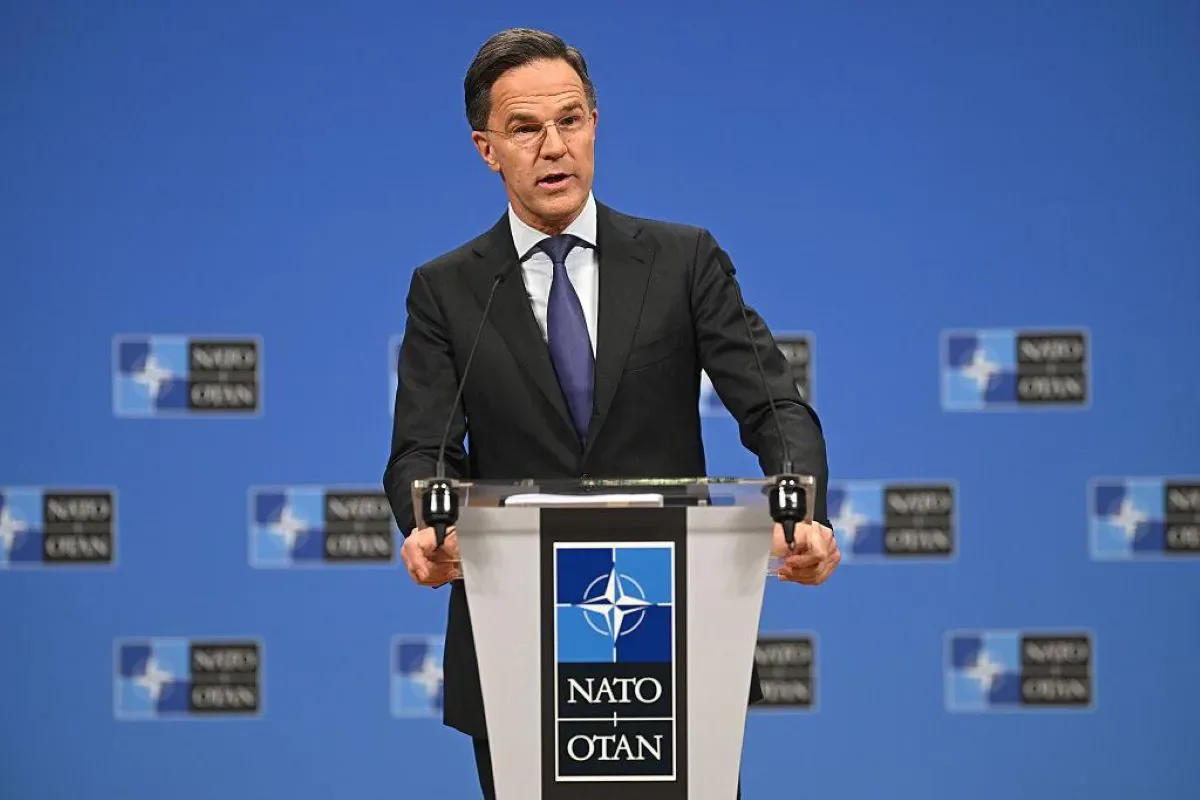

International diplomacy tolerates many flaws, but not recklessness that jeopardizes the security of a sovereign state. The recent statements made to Fox News by NATO Secretary General Mark Rutte, in which he flaunted the takeoff of 500 US military aircraft from bases in Italy in the context of Operation Epic Fury against Iran, represent a point of no return.
Rutte not only contradicted and severely embarrassed the Italian government and Prime Minister Giorgia Meloni — who had assured Parliament and citizens of exclusively logistical and non-kinetic support for the operations — but also exposed Italy to direct retaliation from Tehran. Faced with an error of this magnitude, the political conditions no longer exist for Rutte to continue leading the Atlantic Alliance.
An Unforgivable Crossroad: Superficiality or Malice?
The words of the Secretary General open a deep rift, leaving room for only two interpretations, both incompatible with his role:
- Manifest Strategic Superficiality: Rutte, in a clumsy attempt to please Donald Trump's White House and demonstrate the "burden" shared by Europeans, confused logistical flights with attack missions. An unforgivable communication error for someone at the helm of Western security, demonstrating a total lack of sensitivity to the internal balances of allied countries.
- Political Will to Force the Hand: If it was not an error due to carelessness, Rutte deliberately used Italy as a geopolitical shield, sacrificing the security and diplomatic stability of a founding member on the altar of his personal relations with Washington.
In both cases, the result is the same: Rutte's leadership has become a danger to the very stability of NATO and the geopolitical safety of Italy.
The Technical Methods for Removing the Secretary General
Removing a NATO Secretary General is a politically complex process, but technically straightforward. The figure of the Secretary is not removed through a formal "motion of no confidence" in the parliamentary model, but through precise diplomatic mechanisms.
1. The Principle of Consensus and Withdrawal of Confidence
Within NATO, all decisions, including appointments and revocations of the political leadership, are made strictly by unanimous consent of the member countries (the North Atlantic Council or NAC). Italy has the power to:
- Formally open a diplomatic crisis within the NAC, declaring that the conditions of bilateral trust no longer exist.
- If a major contributing and strategic country like Italy formally withdraws its approval, the Secretary's position becomes politically untenable, as NATO cannot operate effectively without unanimity of views.
2. The Push for Early Resignation
Historically, NATO Secretaries General who lose the support of key allies are not publicly "fired" with a vote, to avoid showing structural weaknesses externally (especially ahead of the delicate Ankara Summit in July 2026). The technical practice involves:
- Agreed Resignations: Strong joint pressure from a bloc of European countries forcing the Secretary to step down "for personal reasons" or to "facilitate the transition."
3. The Appointment of an Interim Secretary
Should Rutte resign before the natural expiration of his mandate, NATO's procedural norms provide that temporary leadership be assumed by the NATO Deputy Secretary General (as Acting Secretary General ad interim), filling the power vacuum until the North Atlantic Council unanimously converges on a new high-level profile.
Italy has the duty to protect its national interests and security. Allowing Mark Rutte to remain in his position would mean accepting that Italian sovereignty can be sacrificed in a live US TV broadcast. It is time for Europe and Italy to show the former Dutch Prime Minister the door out of Brussels.
The video of the Pre-Ministerial Press Conference of Mark Rutte at NATO offers an official overview of the positions expressed by the Secretary General regarding the Iranian issue and defense spending before the recent diplomatic tensions.



Comments
No comments yet. Be the first!