


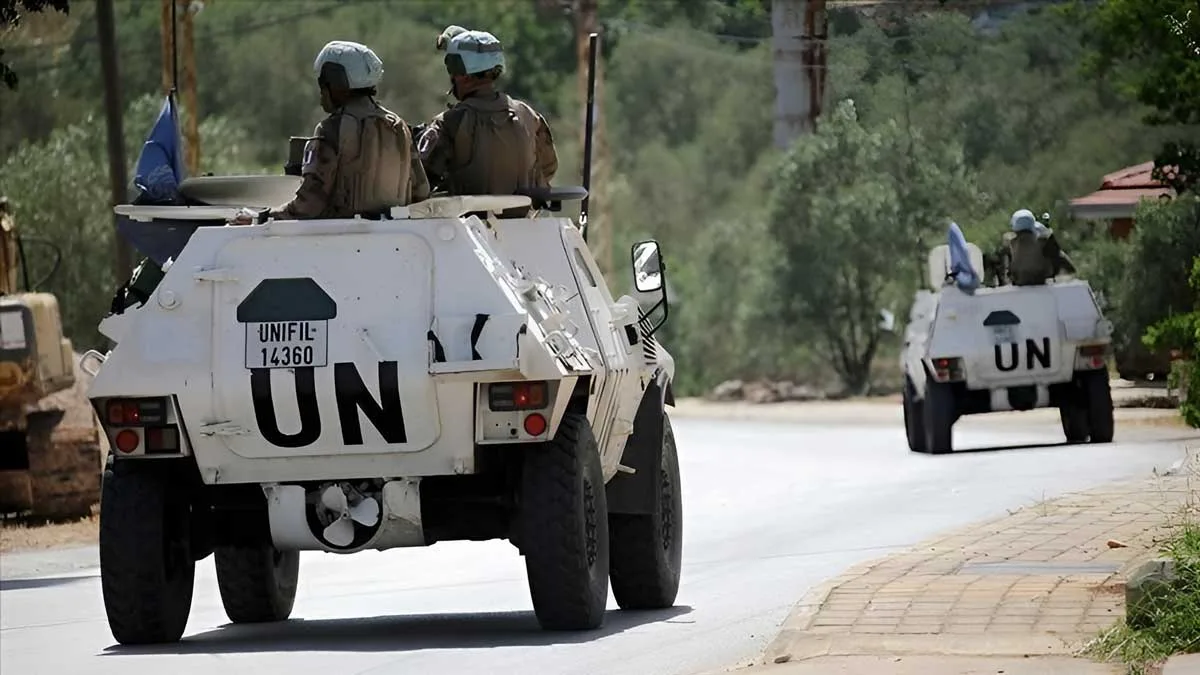

French troops engaged in the UNIFIL mission in southern Lebanon were involved in a significant episode that highlights the evolution of threats in the context of modern peacekeeping operations. In early January 2026, a patrol of blue helmets intercepted and repelled a suspicious drone coming from Israeli territory, using portable electronic warfare systems.
The incident occurred during a routine patrol in the southern area of Lebanon, not far from the so-called Blue Line, the demarcation line established by the United Nations between Lebanon and Israel. The small drone approached the French patrol flying at a very low altitude, coming to about 30 meters above the soldiers, a distance considered potentially dangerous both for the safety of UN personnel and for civilians in the area.
Sud-Liban. Des soldats français de la Finul actionnent des contre mesures sur un drone israélien dangereux. Deux drones israéliens porteurs d'explosifs ont été neutralisés au cours de cette mission de la Force des Nations unies régulièrement la cible des drones israéliens. #Liban pic.twitter.com/vVM5rPVh07
— Georges Malbrunot (@Malbrunot) January 5, 2026
The response with jamming
In accordance with defensive rules of engagement, the French soldiers reacted by employing Nerod F5 portable jammers, devices designed to disrupt the control and navigation signals of drones. The action was not offensive in nature nor aimed at shooting down the aircraft, but solely to neutralize its ability to operate above the patrol.
Following the electronic interference, the drone lost operational stability and was forced to reverse course, moving away from the area and heading back to the zone from which it came. The intervention took place without the use of kinetic weapons and without consequences for UN personnel or the local population.
An increasingly complex context
The episode is part of an extremely delicate operational framework. The area along the Blue Line has long been affected by frequent UAV overflights, surveillance activities, electronic disturbances, and, in some cases, indirect hostile actions. The growing presence of drones — often difficult to attribute with certainty — represents a concrete challenge for peace missions, born in an era when this type of threat did not exist.
In recent months, UN forces have reported several events that have endangered the freedom of movement of patrols, including the launch of ordnance from light aerial platforms and interference with communication systems.
Peacekeeping in the drone era
The intervention of the French blue helmets shows how contemporary peacekeeping must now confront hybrid scenarios, where the distinction between surveillance, intimidation, and military action is increasingly blurred. The use of electronic warfare as a self-defense tool represents a paradigm shift: no longer just symbolic presence and interposition, but concrete capability for active protection of UN personnel.
In a theater where every incident can have political and military repercussions, the measured but decisive management of this episode confirms the central role of UN forces in attempting to maintain fragile stability in one of the most sensitive areas of the Middle East.



Comments
No comments yet. Be the first!