




The Arash-2 is one of the Iranian weapon systems that is attracting more attention after the recent attacks against Israel. According to the Iranian agency Tasnim, Tehran allegedly used these drones against the Ben Gurion airport area, identified as a strategic target. Iran presents it as a more advanced and destructive unmanned aircraft compared to the previous Arash-1 and Kian, capable of hitting targets at very long distances. However, beyond the Iranian claims, there is still no full independent confirmation of the actual extent of the damage caused by this system.
A kamikaze drone for deep attacks
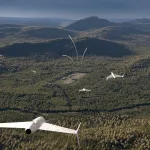
Publicly presented in 2022, the Arash-2 falls into the category of loitering munitions or kamikaze drones: platforms designed to remain in flight until the target is identified and then destroy it by crashing into it. According to official Iranian statements, the drone was developed to hit cities and strategic infrastructures such as Tel Aviv and Haifa, but more generally its function is to carry the Iranian attack deep against military bases, radars, command centers, and logistical nodes. This hybrid nature, halfway between a drone and a rudimentary cruise missile, makes it one of the most observed tools in Tehran's arsenal.

Technical characteristics and cost factor
The most striking data is the range, which according to Iranian sources would reach up to 2,000 kilometers. Open source estimates also speak of a speed between about 180 and 260 kilometers per hour, while other details such as the exact weight of the explosive warhead remain less clear. Tehran also claims that the drone has a reduced radar cross-section, a feature that would make it difficult to detect and intercept. But the real strength of the Arash-2 seems to be its cost-effectiveness ratio: producing and launching a drone of this type would cost much less than the defensive missiles needed to shoot it down. In this perspective, the weapon fits perfectly into the Iranian strategy of saturating enemy defenses, forcing the opponent to consume much more expensive resources to neutralize a relatively cheap threat.
Why the Arash-2 is concerning
More than for its absolute performance, the Arash-2 is concerning for its possible large-scale use. A drone with long autonomy, low cost, and the ability to hit strategic targets can indeed become an effective tool of asymmetric deterrence. This is the logic that has guided the development of the Iranian arsenal for years: using relatively simple systems, but numerous and economically difficult to neutralize, to put pressure on the opponent's defenses. In this sense, the Arash-2 is not just a new kamikaze drone, but the symbol of a military strategy based on mass, depth, and operational convenience.



Comments
No comments yet. Be the first!