


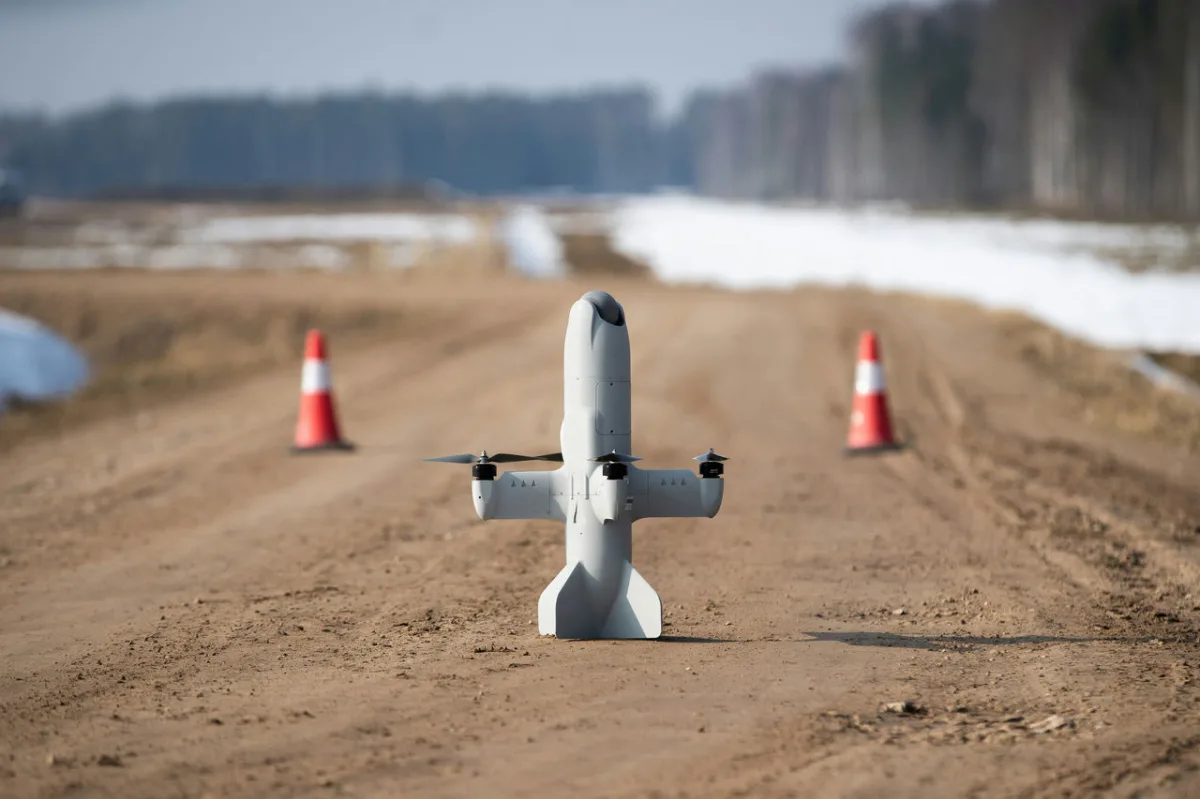

From March 9 to 13, 2026, the NATO Innovation Range for uncrewed systems in Latvia launched its first Testing, Evaluation, Verification and Validation (TEVV) campaign dedicated to Unmanned Aerial Systems (UAS) and Counter-UAS (C-UAS) technologies. The activity took place at the Sēlija Military Training Area, where defense industry companies from NATO allied countries and Ukraine gathered, along with military operators and government representatives. This is the first in a series of TEVV events planned for 2026.
The Sēlija Range and Capabilities Under Test
The Latvian site offers suitable conditions for advanced testing, allowing high-speed and high-altitude interceptor flights, as well as experimentation with various electronic warfare solutions in an open environment. The campaign is designed to accelerate the development and validation of technologies capable of meeting concrete operational requirements, reducing the time needed between the testing phase and field adoption. In this context, NATO aims to strengthen its ability to counter the threats posed by drones in increasingly complex scenarios.
One of Five Sites of the RAAP Plan
The Latvian range dedicated to unmanned systems is one of the five pilot sites created under the Rapid Adoption Action Plan (RAAP). The other hubs include the Cyber Testbed in Estonia, focused on cyber and information technology; the Future Connectivity Range, co-led by Finland and Sweden, dedicated to secure and resilient connectivity; the site for the Underwater Environment in Italy, aimed at underwater systems and maritime technologies; and the Shallow Waters Range in the Netherlands, focused on autonomous maritime capabilities and seabed security. The next testing and evaluation activity will take place on the sidelines of the International Drone Summit scheduled in Riga on May 27, 2026.




Comments
No comments yet. Be the first!