




Italy is currently at the center of one of the most delicate political-strategic crises in its recent history. The clash between Deputy Prime Minister Matteo Salvini and Defense Minister Guido Crosetto is not just a simple dispute between government allies: it reflects a deep rift over the future of national security. On one side, Salvini, with his “Fortress Italy” model, prioritizes border control and the protection of internal infrastructures. On the other, Crosetto, supported by military leaders, calls for a “strategic realism” based on rearmament, strengthening the Armed Forces, and full respect for NATO commitments.
The friction is not only political: it questions Italy's very ability to defend itself in an unstable international context, marked by the conflict in Ukraine, tensions in the Mediterranean, and hybrid threats that transcend traditional war boundaries.
Two Opposing Visions: Salvini vs Crosetto
For the leader of the Lega, the priority of national security does not lie in facing conventional conflicts with foreign powers, but in containing hybrid threats such as irregular immigration, terrorism, and organized crime. Hence his proposal for a universal six-month military service, closer to civil protection than combat preparation.
His position is set in a sovereignist and populist horizon: downsizing arms spending, allocating resources to citizens and internal infrastructures. It is no coincidence that Salvini proposed including the Bridge over the Strait of Messina as a “strategic expense” from a NATO perspective, a way to transform a civil work into a symbol of national security.
Guido Crosetto, on the other hand, has repeatedly denounced the country's unpreparedness for a possible attack. According to the Minister, Italy needs to strengthen its military apparatus, ensure adequate supplies, and maintain strong international alliances.
His line is clear: without NATO and without structural investments, the country risks being defenseless. Crosetto openly supports a significant increase in military spending. The minister rejects the idea of a return to conscription, deemed ineffective in a context where professionalism and technological skills matter. Instead, he proposes a model of modern Armed Forces, integrated into multinational systems, capable of operating in complex and multi-domain scenarios.

The Structural Shortcomings of the Armed Forces
Beyond the political debate, the data is clear: Italy is currently unprepared to face a conventional conflict.
- Personnel shortage: over 40,000 soldiers are missing in the Army and 9,000 in the Navy, according to Armed Forces leaders. This means unsustainable operational shifts and difficulties in recruiting new recruits.
- Reduced stocks: ammunition would last for 48-72 hours of conflict. Much of the arsenals have been emptied to support Ukraine, and the national industrial sector is unable to quickly replenish them. The average delivery times are three years for bullets and six for missiles.
- Insufficient air defense: Italy does not have a complete missile and drone shield. Plans to acquire systems like SAMP/T NG and Aster 30 B1 NT are not yet operational.
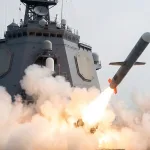
- Technological gap: modern air-to-air and anti-ship missiles are lacking, the tank fleet is obsolete, and the acquisition of systems like Himars rocket launchers is proceeding slowly.
- Inefficient procurement: procurement procedures are slow, fragmented, and subject to bureaucratic constraints that delay the arrival of essential systems. Without faster and more effective procurement processes, modernization risks remaining only on paper, while threats evolve at a pace that the Armed Forces cannot keep up with.
This picture reveals a vulnerability that endangers not only Italy but also the cohesion of the entire Atlantic Alliance.
The International Context and NATO Pressure
Italy committed in 2014 to bring military spending to 2% of GDP. Allies' pressures are increasing, with Washington even pushing towards 5% of GDP. For Italy, this would mean allocating over 100 billion a year to defense, a figure that seems unrealistic.
The government's temptation is that of “creative accounting,” including large civil works as strategic spending. But this stratagem risks undermining the country's credibility in the eyes of allies, already questioned by the slowness with which operational decisions are made.
Modernization at Risk and Priorities
The Chief of Defense Staff, Admiral Giuseppe Cavo Dragone first and then General Luciano Portolano, outlined ambitious plans to transform the Italian Armed Forces: 160,000 professional soldiers, 35,000 reservists, expansion of the F-35 fleet, new drones, and missile systems.
But without certain and stable funding, these plans remain on paper. Political paralysis risks nullifying multi-year planning, condemning Italy to a position of structural weakness.
The clash between Salvini and Crosetto highlights a crisis that is not only political but material. The Italian Armed Forces suffer from evident shortcomings, while the ruling class seems unable to find a common line.
Three priorities to address:
- National consensus on defense: a cross-party agreement is needed to define a long-term strategy, independent of electoral cycles.
- Dedicated defense fund: a stable mechanism to finance modernization, removed from the uncertainties of the budget law.
- Recruitment reform: attract qualified young people, focusing on technical training and professionalism, to face technological and hybrid threats.
- Procurement reform: it is necessary to streamline and speed up acquisition procedures, ensuring transparency but also efficiency. Only fast and less bureaucratic processes can allow the Armed Forces to promptly have the necessary systems.
Without a breakthrough, Italy risks remaining defenseless in an increasingly unstable world, losing credibility in the eyes of allies and jeopardizing its own security.




Comments
No comments yet. Be the first!