


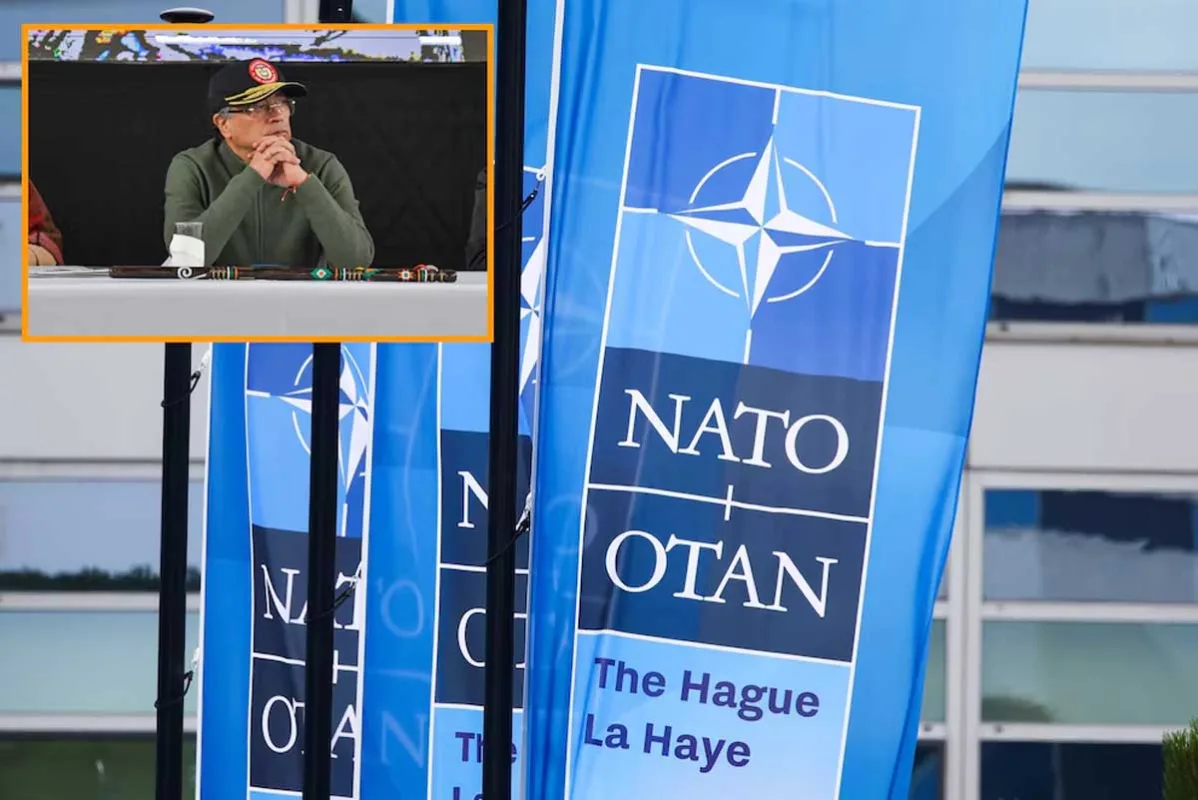

The announcement by Colombian President Gustavo Petro, who proposed withdrawing Colombia from its status as a global partner of NATO, has raised concerns among politicians and defense experts. Colombia is indeed the only Latin American country to have this type of relationship with the Western military alliance, which ensures cooperation in security and defense without implying military obligations.
Among the critical voices is that of former Vice President Marta Lucía Ramírez, who in an interview with the magazine Semana emphasized how the link with NATO has allowed the Colombian Armed Forces to access training, modernization, logistics, and command programs according to international standards. “It is essential to have support and cooperation to strengthen our capabilities in cyber defense and strategic security”, she stated.
Former Defense Minister Diego Molano also expressed his opposition, warning that leaving the alliance could have consequences on multiple levels. “NATO provides access to shared intelligence, military training, and other critical aspects to counter threats. Abandoning this partnership would mean losing international credibility, isolating diplomatically, and reducing cooperation with strategic allies”, Molano declared.
Petro: “We Must Leave, There Is No Other Way”
Petro's announcement came on July 16, 2025 during an official event at the Ministry of Foreign Affairs in Bogotá, on the occasion of an international summit on the Gaza crisis. “We must leave NATO, there is no other way”, the president declared, justifying the decision with criticisms of the role of some European countries in supplying weapons to Israel for the military offensive in the Gaza Strip. “Colombian coal must not turn into bombs in Israel to kill children”, Petro added.
Colombia joined NATO as a global partner in 2017, consolidating a relationship that began in 2013 with the signing of a cooperation agreement on security and information exchange. This status, while not involving military obligations, has guaranteed the country access to armed forces modernization programs, defense transparency, training activities, and knowledge in peace missions and human rights in the military sector.
According to NATO, this relationship has brought “great benefits to Colombia without limiting the government's foreign policy stance”.
A Change of Course in Colombian Foreign Policy
For analysts and observers, Petro's move marks a clear change of direction in Colombia's foreign policy, distancing itself from military alliances considered by the president incompatible with ethical principles in armed conflicts.
“Gaza is an experiment by the super-rich to show people how to react to a rebellion”, Petro declared, criticizing what he defined as a logic of global domination by developed countries.
The Colombian president also directed harsh words against the United States and former President Donald Trump, lamenting the lack of dialogue between Washington and the Community of Latin American and Caribbean States (CELAC). “They do not want to meet with Latin America and the Caribbean”, Petro said, criticizing the American administration's bilateral approach.





Comments
No comments yet. Be the first!