




After more than a quarter of a century of military presence, the NATO KFOR mission in Kosovo is about to undergo one of its most significant transformations. The Supreme Headquarters Allied Powers Europe (SHAPE) has announced an "optimization" that will lead to a gradual reduction in personnel over the next year. Italy will manage this very delicate phase of downsizing and transition, taking command of the mission again starting next October.
A decision that not only represents a technical handover but also consecrates Rome as a major geopolitical player in the Western Balkans chessboard.
Mission Downsizing: Between Risks and Opportunities
The troop reduction comes after two years of intense surveillance. In 2023, following violence and attacks against peacekeepers in Zvečan, KFOR underwent the largest reinforcement of the last decade, with the deployment of an additional thousand soldiers. Today, the situation has changed.
- Opportunities: The stabilization of the security framework (which already led to the cessation of reserve force deployment in January 2026) allows NATO to lighten its military footprint. This transition offers the opportunity to "normalize" Kosovo, encouraging local institutions to take responsibility for maintaining public order and promoting the resumption of civilian life without massive militarization of the territory.
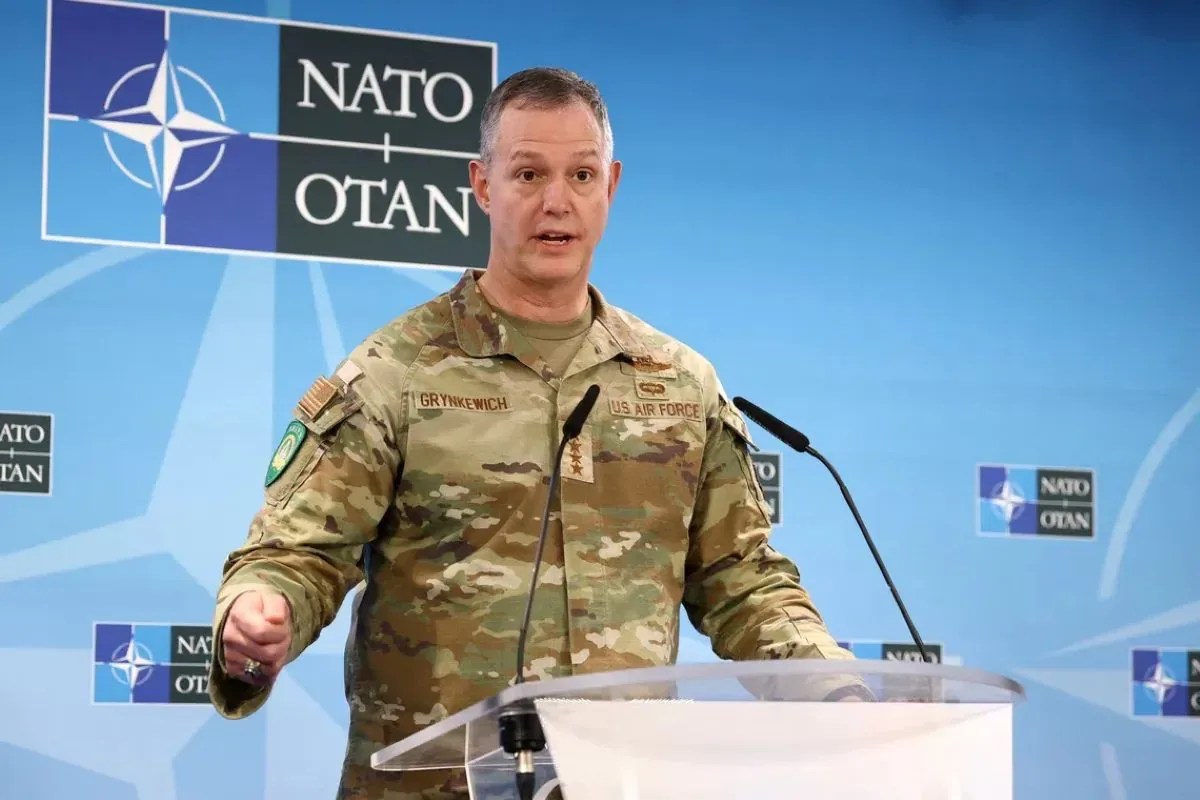
- Risks: The main danger, in a historically volatile region, is the perception of a Western disengagement. On this point, U.S. General Alexus G. Grynkewich, Supreme Allied Commander Europe (SACEUR), was categorical: "NATO will not allow a security vacuum to be created." The downsizing will be an intelligence-based process, constantly monitored and entirely reversible in case of new tensions.
Italy as a "Geopolitical Player" and US Trust
Entrusting the command of KFOR during a phase of force reduction is a signal of enormous political and military trust. The buffer of this transition will be the Italian contingent itself. As confirmed by Defense Minister Guido Crosetto, from October an Italian General will take over from the Turkish Özkan Ulutaş.
Currently, Italy not only expresses the future leadership but also represents the backbone of the mission. Of the 4,657 military personnel from 31 Nations, our country deploys the largest contingent with 907 units, significantly outnumbering the United States (590) and Hungary (408).
This configuration highlights a clear strategic axis: Washington delegates and relies on Rome. The USA, while maintaining supervision through SACEUR, recognizes Italy as a solid partner, equipped with the diplomatic capacity, cultural mediation, and military competence (the so-called Italian way of peacekeeping) essential to reduce tensions without losing control of the territory.
A New and Constructive Approach Towards Serbia
The reduction of NATO troops also has a strong regional diplomatic value. The downsizing of KFOR can be seen as an olive branch, a signal of openness that fosters a new and more constructive approach towards Serbia.
Maintaining an excessively militarized posture at the border would have risked perpetuating the rhetoric of confrontation indefinitely. On the contrary, the reduction of the contingent rewards the hard-won stability and implicitly acknowledges that Belgrade does not pose an imminent threat. NATO has reiterated its support for the dialogue facilitated by the European Union between Belgrade and Pristina: delegating the resolution of disputes to European politics and diplomacy, rather than Atlantic military deterrence, is the fundamental step for lasting security.
Italy, with its excellent bilateral relations with both Serbia and Kosovo, is exactly at the center of this process. Successfully managing the new KFOR will mean for Rome not only ensuring military peace but also acting as a facilitator for the future entry of the entire region into the Euro-Atlantic family.



Comments
No comments yet. Be the first!