


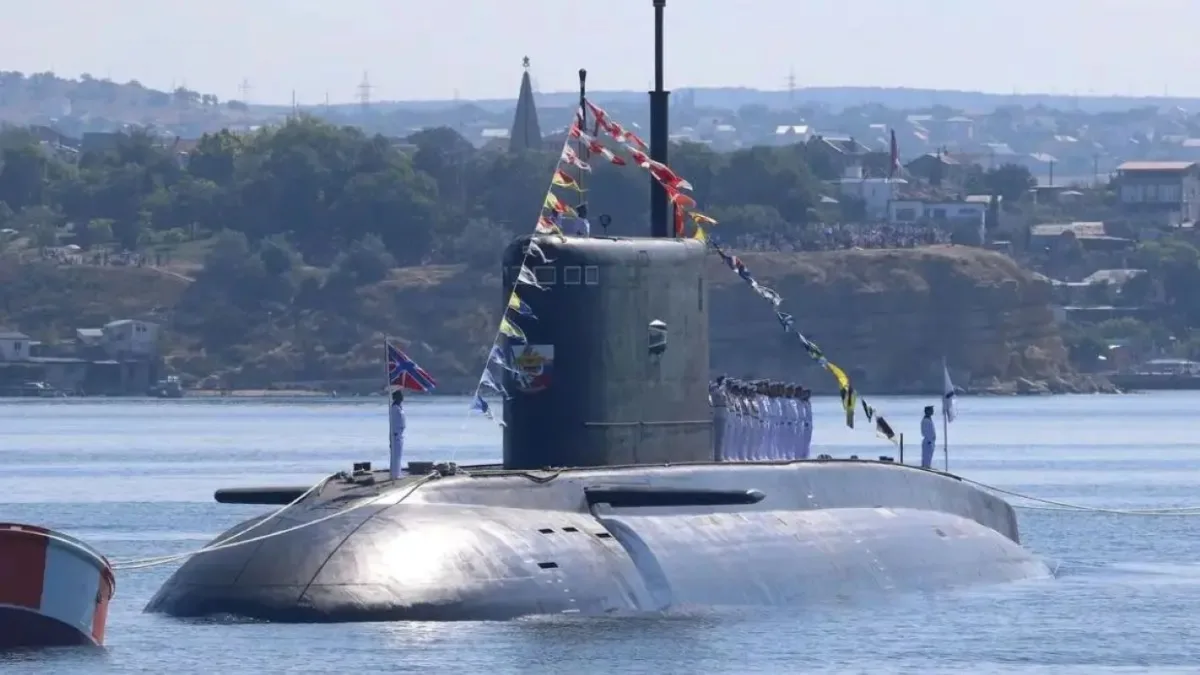

The Russian Federation continues with determination in the development of a cutting-edge naval program, aimed at consolidating its nuclear deterrence through highly elusive submarine systems. In this scenario, the submarine Khabarovsk (Project 09851) assumes a role of primary importance: a highly specialized unit, expressly designed for the deployment of the Poseidon 2M39, the nuclear-powered torpedo-drone intended to strike strategic coastal targets.
The overall setup of the program reflects the evolution of Russian military doctrine: the pursuit of a "second strike" capability entrusted to autonomous platforms, capable of operating beyond the reach of current anti-missile defense architectures.
The Strategic Context: Moscow's Asymmetric Approach
While the United States Navy has historically concentrated its production on an extremely limited number of classes (focusing on the Virginia class for general purposes and the Columbia class for ballistic missiles), Russia has adopted a radically different approach, simultaneously advancing the construction of six distinct classes of submarines.
This economic and engineering effort, despite facing budget challenges and related delays over time, represents the most significant Russian naval modernization since the end of the Cold War. After the collapse of the Soviet Union and the consequent economic crisis that slowed or canceled numerous projects, Moscow's shipbuilding industry has regained strength, differentiating the vessels based on highly specific roles.
Design and Engineering of the Khabarovsk: A Cutting-Edge Synthesis
From the analysis of the technical specifications, it emerges that the Khabarovsk is the result of a hybrid architecture, which merges engineering solutions derived from the Borei-A and Belgorod classes:
- Stern section: inherits the design of the latest generation ballistic missile submarines [cite: 1].
- Bow section: borrows the configuration of the Belgorod, optimized for the integration of Poseidon systems.
The elimination of the central sections typical of the original projects has allowed for a more agile and compact platform compared to its predecessors, while maintaining an impressive tonnage. Reports indicate a length of about 135 meters, a width of 13.5 meters, and a displacement close to 10,000 tons.
In terms of propulsion, the unit adopts an OK-650V nuclear reactor coupled with a pump-jet system, a technical solution that maximizes silence and hydrodynamic stealth [cite: 1]. In operational mode, the submarine can reach speeds between 30 and 32 knots (about 55–59 km/h).
The Heart of the System: Poseidon 2M39
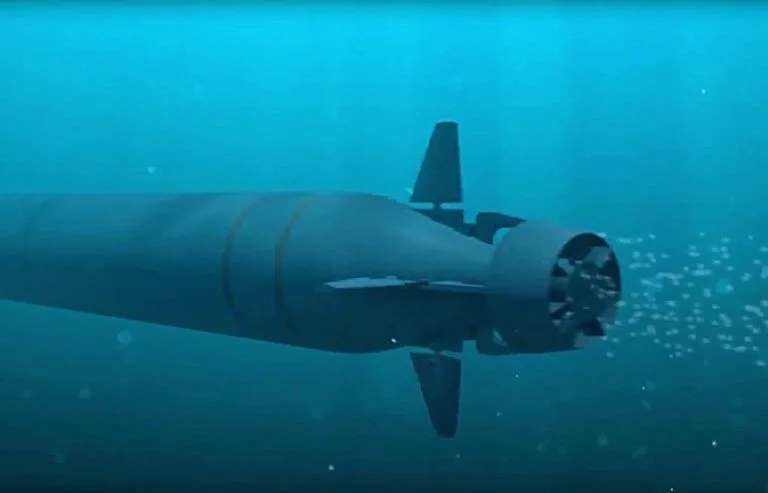
The Khabarovsk is configured to carry six Poseidon drones, stored in special floodable side hangars. Launch occurs through oversized bow openings, similar to large-caliber torpedo tubes. In addition to these compartments, the unit has space for heavy conventional armaments, although to a lesser extent than traditional attack submarines [cite: 1].
The Poseidon system (coded by NATO as Kanyon) redefines the parameters of the underwater threat [cite: 1, 5]:
- Dimensions and performance: described by experts as an autonomous intercontinental torpedo, it has an estimated length between 20 and 24 meters and can exceed 130 km/h.
- Autonomy: its internal nuclear propulsion gives it virtually unlimited range, freeing it from conventional logistical limitations.
- Warfare potential: it can be armed with nuclear warheads with an estimated power between 2 and 10 megatons, capable of devastating ports and coastal infrastructures not only through the explosion but also through massive and prolonged induced radioactive contamination.
In 2025, Moscow confirmed the success of the nuclear reactor activation tests during underwater navigation, marking a decisive progress towards the full operational capability of the system [cite: 1].
The Six Pillars of the Russian Submarine Fleet
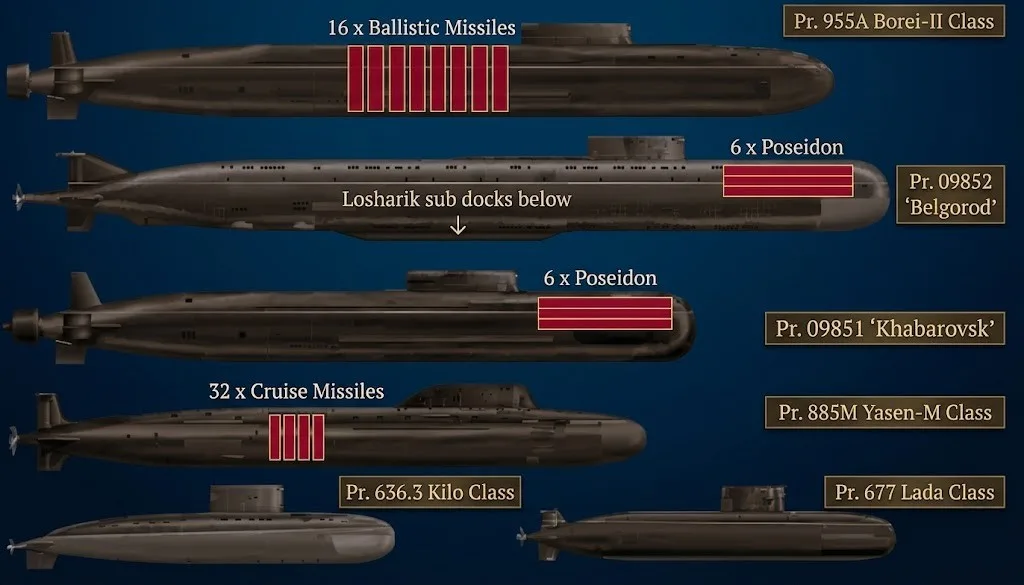
The Khabarovsk is part of a broader and more varied mosaic that makes up the current underwater force of the Kremlin:
- Borei-A Class (Project 955A): Strategic ballistic missile submarines that form the backbone of Russian nuclear deterrence, each capable of carrying 16 Bulava intercontinental missiles.
- Belgorod Class: A colossal special mission submarine. In addition to serving as a platform for the Poseidon system, it operates as a mother ship for deep-diving pocket submarines (like the Losharik), usable for intelligence and sabotage operations on underwater cables.
- Khabarovsk Class (Project 09851): More compact than the Belgorod, but entirely dedicated and optimized as a strategic carrier for the six Poseidon torpedoes.
- Yasen-M Class: Powerful nuclear-powered attack submarines with pronounced stealth capabilities [cite: 6]. They are armed with a combination of long-range Kalibr cruise missiles, Oniks supersonic anti-ship missiles, and the latest Zircon hypersonic vectors.
- Lada Class: Latest generation conventionally powered (non-nuclear) attack submarines [cite: 7]. Russia continues to invest in smaller and more economical vessels compared to the US, designed to integrate air-independent propulsion (AIP) systems in the future.
- Improved Kilo Class: Evolution of a project from the 1980s, these extremely quiet diesel-electric submarines have been upgraded to launch Kalibr cruise missiles directly from the torpedo room.
Future Horizons
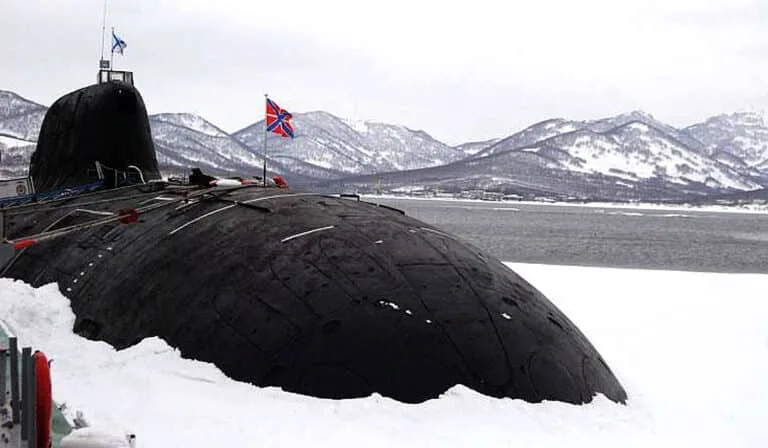
The Khabarovsk, designed by the Rubin Central Design Bureau and built at the Sevmash shipyards in Severodvinsk, represents the spearhead of this asymmetric strategy [cite: 1]. The naval expansion plan also includes the development of additional support units, including the Ulyanovsk program and the evolution known as Project 09853.
Although the diversification into so many different classes is considered less efficient from a logistical and industrial standpoint, it allows Moscow to deploy unique platforms, designed for specific functions that have no direct counterpart in Western navies.






Comments
No comments yet. Be the first!