




In recent weeks, the crisis between Iran, Israel, and the United States has accelerated a predictable dynamic: Gulf countries — exposed to missiles and drones — are asking European partners for air defense and anti-drone systems. In Parliament, Defense Minister Guido Crosetto confirmed explicit requests, particularly citing the SAMP/T (MAMBA) and anti-UAS systems, but also warned: it is a “very delicate” issue because these capabilities are already limited and heavily demanded by European needs and support for Ukraine.
The point for Italy is not just to “help friendly countries,” but to understand if — and at what cost — it can do so without creating a gap in national protection at a time when the threat from the sky is becoming broader, more hybrid, and, above all, more difficult to stop.

The Uncomfortable Question: Can an Iranian Missile Hit Italy?
On paper, Iran possesses the largest missile arsenal in the Middle East and has claimed (for years) a self-imposed limit of about 2,000 km for ballistic missiles, although there are recurring discussions about potential capabilities beyond that threshold.
With 2,000 km, the range certainly covers the regional chessboard (Israel and bases/targets in the broader Middle East). However, to credibly reach Italian territory, geography (launch points), flight profiles, and especially operational demonstrations come into play.
The discussion is different for some cruise capabilities: various analyses cite Iranian missiles with declared or estimated ranges even in the order of 3,000 km, which “in theory” would extend the range to the Mediterranean. But between “theoretical range” and capability actually deployable against a NATO country (defenses, intelligence, pre-alert, reaction), there is a huge gap. Even Reuters, in summarizing Iranian capabilities, highlights the combination of ballistic and cruise missiles with high ranges as an element of strategic pressure, despite uncertainties and political/technical limits.
Therefore: the probability of a direct Iranian attack on Italy today is not the most likely scenario, but it is no longer prudent to think only in terms of “impossible”. The trajectory of recent crises shows that drones and missiles are used for political messages and deterrence, and that escalation and incidents can widen the theater.

Why Crosetto Talks of a “Delicate Issue”: Few Resources, High Demand
Crosetto said a key thing: sending systems to the Gulf is delicate because those same capabilities are also needed to protect Italian assets in the region and because, more generally, availability is compressed.
Reuters summarizes the same concept: SAMP/T and related capabilities are already employed/allocated towards Europe and Ukraine, and “further availability” is difficult.
Practically speaking, Italy does not have “dozens” of long-range batteries ready to rotate: various reconstructions indicate a limited number of SAMP/T in service, while modernization and “new generation” programs are underway.
And the Army also recalls that the SAMP/T has been deployed abroad (for example in Kuwait 2021-2024), precisely to testify how these capabilities are already “stretched” between national needs and missions.
The Anti-UAS Issue: “We Are Behind” Is the Most Urgent Alarm
There is also a second leg, often underestimated: drones. Crosetto stated in a hearing that, compared to that type of attacks, Italy and Europe are behind, because intercepting swarms, low profiles, and economic threats is more complex (and expensive) than stopping traditional aircraft.
This makes the idea of sending anti-UAS capabilities to the Gulf even more sensitive: if the blanket is short, removing sensors, jammers, ammunition, or units dedicated to close defense risks leaving vulnerabilities precisely where Italy acknowledges having a delay.
And Ships with SAM Assets? A Precious (and Not Infinite) Resource
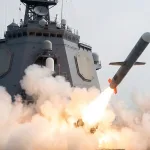
Part of Italy's “real” defense — especially to protect a naval group or an area of interest — also comes from the sea, with units equipped with missiles like Aster 30 and integrated air defense systems. The Navy has documented recent tests and qualifications on PPA platforms with Aster 30, and specialized analyses describe the integration of onboard systems (SAAM-ESD) on units like the FREMM/PPA.
Here too, the point is simple: if ships and ammunition are used in “shield” missions far away, the readiness available for surveillance and defense in the national area and the broader Mediterranean (where Italy has direct and continuous interests) is reduced.

What “Reflect Before Sending” Means: Minimum Criteria of Strategic Common Sense
If Rome decided to contribute to the defense of the Gulf, the reflection should not be an ideological “yes/no,” but a concrete verification on four questions:
- What is the direct threat to Italy (today and in case of escalation) and what “gaps” remain without those capabilities?
- What is the real effect of the transfer: complete battery? module? temporary rotation? only mediation with partners?
- Who covers the gap: NATO/EU? US/allied assets? or does it remain uncovered?
- What is the plan for replenishment (ammunition, maintenance, training) and in what time frame?
Crosetto, in fact, has already set the perimeter: requests exist, but capabilities are scarce and already engaged
From here descends the central thesis: a deployment cannot become automatic, especially if it concerns “valuable” capabilities (anti-missile and anti-UAS) that Italy itself admits it does not have in abundance.
Conclusions
In strictly technical terms, the hypothesis that an Iranian vector could reach Italy is not impossible: the combination of missile types, flight profiles, and escalation scenarios makes it prudent not to exclude the risk a priori. However, the probability of a direct attack against Italian territory remains low today, because it would be a choice of enormous political-military cost and would open a confrontation with a NATO country, in a context where Tehran tends to use the missile tool mainly as a regional lever and deterrent.
This very assessment — possible but unlikely — allows for a realistic consideration of a response to Gulf requests: Italy could send for a limited period some requested air defense/anti-UAS assets (for example modules, specific capabilities, personnel, or a temporary rotation), provided that the operation is calibrated and does not erode the already compressed national security, as Minister Crosetto highlighted on the “delicate” nature of the decision.
The balance line, therefore, is not between “send yes” and “send no,” but between temporary and sustainable deployment and transfers that further deplete national readiness: minimum availability thresholds at home, defined rotations, coverage/compensation with allies where possible, and a clear plan for replenishment of ammunition, maintenance, and training. In this framework, Italy can contribute to the defense of strategic partners without turning an unlikely risk into a certain vulnerability.



Comments
No comments yet. Be the first!