



The meeting held in Tokyo on January 16, 2026 between the Italian Prime Minister, Giorgia Meloni, and the Japanese Prime Minister, Sanae Takaichi, marked a historic turning point in relations between Rome and Tokyo. On the occasion of the 160th anniversary of diplomatic relations, the two leaders elevated the bilateral relationship to a "Special Strategic Partnership", consolidating an axis that unites the Mediterranean and the Indo-Pacific.
The Political Understanding between the "First Women"
The meeting was characterized by a strong personal and political harmony. Both conservatives and the first women to lead their respective governments, Meloni and Takaichi emphasized how cooperation between like-minded nations is the most effective response to current systemic threats.
"In cooperation, there is never an active subject and a passive subject. There is always something that arises from joint work. Exactly what Italy and Japan do." — Giorgia Meloni

The Heart of Defense: The GCAP Program
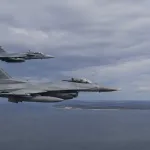
The fundamental pillar of the meeting was the Global Combat Air Programme (GCAP). This project, which involves the collaboration of Italy, Japan, and the United Kingdom, aims to develop the sixth-generation fighter jet that will replace the current Eurofighter Typhoon and the Mitsubishi F-2 by 2035.
Features of the Fighter of the Future:
- Advanced Stealth Technology: Ability to evade next-generation radars.
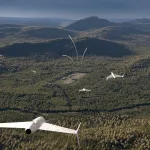
- Integration with Drones: The fighter will act as a "mother platform" to coordinate swarms of unmanned aircraft.
- Artificial Intelligence: Massive data management to assist the pilot in fractions of a second.
- Industrial Synergy: Involvement of giants like Leonardo (Italy), Mitsubishi Heavy Industries (Japan), and BAE Systems (UK).

Other Military and Economic Security Agreements
Besides the GCAP, the summit produced significant agreements on several fronts:
- ACSA (Acquisition and Cross-Servicing Agreement): The agreement facilitating the exchange of supplies and services between the Italian Armed Forces and the Japanese Self-Defense Forces has come fully into force.
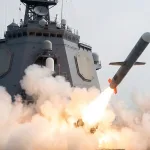
- Maritime Security: The presence of the Italian Navy in the Indo-Pacific was confirmed, with Italian ships scheduled to call at Japanese ports between August and September.
- Supply Chain Resilience: The two leaders agreed to cooperate to ensure the security of critical minerals (rare earths), reducing dependence on third parties (with a clear reference to China) for defense and energy transition technologies.
Summary of Key Points
The Rome-Tokyo axis thus projects towards a future where military technology and geopolitical stability go hand in hand, uniting two nations that, although geographically distant, today share the same strategic objectives.
Would you like me to delve into the technical details of the GCAP weapon system or the specific aspects of the critical minerals security agreement?



Comments
No comments yet. Be the first!