


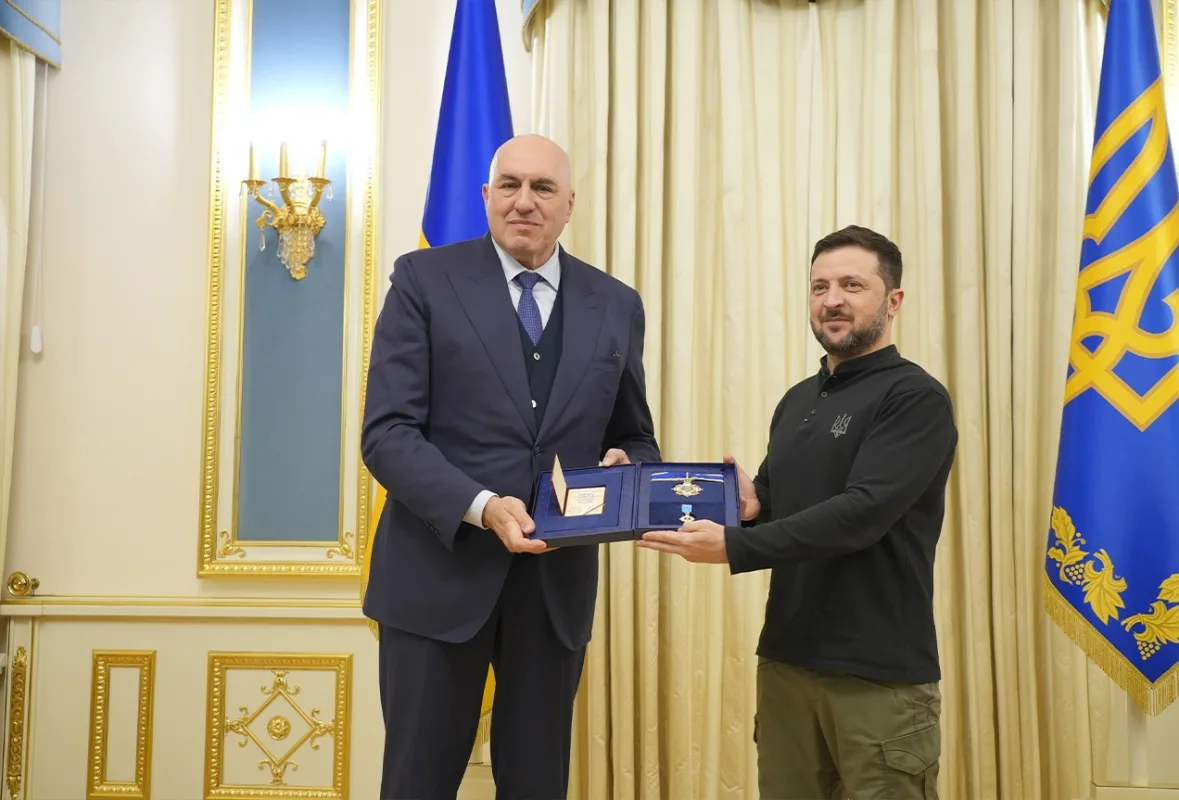

The meeting in Rome between Ukrainian President Volodymyr Zelensky and Defense Minister Guido Crosetto marks a fundamental shift in the relationship between the two countries. It is no longer just about emergency supplies, but a true strategic industrial partnership. The focus of this new phase is the so-called "Drone Deal", an agreement aimed at transforming Italy into an integrated production and technology hub with the field experience of Kiev's forces.

The German Model: A Warning for Italy
While Italy defines the details, Germany has already charted an aggressive and forward-looking course. The agreements signed in April 2026 between Berlin and Kiev show how industrial cooperation is not just an act of solidarity, but an operation of national security and technological innovation:
- High-impact Joint Ventures: Companies like Quantum Systems and Auterion Airlogix have already created joint ventures to produce thousands of AI-guided attack drones and interceptor drones.
- Industrial-scale Production: The German model envisions systems, born under Ukrainian fire, being produced on European assembly lines, ensuring massive volumes and NATO standards.
- Air Defense: Berlin is funding hundreds of Patriot missiles and dozens of Iris-T launchers, integrating Ukrainian combat data to perfect defense technologies against Russian drones and missiles.

The Italian Opportunity: Air Defense and "Unmanned" Systems
Italy has the industrial skills to compete and collaborate in this new ecosystem. The Crosetto-Zelensky meeting identified key sectors where Italian excellence (from Leonardo to Fincantieri, including the technological SME supply chain) can make a difference:
- Unmanned Systems (Drone Deal): Ukraine has transformed warfare with the massive use of drones. Italy can offer miniaturization capabilities, advanced guidance systems, and, above all, the industrial scalability needed to produce thousands of units.
- Air and Missile Defense: Following the success of the SAMP/T systems, cooperation in developing new interception capabilities is vital. Ukraine today is the world's largest "laboratory" for testing the effectiveness of systems against hypersonic threats and drone swarms.
- The Maritime Sector: The official note explicitly mentions naval cooperation. With the Ukrainian fleet to be rebuilt, Italian expertise in shipbuilding and coastal surveillance systems represents a natural asset.

The Exchange of "Lessons Learned"
One of the most significant points of the meeting is the exchange of experiences. Ukraine is no longer just a receiver of technology; it is a provider of tactical data and software solutions born from wartime necessity (such as the DELTA systems or Avengers).
"Future cooperation will not be one-way. Italy needs the lessons learned from Ukrainians on the modern battlefield to make its weapon systems resilient to modern electronic threats and attrition warfare."
Conclusion: A Common Security Framework
The "Drone Deal" and the strategic partnership are not just economic contracts; they are the tools with which Italy can ensure that its Defense industry remains at the global forefront. Following the example of German joint ventures, Italy must accelerate the transition towards integrated co-production.
Supporting Ukraine today means designing together the weapons that will defend Europe tomorrow, combining Italian manufacturing ingenuity with the extreme innovation capability developed in Kiev.



Comments
No comments yet. Be the first!