


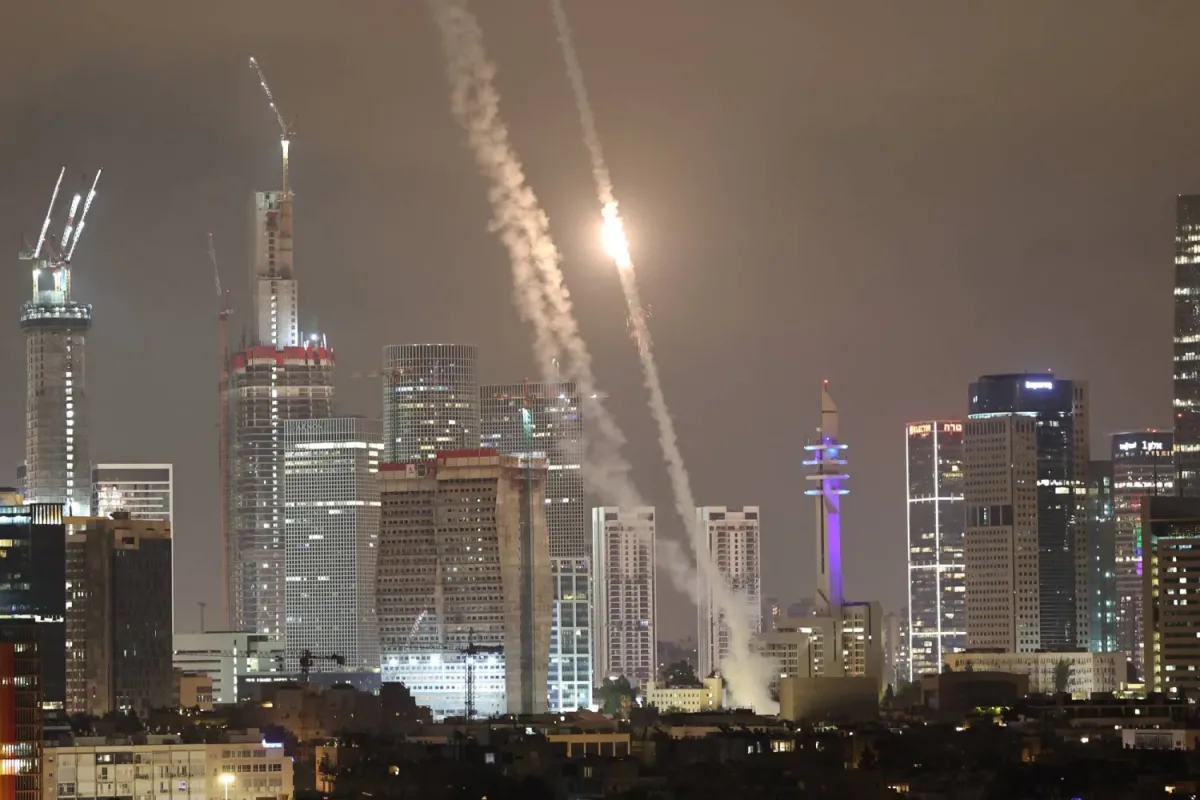

Israeli air defenses are considered among the most advanced in the world. That's why it makes news when missiles manage to get through: it happened on the night between March 21 and 22, 2026, when two Iranian ballistic missiles hit Arad and Dimona in southern Israel, prompting the army to open an investigation into the missed interceptions. The impacts caused extensive damage to residential buildings and showed, once again, that even a very sophisticated system can be penetrated.
When talking about the Israeli shield, the name Iron Dome is often used, the “Iron Dome”. In reality, it is only one of the layers of a much broader network. Israel indeed has a layered air and missile defense, built over time to respond to different threats: short-range rockets, drones, cruise missiles, and ballistic missiles. Its strength lies precisely in this multilayer architecture, where each system has a specific task and intervenes depending on the type of attack.
The innermost layer is precisely Iron Dome, designed to intercept close threats: rockets, mortar shells, some drones, and other short-range targets. It works with three main components: a radar that detects the launch, a command and control system that calculates the target's trajectory and decides if it truly constitutes a threat, and finally the Tamir interceptors, launched against projectiles heading towards populated areas or sensitive infrastructure. One of its most notable elements is precisely this: it does not attempt to hit everything, but only what risks causing real damage.

2. The Other Layers: David’s Sling, Arrow, and the New Iron Beam
Above Iron Dome is David’s Sling, the “David's Sling”, which occupies the intermediate level of defense. It is designed to intercept more challenging threats, such as medium-range ballistic missiles, cruise missiles, aircraft, and drones. Essentially, it is positioned between Iron Dome, which protects against closer threats, and the more advanced systems intended for ballistic missiles launched from far away.
The outermost layer is formed by Arrow 2 and especially Arrow 3, developed to tackle long-range ballistic missiles, those that can come from countries like Iran or Yemen. Arrow 2 intercepts in the atmosphere, while Arrow 3 is designed to hit targets outside the atmosphere, destroying them as far as possible from Israeli territory. The idea is to stop the threat before it re-enters and before it can cause damage on the ground.
This network is complemented by other support systems and cooperation with the United States, which in recent years have helped Israel strengthen both operational capabilities and the production of interceptors. Then there is Iron Beam, the new laser defense system that Israel considers the next technological leap. Its main advantage is economic: each interception costs much less compared to one carried out with a missile. For now, however, Iron Beam does not replace Iron Dome: it integrates it, adding an additional level of protection against closer threats.

3. Why Missiles Can Still Get Through
The case of Arad and Dimona clearly shows why even a very efficient shield can fail. The first reason is saturation: if many missiles arrive almost simultaneously, perhaps from different directions, the number of targets can put pressure on radars, launchers, and interceptor stocks. The second concerns the nature of the threat: Iranian ballistic missiles are much faster and more complex than the homemade rockets against which Iron Dome was originally conceived.
There is also a third factor: the evolution of Iranian arsenals. Some missiles can carry submunitions or adopt flight profiles designed precisely to make interception more difficult. In these cases, having an advanced system is not enough: all levels of defense must work in a coordinated manner and be able to react very quickly. When this does not happen, even partially, the missile can reach its target.
For this reason, when a missile gets through, it does not automatically mean that “Iron Dome did not work”. More often it means that the threat belonged to another category, that the interception failed due to a combination of technical and operational factors, or that the attack was designed precisely to challenge a multi-layered defense. This is the essential point: Israeli air defenses remain among the most effective in the world, but they are not invulnerable. Their strength is in the combination of specialized systems; their weakness emerges when the adversary manages to saturate them, complicate the target profile, or strike at a point where one of the layers is not enough.



Comments
No comments yet. Be the first!