


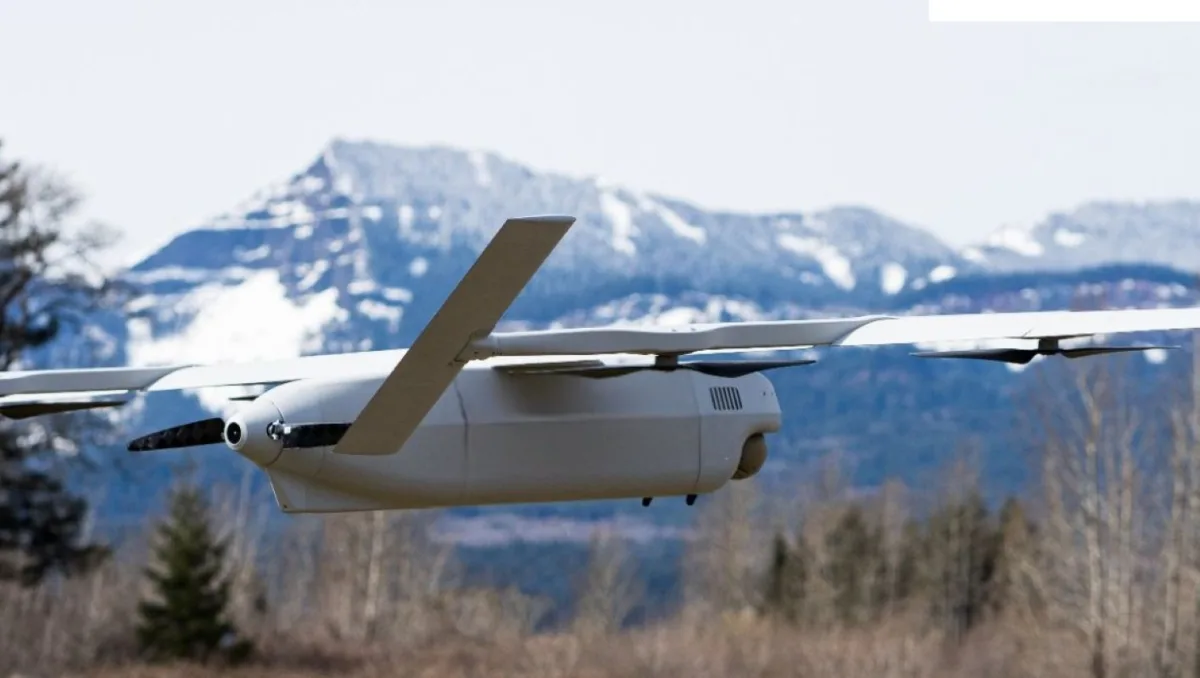

In the rapidly evolving landscape of unmanned aerial vehicles (UAVs), hydrogen propulsion is emerging as one of the most promising frontiers, offering unique advantages in terms of autonomy and stealth. It is precisely in this sector that the latest, impressive milestone achieved by Zepher Flight Labs (ZFL), a Washington-based company pushing the limits of high-altitude drone innovation, fits in.
The protagonist of this breakthrough is the Z1, a vertical take-off and landing (VTOL) drone powered by a hydrogen fuel cell. Recently, the Z1 successfully completed a crucial test, demonstrating exceptional capabilities in conditions simulating a real intelligence, surveillance, and reconnaissance (ISR) mission.

A Record Flight and Incredible Capabilities
Starting with its maximum take-off weight, the Z1 executed an impeccable vertical climb, reaching the remarkable altitude of 12,000 feet (almost 3,700 meters). This flight sets a new record for this phase of testing, confirming the structural stability and flight dynamics of the system even at full power and high altitude. The mission was conducted in coordination with the United States Army Research Laboratory, highlighting the strategic importance of this technology.
But the Z1's performance doesn't stop there. This drone, classified as Group II, is designed to exceed 10 hours of continuous flight and can reach a potential altitude of 20,000 feet (over 6,000 meters). Its hydrogen propulsion architecture not only ensures zero emissions operation but also offers a fundamental tactical advantage: an extremely low acoustic and thermal signature. This makes it difficult to detect by enemy radar, giving it unprecedented stealth capability.
Thanks to its VTOL capability, the Z1 can also operate in remote areas without landing strips, making it ideal for a wide range of missions, including surveillance, disaster relief, or supply transport in complex environments.

Designed for Field Deployment
"This flight is not an endpoint, but another data point in a trajectory defined by engineering discipline and operational relevance," commented Michael Buscher, president of Heven's U.S. operations, the parent company of ZFL. "We are not building for demonstrations, but for field deployment, which means proving capabilities in the toughest, highest, and most challenging conditions."
This milestone comes at a strategically significant time, just days after Secretary of Defense Pete Hegseth signed a policy directive aimed at accelerating the development and adoption of domestically produced drones. This initiative paves the way for innovative platforms like the Z1, highlighting the growing interest in advanced and autonomously produced technological solutions.
Zepher Flight Labs' push is further strengthened by strategic partnerships, such as the one with Mach Industries, aimed at expanding U.S. supply chain production and resilience.
Key Specifications of the Z1 Drone
- Payload Capacity: Up to 4.5 kg (10 lbs)
- Maximum Take-off Weight: 25 kg (55 lbs)
- Endurance: Over 10 hours
- Speed: Up to 28 m/s (64 mph)
- Assembly Time: Less than 5 minutes, tool-free
Main Features
- Payload Flexibility: Can carry up to 4.5 kg with ease, quickly adapting to different mission needs.
- Hydrogen Endurance: Flies for over 10 hours, ensuring prolonged missions.
- VTOL Precision: Takes off and lands anywhere, eliminating the need for specific infrastructure.
- Modular Design: Allows for rapid adaptability and maintenance.
- Silent Operations: Operates with minimal acoustic and thermal signature, making it nearly invisible.
The Z1 redefines UAV technology with its precision VTOL capabilities, extended endurance, and modular design. Whether for ISR missions, defense, or heavy sensor use, it offers unparalleled flexibility and operational efficiency, marking a significant step towards the next generation of drone innovation.




Comments
No comments yet. Be the first!