


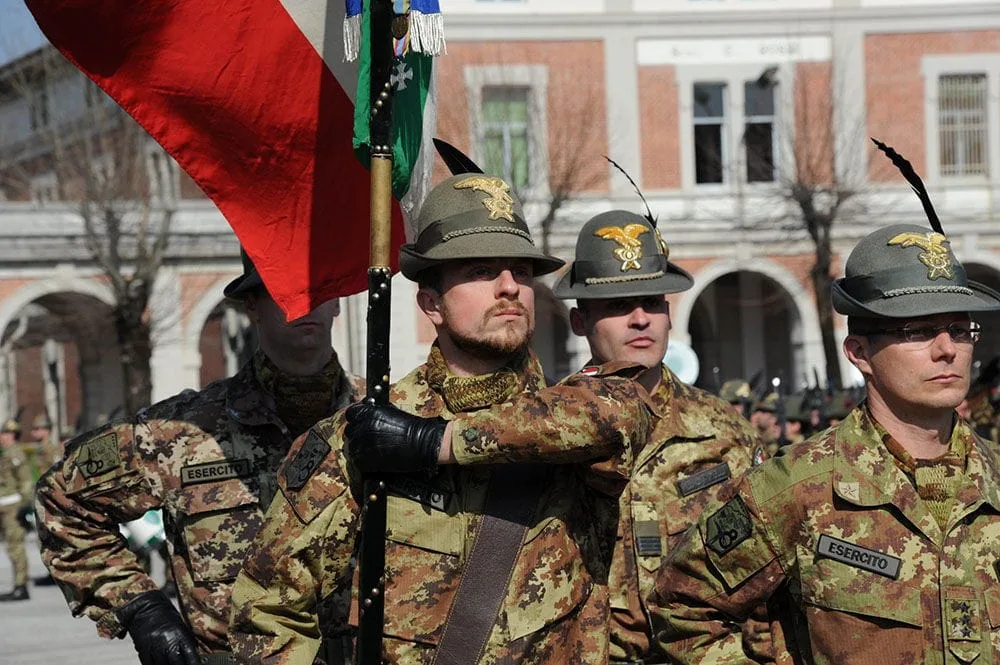
The Alpini are an extraordinary military component of the Italian Army highly specialized in mountain operations. They are light infantry that has gained great fame for their operational capabilities and specific training for the mountain environment. Their identity is deeply rooted in the traditions and values they have developed over the years.
Origins of the Alpini Corps
Various corps have been considered ideal precursors of the Alpini, from Roman military units like the legio iulia alpina and the cohorte montanorum to the hunters of the Alps engaged as Garibaldi volunteers in the second and third wars of independence. However, at the completion of the Risorgimento, there were no specific forces organized by the State for the defense of the Alpine passes. During the reorganization of the Italian army initiated following the Prussian success in the war against France, the "Ricotti reform" was launched by General and Minister of War Cesare Francesco Ricotti-Magnani, which provided for a restructuring of the armed forces conducted on the Prussian model, based on the general obligation to a short-term military service, in such a way as to subject all those registered on the conscription lists who were physically fit to military training, abolish substitution, and transform the Italian army into a numerical army, an expression of the nation's human potential.
We therefore apply the Prussian system because this is what the necessities of the times command; our country needs to militarize and discipline itself as our army needs to cultivate itself, and compulsory military service will benefit both.
Nicola Marselli in "Events of 1870-1871"
In the innovative fervor within the Ricotti management, the problem of defending the Alpine passes was also addressed. Until then, it was believed that a real defense of the passes was impossible and that a potential invader should be hindered by the fortified barriers of the valleys, but definitively stopped only in the Po Valley. This tactic would have left all the Alpine passes from the Simplon to the Stelvio and all of Friuli completely unguarded, that is, the most direct and powerful invasion line available to the Austro-Hungarian Empire.

In the autumn of 1871, the staff captain, former geography teacher, Giuseppe Perrucchetti, prepared a study entitled Considerations on the defense of some Alpine passes and proposal for a territorial military organization in the Alpine area, resuming a previous study from 1868 by General Agostino Ricci in which he argued the principle that the defense of the Alps should be entrusted to the mountain people. Born in 1839 in Cassano d'Adda, therefore not in the mountains, Perrucchetti, who was not an Alpino, was in fact a Captain of the Bersaglieri, and never became one, was a passionate scholar attentive to the military operations conducted in previous centuries in the Alpine territories, and from the beginning he grasped the contradictions that the Italian recruitment system entailed.
Due to the complex recruitment system concentrated in the plain, at the time of mobilization, men would have had to flow from the Alpine valleys to the inhabited centers to be equipped and framed, then return to the valleys to withstand the impact of an enemy who in the meantime could have organized and deployed their forces at best. In this way, a chaotic concentration of men would have been created at the military districts intended to supply the personnel who had descended to the valley along with those stationed in the plain, with consequent and inevitable delays. To this would have been added - always according to Perrucchetti - another serious limitation: the mobilization needs would have led to the creation of heterogeneous battalions composed of provincials from the plain little suited to mountain warfare and not familiar with the places.
In 1872, Perrucchetti signed an article for the Military Review, in which he addressed the problem of defending the Alpine passes and suggested some innovations for the military organization in the border areas. In the border areas, local mountaineers would have been enlisted, similarly to the Prussian territorial organization, for which the Alpine area would have been divided by valleys into many defensive units, each constituting a small military district. In each defensive unit, the recruited forces would have been formed on a certain number of companies grouped around an administration and command center, in such a way as to have as many defensive units as there were Alpine passes to protect. According to Perrucchetti, the soldiers destined for these units had to be accustomed to the harsh climate, the fatigue of moving in the mountains, the pitfalls of a rugged and dangerous terrain, and the discomforts of the weather; for their part, the officers had to be direct and profound connoisseurs of the territory, mountaineers before being military. Finally, relations with the civilian population had to be close and spontaneous, in such a way as to benefit from the function of informers and guides that the mountaineers could perform for the benefit of the troops. Local recruitment, in addition to providing men already accustomed to the harsh life in the mountains, was a strong element of cohesion among the troops: by bringing together in the companies the young people from the same valley, and stationing them in their land of origin, significant advantages were obtained without exposing to risks.
Due to the budget problems affecting the Ministry of War, and thus fearing an unfavorable vote from Parliament, Ricotti did not present a comprehensive plan for the creation of a new Corps, but included it in a general restructuring of military districts, which were to increase from fifty-four to sixty-two, along with the creation of a limited number of alpine companies, restricted to fifteen. The project was supported by the Minister of War of Quintino Sella's government, Ricotti-Magnani, who shared the need for the defense of alpine passes and prepared the decree in which the new Corps was established, practically in secret, disguised with administrative duties. The decree was then signed by King Vittorio Emanuele II on October 15, 1872 in Naples. In the ministerial report accompanying Royal Decree No. 1056, the establishment of the first alpine companies was mentioned. Shortly thereafter, on the occasion of the call to arms of the 1852 class, the formation of the first fifteen alpine companies began, which would be established within a year.
Evolution, armament, and uniforms
The rapidity with which the Ministry decided on the establishment had negative repercussions on the number and especially on the equipment. The uniform was the same as the infantry, with evident inconveniences in relation to mountain needs; felt kepi, cloth coat worn directly over the shirt, canvas gaiters, and low shoes. The armament consisted of a recent model rifle, the "Vetterli 1870", in line with those of other European armies, but excessively heavy and long for movements on rough terrain, while officers were equipped with the saber mod. 1855 and the obsolete "Lefaucheaux" revolver. For the transport of materials, each company had only one mule and a baggage cart, so as to fill the soldiers' backpacks not only with personal effects but with everything useful to the company, from food supplies to ammunition, to firewood itself.
The organizational shortcomings, however, did not hinder the affirmation and growth of the Specialty, whose companies in 1873 were increased to twenty-four and divided into seven battalions.
The organic evolution was accompanied by a progressive adaptation of uniforms and armament. Since 1873, the distinctive element of the Corps became the "Calabrese" hat with the black feather, adorned with an emblem representing an eagle with outspread wings surmounted by a royal crown.
In October 1874, the tailcoat was replaced with a less cumbersome gray-blue jacket, over which a blue bersagliera-style cloak was worn, and low shoes were replaced with high boots.
Meanwhile, since 1873, Mountain Artillery had been established, and four years later, the first regiment was formed. It was a specialty capable of operating in high mountains to provide adequate fire support to the alpini, capable of operating in areas inaccessible to towed artillery. Mountain batteries and alpine units soon became accustomed to living and maneuvering together.
In 1875, realizing that the area assigned to each company was too vast, the battalions were increased to ten for a total of thirty-six companies, each with a captain, four junior officers, and 250 troops.
In 1882, the Minister of War Emilio Ferrero decided on a restructuring of the units, and with the Royal Decree of October 5, the ten battalions with the thirty-six companies were disbanded and regrouped into the first six ternary regiments (the 1st, 2nd, 3rd, and 4th in Piedmont, the 5th in Lombardy, and the 6th in Veneto), composed of three battalions, which became seven in 1887 and eight in 1910.
In the summer of 1883, the uniform was characterized by the color that would distinguish it from other corps and specialties, green, a color that two years later was extended to all the insignia and trimmings of the uniform.
From 1888, mountain artillery was also recruited based on origin.
Regarding armament, the Wetterli rifle 1870 was transformed in 1887 into a standard repeating weapon thanks to the project of artillery captain Giuseppe Vitali, who also gave his name to the new weapon, namely the "Vetterli-Vitali Mod. 1870/87" rifle. Despite Vitali's efforts, the need for lighter ammunition led the Small Arms Commission to adopt the 6.5 mm caliber and in September 1890 to entrust the Kingdom's arms factories with the study of a new rifle. Among the various models presented, the one from the Turin arms factory was chosen, the "Carcano Mod. 91", shorter and more manageable. Parallel to the Mod. 91 for the troops, the armament of the alpine officers was also renewed with the saber Mod. 1888 and the Bodeo Mod. 1889 standard repeating revolver.
The Baptism of Fire

Towards the end of the 19th century, Italy too was struck by the "African fever", driven by the desire to seek new "living spaces" on par with other European powers. The first group of Alpini destined for Africa was formed by volunteer elements taken from the 69th company of the Gemona Battalion, the 56th company of the Verona Battalion, and the 48th company of the Tirano Battalion. The formation Battalion, composed of three companies and commanded by Major Domenico Cicconi, had a strength of 5 Officers plus a Medical Lieutenant and 150 non-commissioned officers and troops.
It departed from Chiari on February 19, 1887, destined for Naples, where it embarked for Massawa on February 21, 1887. The formation Battalion participated in the most important military actions in Eritrea of that era: Tokakat, Monkullo, Gherar, Saganeiti, and Saati without suffering losses, but despite not having fallen in combat, 14 Alpini died, including their own commander Major Cicconi, who was replaced by Major Pianavia Vivaldi, victims of the climate and tropical diseases. The remaining 445 Alpini were re-embarked to Naples on April 22, 1888, having given an excellent performance and left a good reputation.
In the winter of 1895/96, Prime Minister Francesco Crispi sent a second contingent of Alpini and a mountain artillery battery to Ethiopia as reinforcements requested by General Oreste Baratieri, governor of the colony, after the failures of Amba Alagi and Macallé.
Born for the defense of the Alpine arc, this mountain infantry corps instead had its baptism in pitched battle at the Battle of Adwa in Ethiopia, during which the Alpini suffered unspeakable hardships, and where at dawn on March 1, 1896, despite the initial confidence in the enterprise, the 15,000 soldiers of General Baratieri, including 954 Alpini, were overwhelmed by over 100,000 warriors of Menelik II. Of the 954 Alpini who left Italy under the command of Lieutenant Colonel Davide Menini, only 92 remained alive, and Menini himself was posthumously awarded the silver medal.
The entire mountain battery, called "the Sicilian", whose gunners came from the Enna area, sacrificed itself on its pieces. The first Alpino to be awarded the gold medal for military valor was Captain Pietro Cella, born in Bardi, who also died that morning at Adwa. An honorable epilogue, despite the defeat being the inevitable conclusion of a poorly and hastily organized mission.
On the Eve of World War I
In the fifteen years between the beginning of the century and the outbreak of World War I, the Alpine troops did not undergo significant transformations, except perhaps for the introduction of skiing.
While since the early 19th century in the armies of Northern Europe the use of ski-equipped troops was well known, and for patrol and relay use can even be dated back a few centuries earlier, in Italy the Alpini experimented with them only in the winter of 1896/'97, on the initiative of Artillery Lieutenant Luciano Roiti. During that winter, the 3rd Regiment conducted several experimental exercises, with encouraging results that led to the organization of specific training camps at the company level with the hiring of Swiss and Norwegian instructors. In just a few years, skis became a stable part of the Alpini's equipment, and by decree of November 25, 1902, the Minister of War Giuseppe Ottolenghi ordered their use in the regiments.
In the early years of the century, a debate was opened on the opportunity to unite the Alpini units with the Bersaglieri, creating a single corps. The Bersaglieri, since their origins in the Savoy Kingdom, were normally employed in the mountains, and the physical build on which they were selected was the same as the Alpini. However, the special needs of mountain warfare did not fit well with larger troop groupings that this union would have brought. This hypothesis was therefore shelved for several decades.
From the six regiments established in 1882 and the seventh formed in 1887, the units were increased by a few thousand between 1908 and 1909 with the establishment of the eighth regiment after the opening of the Simplon railway imposed greater defensive needs in the Ossola Valley.
On the initiative of Luigi Brioschi, president of the Milanese section of the Italian Alpine Club, in 1908, after almost two years of experimentation, a gray-green uniform was adopted, and two years later the hat was also adapted to the new colors. As for armament, the novelty of the early years of the century was the machine gun, which became established after the Russo-Japanese conflict of 1905. The first machine guns used by the Alpini were the Maxim Mod. 1906 (used in the Libyan campaign) and the Maxim-Vickers Mod. 1911 distributed starting from 1913.
In 1910, the formal sanction of the symbiosis between the Alpini and Mountain Artillery was achieved, with the adoption for the latter of the gray felt alpine hat with the feather, which, however, instead of being black was often brown not only for junior officers, as established by regulations, but also for non-commissioned officers and artillerymen. The colors of the pom-poms also changed accordingly.
On the eve of the First World War, three Mountain Artillery regiments were operational, totaling thirty-six batteries equipped with 65/17 cannons.
The Italo-Turkish War
The outbreak of the Italo-Turkish conflict for the possession of Libya in the autumn of 1911 meant a new operational deployment for the Alpine troops in Africa. On September 29, 1911, after the ultimatum was rejected, Italy declared war on the Ottoman Empire, and just a week later, on October 4, the first men of the expeditionary corps commanded by Lieutenant General Carlo Caneva landed in Tobruch.
What was supposed to be an easy and triumphant occupation was actually hindered from the start by the limitations of a hastily improvised campaign conducted with a complete underestimation of the enemy forces. The Turkish troops, estimated at about 5,000 men in Tripolitania and 3,000 in Cyrenaica, withdrew inland, initiating significant resistance in the desert, also thanks to the support of the indigenous population. After the initial clashes, the scale of the conflict quickly became apparent; it was a difficult war for which the contingent had to be increased from the initial 35,000 men to over 100,000, where the environment and the hostility of the population made it impossible to maintain control of the occupied lands. In the end, the toll was 3,500 dead (including 2,500 Italians and about 1,000 Eritrean, Libyan, or Somali Ascari), 1,500 prisoners; 37 cannons and 9,000 rifles were the material losses.
The Alpine troops participated in the Libyan campaign with a large contingent: thirteen mountain batteries plus the battalions "Saluzzo", "Edolo", "Mondovì", "Feltre", "Vestone", "Ivrea", "Fenestrelle", "Verona", "Susa", and "Tolmezzo". These were not employed as autonomous units but were attached to infantry units, taking part in all significant battles, from Ain Zara (December 4), to Sidi Said (June 26-28), to Zuara (July 1912). After the signing of the Treaty of Ouchy, the battalions "Feltre", "Vestone", "Susa", and "Tolmezzo" remained in Libya with three mountain batteries gathered in the 8th "special" Alpine Regiment under the command of Colonel Antonio Cantore.
After a period of march training, the regiment had to adapt to fighting among the dunes against Berber tribes or against the Muslims of Cyrenaica or in the Tripolitanian hinterland in a war longer than expected, so much so that the first contingents that landed in Tobruch in October 1911 (like the 8th "special" Alpine Regiment) were still engaged in defending Tripoli and Homs from guerrilla actions by the indigenous population in May 1915, when Italy entered the war against the Austro-Hungarian Empire.
The First World War
On May 24, 1915, with Italy's entry into the First World War, the Alpini occupied important and rugged points, from the Stelvio Pass to the Julian Alps, passing through the Tonale Pass and Mount Pasubio. On that same day, the first soldier to lose his life among the Italian troops was an Alpino from the 16th Company of the Cividale Battalion, 8th Regiment, named Riccardo Giusto, who at 04:00 on May 24, while crossing the border on Mount Natpriciar, was shot by an Austrian sniper.
They participated in the most brutal battles, such as the one at Ortigara with the conquest of the mountain of the same name, the defeat at Caporetto, up to the resistance on Mount Grappa and the final counteroffensive by General Armando Diaz, which led to the victory of October 1918. The Alpini were the protagonists of a conflict fought almost entirely in the Alps, and on all fronts, from the glaciers of the Adamello to the Dolomite crags, from the Karst to Mount Grappa, from the plateaus to the Piave, suffering over 35,000 dead and missing and about 80,000 wounded.
Establishing the exact number of Alpini mobilized during the Great War is difficult. During the conflict, the Alpine troops reached their maximum development, counting eighty-eight battalions for three hundred and eleven companies, totaling just under 240,000 men, a purely indicative figure because the actual numbers varied and the gaps left by the fallen and wounded were filled, at least in part, by new recruits. Additionally, sixty-seven mountain artillery groups with a total of 175 batteries must be added to the sum. During this period, in fact, the Alpine recruitment areas were extended to almost all the mountainous districts of the peninsula.
Among the many military actions of the war involving the Alpini, some stand out for their dramatic nature, such as the conquest of Mount Nero, the war on the glaciers of the Adamello and Mount Cavento, and the battle of Ortigara, which caused thousands of casualties, especially among the Alpine units. These battles and all those in which the Alpini took part made these mountain troops a true symbol of the national effort.
From the Post-War Period to Fascism
Of the sixty-one Alpini battalions existing in November 1918, more than half were disbanded, and by the end of 1919, the eight regiments had almost entirely regained their 1914 structure. Already in the year following the end of the conflict, some returning Alpini officers, all passionate mountaineers from the CAI of Milan, decided to create an association among those who had served in the Alpini corps. Initially, it was thought to make it a subsection of the CAI, but the line of Arturo Andreoletti prevailed, who, considering the Club too exclusive, advocated for the creation of something autonomous, and on July 8, 1919, the Associazione Nazionale Alpini (ANA) was established in Milan at the headquarters of the Association of Surveyors, with Major Alpino Daniele Crespi as the first president. Andreoletti, still considered the founder par excellence, was later the first President elected by the Assembly of Delegates. Soon the association had its newsletter, the Alpino, born the same year on the initiative of the Alpini lieutenant Italo Balbo, later a well-known exponent of fascism.

In September 1920, the ANA organized the first national gathering on Mount Ortigara, which three years earlier had been the scene of very violent clashes with about 24,000 fallen, many of whom were Alpini, and from that first meeting, twenty more followed until June 1940, in Turin, when the outbreak of the Second World War suspended the event for seven years.
In 1925, the A.N.A. also incorporated the Ass. Artiglieri da Montagna, further consolidating the moral symbiosis between the two specialties of the respective Arms.
Meanwhile, the country was experiencing the strong social tensions of the immediate post-war period: the part of the population that had been on the margins of national life for decades now claimed a primary role, strengthened by the sacrifices endured in war, from food rationing to requisitions in the arms industry, and of course, looting and plundering in areas invaded by the enemy after Caporetto. The tensions were fueled by the workers who, to support the armaments industry's effort, had not been sent to the front and therefore had the opportunity to receive and spread the social demands that had led to the very recent revolution in Russia. Thus, a hostile climate was also created between veterans and workers, the former judging the latter as "slackers," who in turn reproached them for not having mutinied, and thus contributing to the great capitalist project that had undoubtedly profited economically from the war. The consequent public order needs, also linked to the objective structural and logistical difficulties of a country devastated in its economy, made demobilization a long and complicated operation and ensured that a force of about 300,000 men was maintained in arms, enough to keep theoretically suppressed units alive on paper.
The Alpini in the post-war period also distinguished themselves in roles different from those of the soldier. In 1928, the airship Italia flew over the North Pole and on its return, on May 25, it entered a tremendous storm that caused it to lose altitude until it crashed on the Arctic pack, where the command gondola was destroyed in the impact and ten men were thrown onto the ice, while the remaining six crew members remained aboard the envelope; nothing more was heard of them and the airship, among the ten was General Nobile, who managed to send an initial SOS message.
The first rescuers were the Alpini of the expedition led by the Alpino Captain Gennaro Sora, from Bergamo, who commanded a team formed, besides Sora, in the center of the photo, by the Alpini, from left, corporals Giulio Bich, Silvio Pedrotti, Beniamino Pelissier, sergeants major Giovanni Gualdi, Giuseppe Sandrini, Angelo Casari, Giulio Deriad, and Giulio Guédoz, who on June 18, 1928, set off towards the Pole in search of Umberto Nobile and his crew. However, Sora's expedition was unsuccessful, and the rescuers became castaways. Sora and the others were spotted by three Swedish aircraft on July 12, and although Nobile was eventually rescued by the Soviet icebreaker Krassin, Sora and his Alpini went down in history for the heroism shown in extreme conditions during over a month of searching for the missing.
It was in 1931 that the first skiing competitions for the alpine troops began, today known as Ca.STA (Ski Championships of the Alpine Troops). In 1934, the Central Military Mountaineering School was established in Aosta, to provide ski-mountaineering training for the alpine troops' cadres. The school would soon become a center of excellence in the sports and ski-mountaineering field, so much so that it was considered the "university of the mountains."
In the 1930s, the defense of the alpine borders was entrusted to the Royal Finance Guard, the Royal Carabinieri, the Border Militia, and alpine units, which were also tasked with guarding the new defensive works of the permanent fortification, then being designed and constructed along the Italian mountain border, from Ventimiglia to Istria.
This deployment for the alpine troops was in contrast with the doctrines of that time which foresaw the use of large Alpine units wherever the need arose, as these troops were suitable for dynamic actions and not militias destined for the defense of fixed points. Therefore, with the royal decree law no. 833 of April 28 1937, a special Corps called Guardia alla frontiera (GaF) was established, which had the task of permanently guarding the fortified system of the Vallo Alpino del Littorio, a fortified line along the entire Italian border. The GAF included Infantry, Artillery, Engineering, and Services units, but was often commanded by Alpine Officers and had as its headgear the alpine hat without the feather. Subsequently, due to the harsh living conditions at high altitudes, it was formally recognized as an Alpine unit but incongruously was not granted the use of the feather. The Guardia alla frontiera was thus assigned to the defense of national borders while the Alpini were intended for deployment wherever military needs required, including offensive actions and outside the alpine theater: for this purpose, in 1934, the Alpine divisions "Taurinense", "Tridentina", "Julia", and "Cuneense" were formed, with the addition of "Pusteria" in 1935. To these units were added the "Duca degli Abruzzi" battalion (attached to the Central Military Mountaineering School) and the "Uork Amba" battalion, and notably, five mixed battalions of the Military Engineering and Logistics Services (which then also included communications). Thus were born the supports of the Alpine Troops, as alpine specialties of their respective Arm of belonging, therefore in all respects belonging to the Corps, alongside the Alpini and the Mountain Artillery which from June 4 1934 was renamed Alpine Artillery to further emphasize the cohesion and new methods of employment, which provided for the temporary attachment of a mountain battery to an alpine battalion.
In total, the Alpini Corps came to include 31 battalions, 93 companies, 10 alpine artillery groups, and 30 batteries, organized into five divisional commands.
The development of alpine armament during the twenty-year period 1919-'39 was essentially limited to machine guns and curved trajectory weapons. In the first case, it was about creating an automatic weapon for collective fire that was lighter and more mobile than the heavy Fiat Mod. 14 machine gun, which was more suitable as a positional weapon. After various experiments, the light Breda Mod. 30 was developed, which became the accompanying weapon of the Alpine rifle squads. In line with the needs of mountain warfare, two new mortars were developed, the Brixia Mod. 35 of 45 mm and the 81 mm one. The lack of attention that the armed forces gave to the development of new weapons, especially the tank and anti-tank weapons, meant that the only cannon capable of stopping armored troops, the 47/32 Mod. 1935, was assigned only to three alpine divisions (Cuneense, Tridentina, and Julia) with consequent serious deficiencies in the face of the massive use of armored vehicles in other armies.
The Ethiopian War and the Albanian Campaign
The years 1935-'36 saw the Alpini still engaged in Africa and precisely in Ethiopia, where they landed at Massawa from where the Alpini of the 5th Alpine Division "Pusteria" participated in the war operations, with the battles of Amba Aradam and Amba Alagi. On March 31, there was the final battle of Mai Ceu, where the troops of Haile Selassie were forced to retreat and for the Emperor of Ethiopia, it was a defeat. For the Italian column formed by a thousand vehicles, the road to Addis Ababa was clear, and the "Pusteria", with only 220 losses, returned in April 1937.
After the operations in Albania during the Great War, less than twenty years later the Alpini landed again on the coasts of Durres and Vlore on April 7, 1939 at the behest of the Duce, who wanted to counterbalance the move of the German ally in Austria a few months earlier. It was an expedition marked by disorganization, so much so that the same mules embarked without saddles, harnesses, and halters began to escape from the port invading the streets of Durres. In the city, the Alpini remained for a couple of weeks, then they scattered throughout the country through the mountains that are accessible thanks to the roads built on that occasion by the military engineering.
The summer was particularly hot and the winter particularly harsh, malaria losses reached 30% of the personnel, and the Alpini also had to endure the humiliation of the fascist racial laws which in June 1940 imposed the removal of officers and soldiers of Slavic origin from the units, not only those from the areas annexed in the war of '15/'18, but also from the lands incorporated seventy years earlier. Only the strong protests of General Sebastiano Visconti Prasca prevented the Julia Division from being seriously weakened by such a measure.
World War II
World War II initially saw the Alpini engaged on the French border during the Battle of the Western Alps in June 1940, where four Alpine divisions were deployed in the war zone: the Taurinense deployed on the border at the head of the Dora Baltea, the Tridentina in the second line in the same valley, with some Alpine battalions formed at the time of mobilization; in reserve were the Cuneense and the Pusteria, respectively in the Gesso Valley and the Tanaro Valley. These units were framed in the Western Army Group strong of 315,000 men along the entire border.

Despite the overwhelming forces, the Italian units were called to operate in precarious and detrimental conditions because, especially for the Alpini of Piedmontese origin, the discomfort was exacerbated by the realization of the social and economic repercussions on the civilian populations. Furthermore, thousands of poorly trained and poorly equipped troops with means and armaments found themselves fighting on difficult terrain and against a first-rate defensive system equipped with a complex of over four hundred works served by an excellent railway and road network. On June 21, the order to attack arrived, and the Tridentina, Cuneense, and Pusteria divisions were moved to their respective theaters of conflict; the Tridentina was placed on the front line along with the Taurinense with the task of penetrating towards Bourg-Saint-Maurice from the Little St Bernard Pass, while the other two divisions were tasked with penetrating the Maira-Po-Stura sector. Failing to break through the enemy lines, the Alpini insinuated themselves into the difficult spaces between the fortified works, also taking advantage of the fog, and occupied, at the cost of a disproportionate blood tribute, a series of high-altitude positions in Savoy and the Alps, which they maintained in almost prohibitive conditions. On the night between June 24 and 25, the Armistice of Villa Incisa was signed, ending hostilities with France.
In October of the same year, the Cuneense, Tridentina, Pusteria divisions, and the Alpi Graie were moved to the Greek-Albanian front where the Julia was already present, which was also the first to carry out war actions in the sector. The dispatch of the Alpini occurred due to the breakthrough of the Italian defensive front on the Vojussa: the Greek advance threatened to reach the Adriatic and push the Italian troops overseas. Only thanks to the influx of reinforcement units, including the three Alpine divisions, was it possible to establish a position of resistance capable of holding until the following spring. The Julia was employed in the first attacks, but the disorganization of the commands meant that in just a month of difficult advances it was forced to retreat and defend itself from Greek incursions. By the end of December, from 9,000 men, the Julia was left with only 800 units. The Greek campaign was a failure for Italy, and only the intervention of the German ally in the spring of 1941 turned the operations around. To secure control of the Balkans in anticipation of the invasion of the Soviet Union, Adolf Hitler and his General Staff developed Operation Marita. The Italo-German attack began on April 6 and by the 23rd Greece requested an armistice, an armistice that came after an enormous blood tribute for the Alpini, with 14,000 dead, 25,000 missing, 50,000 wounded, and 12,000 frostbitten.
In 1942, by decision of Mussolini and the high command, the expeditionary corps sent to the Eastern Front was strengthened by forming the Italian 8th Army or ARMIR, with over 200,000 men; among these, 57,000 constituted the Alpine Corps, composed of the Cuneense, Tridentina, and Julia Divisions, for a total of eighteen Alpine battalions, nine Alpine Artillery groups, and three mixed Engineer battalions.
In this context, in the spring-summer of 1942, the realization on a reduced scale of the project already envisioned decades earlier took place: a fusion between Alpini and Bersaglieri. The 216th Anti-Tank Company of the 7th Bersaglieri Regiment, stationed in Cavalese, was assigned to support the 6th Regiment of the Tridentina, receiving the Alpine hat and badges in Caprino Veronese. The Bersalpini of the 216th Anti-Tank Company 47/32 Bolzano were born, not without some discontent from some of those involved, who were allowed to wear the crimson flames under the collar and a small fez on the left pocket buttonhole of the uniform. They were predominantly from Brescia, Verona, and Bolzano, and 86 drivers from the Verona, Vestone, and Valchiese Battalions were attached to them, with whom they soon amalgamated given their common origins. On July 19, 1942, the company, with 246 personnel, departed from Asti for the Eastern Front.
Instead of being deployed in the Caucasus, as initially planned by the Italo-German commands, the Alpine Corps was instead employed in the defense of the Don where the Alpini arrived in the first week of September 1942, coming under the command of the Italian 8th Army.
The operational environment of the Don presented characteristics absolutely different from those in which the Alpini were trained to operate; a vast uniform plain devoid of mountainous reliefs, where an invading army would need armored and motorized forces to benefit from fundamental mobility on the tactical level. The Alpine Corps, however, had 4,800 mules and 1,600 vehicles, which would have been largely insufficient even in much more restricted operational spaces; moreover, all the anti-tank weaponry was missing, the anti-aircraft artillery and the transmission equipment, built for use in high mountains, had limited power and could not establish the correct connections over large distances. In general, all the weaponry available to the Alpini was severely insufficient: no snowplows, tracked vehicles, sleds, antifreeze lubricants, adequate clothing, or automatic weapons capable of withstanding the freezing Soviet temperatures were provided. The deployment of the Alpine Corps on the Don did not arise from a strategic and organic plan, but from the emergency that developed across the Soviet front in the summer-autumn of 1942 and intensified in the following winter until the rout of the invading units in December-January. The Alpini diverted to the Don arrived just in time to be deployed on the front line, get encircled by the advance of the Red Army, and be forced into a tragic retreat in which over two-thirds of the men fell. Overall, the Alpini were assigned a sector of 70 km, making it impossible to maintain a reserve division.
The first period of the Alpini's stay on the line was mainly one of "operational stasis," without significant actions from either side, and the Alpini focused on ensuring survival conditions in anticipation of winter by building shelters, covered positions, procuring all kinds of materials, digging anti-tank ditches, laying mines over vast areas, and positioning barbed wire and firing positions.
After defeating the Romanian army, encircling the 6th German Army at Stalingrad in November 1942, and destroying much of the ARMIR in December, on January 14, 1943, the Red Army launched the powerful Ostrogozhsk-Rossosh offensive and routed the Hungarian and German troops positioned on the flanks of the Alpine Corps, which was then quickly surrounded by Soviet armored columns; the three Alpine divisions were forced to retreat with a long march through the freezing Soviet plains, suffering very high losses. Two of the divisions (Julia and Cuneense) were eventually trapped at Valuyki and forced to surrender, while the survivors of the Tridentina division managed to break through after a series of desperate battles, the most famous being the battle of Nikolaevka, managing to capture the village and escape from the "pocket."
The overall losses of the Alpine Corps (Alpine divisions Julia, Cuneense, and Tridentina and the Vicenza Infantry Division) in the battle exceeded 80% of the forces deployed on the Don front: out of an initial force of about 63,000 men, there were 1,290 officers and 39,720 soldiers killed or missing, 420 officers and 9,910 soldiers wounded, for a total of 51,340 losses. Generals Umberto Ricagno (commander of Julia), Emilio Battisti (commander of Cuneense), and Etvoldo Pascolini (commander of Vicenza) also fell prisoner. Very indicative was also the fate of the young Bersalpini company. Of the 246 men, half managed to escape the pocket, of the other half only 3 returned home, 2 of whom with frostbite injuries.
Far more effective than historiography, literature has delivered the events that occurred in the Soviet Union to future memory with books like Centomila gavette di ghiaccio and Nikolajewka: c'ero anch'io by Giulio Bedeschi (medical officer), Il sergente nella neve by Mario Rigoni Stern, Warwarowka Alzo Zero by Ottobono Terzi di Sissa, Mai tardi, La guerra dei poveri and La strada del Davai by Nuto Revelli, and I più non ritornano by Eugenio Corti; all authors who participated in the retreat, some were Alpini, others like Ottobono Terzi, although coming from other units, had joined as fighters with Alpine units.
The Alpini after the armistice
With the proclamation of the armistice on September 8, 1943, the history of the Alpini fragmented. Most of the men joined partisan groups in the north (such as the famous Fiamme Verdi formations of the Alpine Officer Romolo Ragnoli in the Brescia area) or Allied units advancing up the peninsula, others became part of the newly formed Italian Social Republic (RSI), while the less fortunate ended up imprisoned in Soviet or German camps. In the RSI, the 4th Alpine Division "Monterosa" was formed, to which other Alpine units were added, framed in the "Divisione Littorio", the Reggimento Alpini Tagliamento, and the "Valanga" sapper battalion of the Decima Mas. Those who decided to fight alongside the Allies and the resistance operated throughout the south and particularly in Abruzzo. The 6th Alpine Division "Alpi Graie" was formed, which clashed fiercely with the Germans in the Apennines in the days following the armistice, the "L'Aquila" Alpine battalion which, with the Allies, advanced up the entire peninsula to victory, while the veterans from the Soviet Union of the Cuneense and Tridentina gave rise to partisan formations in South Tyrol.
The only organized Alpine units whose events could be followed were those incorporated into the Allied army engaged in the war of liberation, such as the "Piemonte" battalion, initially part of the First Motorized Group, which in April 1944 was absorbed by the 3rd Alpini Regiment and incorporated into the forming Italian Liberation Corps (CIL). The battalion was then employed in the Adriatic sector until August 1944, when the CIL, having reached the Gothic Line, was dissolved to be replaced by Combat Groups. The Piemonte battalion became part of the "Legnano" combat group along with the L'Aquila battalion, participating in the clashes in the Idice valley and in the pursuit of the Germans up to Bergamo and Turin. The "Monte Granero" Alpini battalion, absorbed along with the Piemonte into the 3rd Regiment, was sent to Sicily in September 1944 for public order service.
The Postwar Period
The reconstruction period of the Alpine troops after the conflict was relatively long; from the initial two battalions (Piemonte and L'Aquila) to the establishment of the five brigades that constituted the Alpine corps' structure until the early nineties, about eight years passed.

Significant economic constraints affected the equipment, armament, and even the real possibility of maintaining the expected effective force in service. Recruits in the first weeks after incorporation received only the fatigue uniform consisting of the Allied paratroopers' overalls and the dark green shirt already supplied to the Southern Army (the so-called "Verdoni"), the complete uniform, also Anglo-Saxon, was distributed with significant delay, the rifle was the old English Enfield; moreover, against a theoretical draft of 15 months, early discharge at about one year was practically routine.
Meanwhile, the associative activity of the A.N.A. gradually regained strength. In April 1947, the newspaper L'Alpino reappeared. In October 1948, the first postwar gathering took place in Bassano del Grappa (which, after a pause in 1950 due to technical reasons, resumed without further interruptions), while on October 2, 1949, there was a reunion in Bolzano of the Monterosa veterans, who at the time had not been recognized for their previous membership in an Alpine unit to participate in the associative life of the A.N.A.
The numerical constraints imposed by the armistice were overcome only in 1949 with Italy's entry into the Atlantic Pact, where the armed forces committed to controlling the eastern borders and public order throughout the peninsula on their own. Meanwhile, in the same year, the Alpine Military School of Aosta was reconstituted, while the Frontier Guard was absorbed by the Alpine troops, giving rise to the specialty of the Alpini d'arresto.
To garrison the new fortified works, in the early fifties, the "position battalions" were first established, then the "position groups," and later, in 1962, the "arrest units." The position battalions and position regiments until 1957 were responsible for all mountain and plain positions. From that date, however, the plain fortifications remained with the Infantry d'arresto, while those in the mountains were definitively assigned to the Alpini.
By the mid-fifties, the Alpine troops were thus brought to five brigades:
- "Taurinense," stationed in Piedmont with the command in Turin and the units in the Chisone valley, Susa valley, and Cuneo area; recruitment basin in Piedmont, Aosta Valley, Piacentino, and the Apennine areas of Liguria and Tuscany;
- "Orobica," stationed in western South Tyrol, with the command in Merano and the units in the Venosta valley and Isarco valley; recruitment basin in Lombardy and South Tyrol, but limited to quotas of South Tyroleans from the localities where the units were stationed;
- "Tridentina," stationed in eastern South Tyrol, with the command in Bressanone and the units in the Pusteria valley and Isarco valley; recruitment basin in Trentino-Alto Adige and the province of Verona;
- "Cadore," stationed in Veneto with the command in Belluno and the units in Cadore; recruitment basin in the provinces of Belluno and Vicenza and the central-eastern Apennine areas of Emilia-Romagna;
- "Julia," stationed in Friuli with the command in Udine and the units in Carnia (a battalion, "L'Aquila," detached in Abruzzo); recruitment basin in the extreme North-East and in Abruzzo. More precisely in Veneto in the provinces of Padua, Treviso, and Venice, in Friuli-Venezia Giulia, in Abruzzo, and in the province of Isernia.
In the fifties, the "Monte Cervino" paratrooper Alpini were born, who still today, having also acquired the NATO qualification of "Rangers," represent the elite of the Alpine troops. Another novelty was the establishment of the Recruit Training Centers (CAR), for the initial training of conscript recruits.
In the 1970s, as part of a restructuring of the army to reduce contingents and make the military institution more efficient and modern, the alpine troops were reorganized with the abolition of regiments and the formation of higher-level units; the brigades. These alpine brigades were grouped into the 4th Alpine Army Corps, whose first commander in 1952 was General Clemente Primieri, which also included support units of cavalry, artillery, military engineering, communications, light aviation, and services. The task of the IV Army Corps was the defense of the northeastern alpine sector in case of an attack launched by the Warsaw Pact forces. In the summer of 1972, to celebrate the centenary, representatives of five alpine brigades and the Alpine Military School organized the so-called "centenary raid" with a march that from Savona, passing through Trieste, arrived on July 20 in Rome.
From the alpine troops since 1963 also came the contingent that constituted the Italian component assigned to the Allied Mobile Force-Land (AMF-L) of NATO, under the Allied Command in Europe. A small and mobile task force born with personnel from the Taurinense, formed by 1,500 men divided into three units: the "Airborne Alpine Tactical Group", the "Airborne Health Unit" and the "National Support Element" for the logistical support of the contingent.
Starting from the 1980s, the commitment of the alpine troops in international and humanitarian missions abroad began. Among these, the peacekeeping missions in Lebanon (missions "Lebanon 1" and "Lebanon 2" between 1982 and 1984) should be remembered.
The 1990s
In the early 1990s, with the diminishing Soviet threat, the army restructuring process was initiated, which led to the suppression of units for the alpine troops, both historical and more recent, including the Orobica and Cadore Brigades and the Alpini d'Arresto. In 1997, the IV Alpine Army Corps was reorganized into the Alpine Troops Command formed by three Brigades (Taurinense, Tridentina, and Julia), which became two in 2002 following the suppression of the second.
This restructuring saw the alpini engaged in a training and logistical renewal that allowed them to become one of the most suitable specialties for deployments abroad, where well-prepared men are needed, militarily accustomed to moving in small autonomous groups. For example, in 1993, the intervention in Albania (KFOR).
To overcome the difficulties related to public opinion opposed to using conscript soldiers for missions abroad, in 1995, the recruitment of volunteer personnel was introduced, and this new availability of personnel transformed the brigades into a valuable reservoir of units to be used both in internal public order operations (missions "Forza Paris" in Sardinia, "Vespri siciliani" in Sicily, and "Riace" in Calabria), and in humanitarian operations abroad: the Provide Comfort operation in Iraqi Kurdistan at the end of the Gulf War (1991), the Onumoz operation in 1993/'94 with the Taurinense and Julia brigades framed in the "Albatros" contingent in Mozambique and the peacekeeping missions in Bosnia (operation Joint Guard and operation Constant Guard 1997/1998, the Alba operation (1997) and AFOR (1999), OSCE/KVM in Kosovo (1998/'99) after the NATO intervention and the withdrawal of the Serbian army, and in Afghanistan (from 2002 operation Nibbio, operation Enduring Freedom and ISAF). These are the main operational theaters of the Black Feathers between the twentieth century and the 2000s; on the one hand, this has allowed the Alpini to be appreciated internationally, on the other hand, it has led to the reduction of purely alpine training in favor of versatility of deployment in every global theater.
The 2000s "The mission in Afghanistan"
The first contingent of alpini sent to Afghanistan was a company of the then "Monte Cervino" Alpine Battalion, which arrived in Kabul in May 2002. On January 30, 2003, the farewell ceremony of the 9th Alpine Regiment was held in L'Aquila, which in a few days would represent the bulk of the Italian nucleus sent to Afghanistan as part of the operation Enduring Freedom. The regiment settled in Khowst, 300 kilometers southeast of Kabul, replacing the US contingent that had just handed over the area. The regiment is part of the Taurinense Brigade, the first to arrive in Kabul with four hundred men tasked with protecting the access roads to the city's airfield.

Starting from April 20, 2010, until October of the same year, the Taurinense replaced the Mechanized Brigade "Sassari" at the head of the "Regional Command West" in Herat, the NATO command responsible for the western part of Afghanistan, and progressively deployed all its units: the alpine infantry regiments (the 2nd from Cuneo led by Colonel Massimo Biagini, the 3rd from Pinerolo under the orders of Colonel Giulio Lucia, and the 9th from L'Aquila under the command of Colonel Franco Federici), the engineers of the 32nd regiment stationed in Turin commanded by Lieutenant Colonel Luca Bajata, and also the 1st mountain artillery regiment from Fossano under the orders of Colonel Emmanuele Aresu. This last unit was mainly employed in support of the "Provincial Reconstruction Team" in Herat, a military structure engaged in the civil reconstruction of that province.
Subsequently, other alpine regiments, even those not belonging to the Taurinense, served in Afghanistan, including the 5th, 7th, and 8th. The 3rd Alpini Regiment was in Afghanistan from September 3, 2002 to January 18, 2003, returning later under the command of Colonel Lucio Gatti and returning to Italy, after six months of activity, on May 19, 2009. During these six months, Afghan security forces were trained, and in the valleys south of Kabul, two schools were completed, a structure for tribal council meetings was built from scratch, and some villages were equipped with educational materials for education and tools for agriculture, as well as medicines and clothing; thanks also to funds collected directly in Piedmont among the population or provided by the region's public administrations, it was possible to restore 15 km of irrigation canals accompanied by as many wells to make drinking water available to the villages. The 7th Alpini Regiment, under the command of Colonel Paolo Sfarra, together with the 2nd Engineer Sapper Regiment and the 232nd Transmission Regiment, returned to Italy in February 2011, after patrolling and organizing forward bases in the districts of Bakwa, Gulistan, and Purchaman, places where a girls' school was rebuilt, a square and a bazaar were paved, a mosque and a medical clinic were restored, and wells for water were built.
From the early months of the mission in Afghanistan, the Alpini suffered several losses due to improvised explosive devices and landmines targeting the convoys with which the military forces moved through the territory. As of April 4, 2011, when the Julia brigade was relieved by the Paratrooper Brigade "Folgore", the Alpini had left seven soldiers dead on the field (five victims of artisanal mines and two killed in firefights).
End of regional recruitment
With the law August 23, 2004 no. 226, the suspension of military service intended as mandatory conscription was decreed starting from January 1, 2005, determining the end of regional recruitment; therefore, from 2005 the Alpini are recruited throughout the national territory.
In 2018 an alpine unit, the 4th Paratrooper Alpini Regiment, was validated as a special force.
Alpini Day
In 2022, the Italian Parliament established, starting from 2023, the "National Day of Memory and Sacrifice of the Alpini", to remember "the heroism demonstrated by the Alpine Corps in the battle of Nikolajewka" and to promote "the values of defending sovereignty and national interest as well as the ethics of civic participation, solidarity, and volunteering, which the Alpini embody." The choice of the date January 26, close to the Holocaust Memorial Day (January 27) and motivated by a battle within the Nazi-fascist aggression war against the then Soviet Union, has been generally criticized as inappropriate.
Civil rescue
The first official recognition for a rescue operation was the bronze medal for civil valor awarded to the "Valle Stura" Battalion, which intervened to extinguish a fire that broke out in Bersezio in the Stura Valley of Demonte in 1883. Over time, the Alpini and ANA veterans distinguished themselves several times where help was needed. To save the populations overwhelmed by an avalanche in Val Varaita in 1886, during the Messina earthquake of 1908, in the Vajont disaster in 1963, in the earthquakes of Friuli, Irpinia, and Molise, in the Val di Stava catastrophe of 1985, in the Valtellina flood of July 1987, and again after in the Umbria and Marche earthquake of 1997, in the Piedmont flood of 2000, in the earthquake in Emilia-Romagna of 2012. The rescue operations were not limited to the national territory: the Alpini were deployed in Armenia in 1989 after a tremendous earthquake, or in peace operations in Mozambique in 1992, or again in support of Albanian and Bosnian refugees during the Kosovo war.
Organization
The Alpine troops are a multi-weapon specialty, bringing together units belonging to the various arms and corps of the Army: infantry, artillery, engineering, communications, transport and materials, logistics corps. Almost all Alpine units report to the Alpine Troops Command (COMALP), a Corps-level command (heir to the 4th Alpine Army Corps) based in Bolzano.
The COMALP oversees:
- Two Alpine brigades: the "Taurinense" with its command in Turin and units in Piedmont and Abruzzo, and the "Julia" with its command in Udine and units in Trentino-Alto Adige, Veneto, and Friuli. The two brigades have a similar structure, each having a command and tactical support unit, three Alpine infantry regiments, a mountain artillery regiment, an engineering regiment, and a Logistics Regiment. The "Taurinense" was one of the first volunteer-based units of the Army and has gained extensive experience in international missions. The "Julia" is instead the unit where Alpine traditions are most alive, having been primarily staffed (like the disbanded "Tridentina") by conscripts and then VFA alongside VFB. With the transition to volunteer-only recruitment, the difference has almost disappeared. These units represent one of the best realities of the Italian Army: the "Julia" and "Taurinense" brigades are projection units, meaning they can be rapidly deployed and are available for any international operational test or employment, having participated prominently with their regiments in the main overseas operations of the Italian armed forces, from Albania to Bosnia, from Kosovo to Afghanistan;
- the Alpine Training Center in Aosta: heir to the Alpine Military School, it is the institute responsible for ski-mountaineering training of the Alpine troops' cadres, as well as personnel from other Italian or foreign arms and armed forces. It also conducts high-level competitive activities with its own athlete unit. The center oversees the 6th Alpine Regiment, stationed in Brunico and San Candido, which manages the training areas of the Pusteria Valley where operational units and military training institutes are trained;
- the supports, significantly downsized compared to the past, as of 2011 consist of the command unit in Bolzano, which ensures logistical support to COMALP; the 4th Alpine Paratroopers Regiment, an elite unit of the Alpine troops used for special operations.
Finally, there are two support regiments (one communications and one paratroopers), once framed in large Alpine units but now placed under other commands. These units remain Alpine troops in all respects, retaining their appearance, name, traditions, and especially the Alpine hat.

The Uniform
The Alpine uniform was initially the same colors as the Piedmontese army: blue jacket and white trousers, which certainly did not allow for good camouflage in a mountain environment. The issue was debated between 1904 and 1906 at the urging of the president of the Milan section of the Italian Alpine Club, Luigi Brioschi. In April 1906, for a practical experiment, the Alpini of the "Morbegno" battalion of the 5th Regiment, stationed in Bergamo, were chosen. The experiment was a success, and thus the "gray platoon" was born, composed of forty men from the 45th company of the "Morbegno", which made its first official appearance in Tirano.
The Hat
The hat is the most well-known and representative element of the Alpini uniform. It is composed of many elements intended to represent the rank, regiment, and specialty of belonging. The latest version of the hat was introduced in 1910.
On March 25, 1873, instead of the infantry kepi, a specific black felt hat with a truncated conical shape (in the "Calabrian" style) with a wide brim was adopted; it had a five-pointed star as a badge, made of white metal, with the company number. On the left side, partially covered by the leather band, there was a tricolor cockade with a small white button with a grooved cross in the center. A red chevron in an inverted V adorned the hat on the same side as the cockade, and below this was inserted a black crow feather. For officers, the hat was the same, but the feather was an eagle's.
On January 1, 1875, the unit commanders assumed the title of Battalion Commanders and no longer wore the Calabrian hat that distinguished members of the Alpine companies, but wore the headgear of the district in which they were stationed, not having their own office. In 1880, instead of the five-pointed star, a new badge was adopted, also made of white metal: an "eagle with lowered flight" surmounting a horn containing the regiment number. The horn was placed above a trophy of crossed rifles with bayonets fixed, an axe, and an ice axe. The whole was surrounded by a crown of laurel and oak leaves.
In the early months of the First World War, the Italian army adopted the "Adrian" helmet, but the Alpini and Bersaglieri snubbed it because they couldn't place their insignia on it, the feather for the former and the plume for the latter. However, there are photographic documents that attest to its use by the Alpini at least until July 1916, for example by Battisti and Filzi at the time of their capture on Monte Corno. Later, it was particularly the Alpini operating at high altitudes who definitively set it aside in favor of balaclavas and felt hats, for more practical reasons than symbolism, related to problems with its use in the cold, wind, and the looming threat of lightning. These problems were also shared by the Austro-Germans, who often resorted to balaclavas in the mountains, as well as the classic Bergmütze, which is still a symbol of the mountain units of the two countries today.
The Feather
About 25-30 cm long, it is worn on the left side of the hat, slightly tilted backward; for the troops, it is made of raven and black in color, for non-commissioned officers and junior officers it is made of brown eagle, while for senior officers and generals it is made of white goose.
It is also worn on the helmet, since the time of the second conflict, using special feather clips (sometimes when these were not available, the end of the feather was inserted into one of the ventilation holes).
The Pom-Pom
The pom-pom, present on the left of the hat, is the semi-oval-shaped disc into which the feather is inserted. For the ranks of non-commissioned officers and enlisted men, this disc is made of colored wool on a wooden core. For junior and senior officers, lieutenants, warrant officers, and sergeants, the pom-pom is made of gilded metal and, in the units of Piedmont and the Aosta Valley, bears the Savoy cross in the center. From the rank of brigadier general onwards, the material used is instead silvered metal.
Originally, the color of the pom-pom distinguished the battalions within the various regiments, so the 1st battalion of each regiment had a white pom-pom, the 2nd red, the 3rd green, and, if there was a 4th battalion, blue. The colors were those of the Italian flag, plus the blue of the House of Savoy. Later, other pom-poms were added with specific colors, numbers, and initials for the different specialties and various units.
The Insignia
It is worn on the front of the hat and distinguishes the specialty of belonging:
- general officers: eagle with laurel wreath and shield with the initials "RI" in the center
- alpini: eagle, horn, crossed rifles
- mountain artillery: eagle, horn, crossed cannons
- engineering pioneers: eagle, horn, crossed axes
- engineering sappers: eagle, horn, sword, flaming grenade, and crossed axes
- communications: eagle, horn, antenna, lightning bolts, and crossed axes
- transport and materials: eagle and winged gear
- health (medical officers): eagle, five-pointed star with red cross, crossed Aesculapius staffs
- health (psychologist officers): eagle, five-pointed star with red cross, Greek letter psi
- health (non-commissioned officers and troops): eagle, five-pointed star with red cross
- administration and commissariat: eagle, turreted crown, purple disc, and laurel wreath
- engineers corps: eagle, turreted crown, cogwheel, and laurel wreath
The craftsmanship of the insignia changes according to rank:
- golden metal thread or golden plastic for officers, non-commissioned officers, and permanent service troops.
- black plastic for fixed-term troops.
Comments
No comments yet. Be the first!