


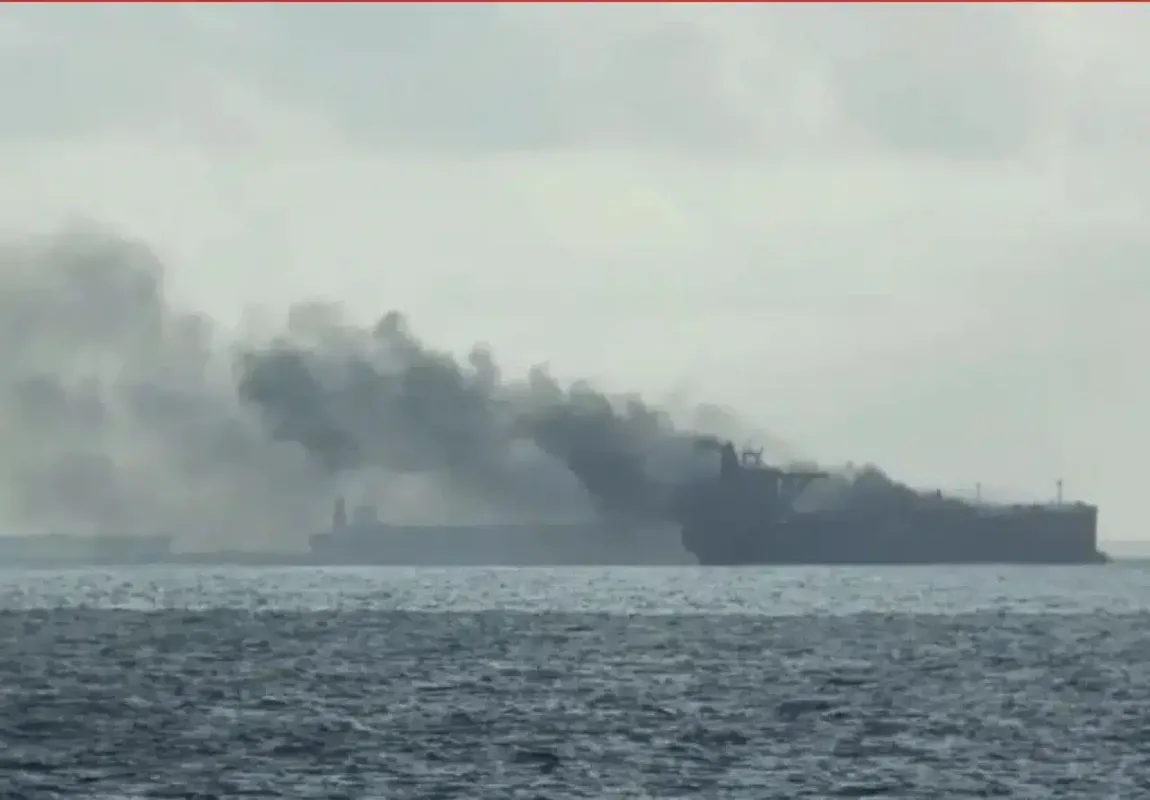

The war in Europe is not fought only with drones and artillery. Increasingly, it involves trade routes, documents, satellite signals, and navigation rules: this is where hybrid warfare takes shape, consisting of gray areas and continuous pressure below the threshold of open military confrontation.
In this context, the threat announced by 14 European countries bordering the Baltic and North Sea (plus Iceland) to stop and detain Russian “shadow fleet” tankers if not perfectly compliant is no longer just a political message. It is a change of posture: transforming maritime legality into a tool of interdiction.

The leverage of law: when opacity becomes a weakness
The core of the European line is simple: those who invoke freedom of navigation must respect verifiable minimum standards (safety, environment, insurance, traceability). The “shadow fleet,” however, often operates with practices that increase risk and reduce transparency: flags of convenience, hidden ownership, uncertain insurance coverage, AIS systems turned off or manipulated, risky transshipments.
The most “severe” step is implicit: a suspicious or unverifiable flag is not just an administrative detail. It can pave the way for more incisive controls because the ship effectively enters an area of legal vulnerability. And this is where hybrid warfare becomes concrete: there is no need to block the route by force, just make the operation costly, slow, and risky.
The leap in quality: France seizes the “Grinch” in the Mediterranean
The proof that Europe is moving from words to actions came outside the Baltic, in the western Mediterranean. On January 22, 2026, the French Navy intercepted the tanker Grinch, identified as linked to the “shadow fleet,” and brought it under French control for checks: the ship was deemed suspicious mainly for irregularities with the flag (Comoros) and for possible sanctions evasion; the case ended up with the Marseille prosecutor and the tanker was subsequently detained/“grounded” in the Marseille-Fos area.
This episode is significant for two reasons:
- it shows that interdiction can be achieved with legal tools (inspections, checks on nationality and documentation, port security measures), without new laws;
- it indicates that the “shadow fleet” is not a problem confined to the Baltic: it is a mobile network that crosses different theaters and forces states to coordinate responses.
The precedent linking the Baltic and Atlantic: the Boracay-Kiwala case
There is also a second story that makes the design even clearer: the tanker Boracay (formerly Kiwala) — linked to “shadow” circuits and subject to sanctionary attention — was stopped in Estonia in 2025 after sailing without a valid flag and with numerous deficiencies found; later, the same ship came under investigation by French authorities for suspected violations and failure to cooperate in proving its nationality. It is the picture of a method: tracking ships over time, not just intercepting them once.

GNSS, AIS, and “electronic noise”: the other half of hybrid warfare
The letter from the 14 countries also highlights another front: interference with satellite navigation systems (GNSS) and manipulation of signals (including those related to identification and navigation safety). Here the hybrid effect is evident: you do not directly hit a ship, but increase the systemic risk for everyone, making the maritime ecosystem more fragile and control more complex.
What really changes: economic deterrence, not just control
If this strategy is applied consistently at mandatory passage points and key ports, the potential impact is not symbolic: it is economic. Every detention, every inspection, every doubt about flag or insurance translates into delays, higher insurance premiums, more expensive freight, less availability of services. And this is where the “shadow fleet” — built to reduce traceability — can become more fragile: because it thrives on convenience. When convenience evaporates, only risk remains.
In summary, the signal from the 14 in the Baltic and the French action on the Grinch tell the same story: Europe is trying to shift the confrontation to the ground where it can be most effective, that of rules, safety, and traceability. In hybrid warfare, this is often how a flow is blocked: not with a declared embargo, but with continuous friction that makes the route impractical.



Comments
No comments yet. Be the first!