


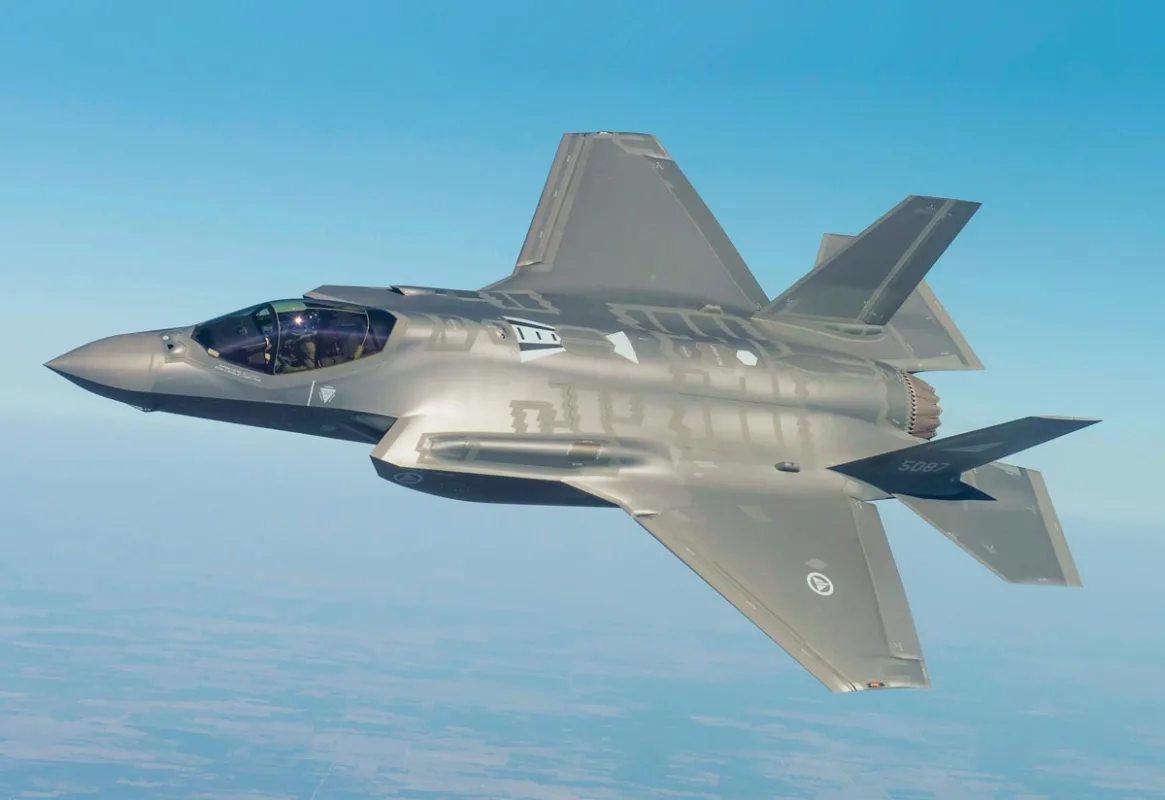

A recent official report by the Inspector General of the United States Department of Defense, published on December 19, 2025, highlights serious issues in the management of the support and maintenance program for the F-35 Joint Strike Fighter. The document, over forty pages long, emphasizes how the Department of Defense continued to pay substantial sums to the main contractor despite operational results being significantly below the required standards.
The report is not based on political or journalistic evaluations, but on a technical analysis conducted by the Pentagon's internal oversight body, which examined contracts, procedures, and operational data related to the F-35 fleet.
A Colossal Program Under Scrutiny
The F-35 represents the largest military program ever undertaken by the United States, with a total estimated cost of over $2 trillion over its entire lifecycle. The aircraft is used by the US Air Force, the US Navy, the Marines, and numerous allied countries, including Italy.
The management of production and logistical support is entrusted to the Joint Program Office (JPO), while Lockheed Martin is the main contractor responsible for the construction and maintenance of the aircraft.
Payments Without Adequate Results
The most significant finding from the report concerns the payment of about $1.7 billion to Lockheed Martin under the 2024 support contract, despite the fleet not reaching the minimum operational readiness levels required by the US Armed Forces.
In 2024, the average availability of the F-35s (Air Vehicle Availability) was about 50%: in practice, for half of the time, the aircraft were not available for flight. The report highlights that these levels were below the minimum required thresholds and that, despite this, no penalties or payment reductions were triggered.
The reason indicated by the Inspector General is simple: the contract did not include binding clauses that made payments dependent on operational readiness results. Without measurable requirements included in the contract and without economic remedies linked to those results, the DoD had no immediate leverage to reduce payments even in the presence of insufficient availability.
Contracts Lacking Real Constraints
The report highlights how the sustainment contract did not include mandatory parameters related to the operational readiness of the aircraft. There were no binding indicators on:
- flight availability
- mission capability
- recovery times
- efficiency of the logistics chain
In the absence of such constraints, the Department of Defense could not reduce payments or impose substantial corrections, even in the presence of results below expectations.
Insufficient Controls and Ineffective Oversight
The audit describes a fragmented and often ineffective control system. In numerous bases, there was a lack of adequate oversight, while many officials responsible for control did not have full access to the data needed to assess the contractor's performance.
In several cases:
- real efficiency levels were not monitored
- complete data on spare parts were not available
- controls were limited to formal checks
- there was a lack of structured coordination among various authorities
The result was a system incapable of exercising real control over the execution of the contract.
Aircraft Cannibalization
One of the most critical aspects emerging from the report concerns the practice of cannibalization. To keep some aircraft operational, units were forced to dismantle components from other F-35s, further reducing the overall availability of the fleet.
In several US bases, systematic removal of parts from multiple aircraft was documented to ensure at least one operational, an evident sign of a logistics chain inadequate to support operational needs.
The Inspector General's Conclusions
The final judgment of the report is clear: the Department of Defense did not exercise adequate control over the F-35 support contract and continued to pay the contractor despite the absence of expected results.
The Inspector General made seven official recommendations, many of which remain open or only partially implemented, calling for a deep review of contractual criteria, control mechanisms, and operational responsibilities.
A Problem Affecting Allies Too
Since the F-35 system is shared by numerous allied countries, the issues raised do not concern only the United States. The logistical structure, support contracts, and management methods are also common to European air forces, including Italy.
The report therefore raises broader questions about the long-term sustainability of the program and the system's real ability to ensure adequate operational levels in high-intensity scenarios.
Conclusion
The Inspector General's document does not question the technological value of the F-35, but highlights a structural flaw in program management: guaranteed payments in the absence of verifiable results.
An alarm bell that draws attention to the need to reform control mechanisms, responsibilities, and transparency in one of the most expensive and complex military programs in modern history.




Comments
No comments yet. Be the first!