


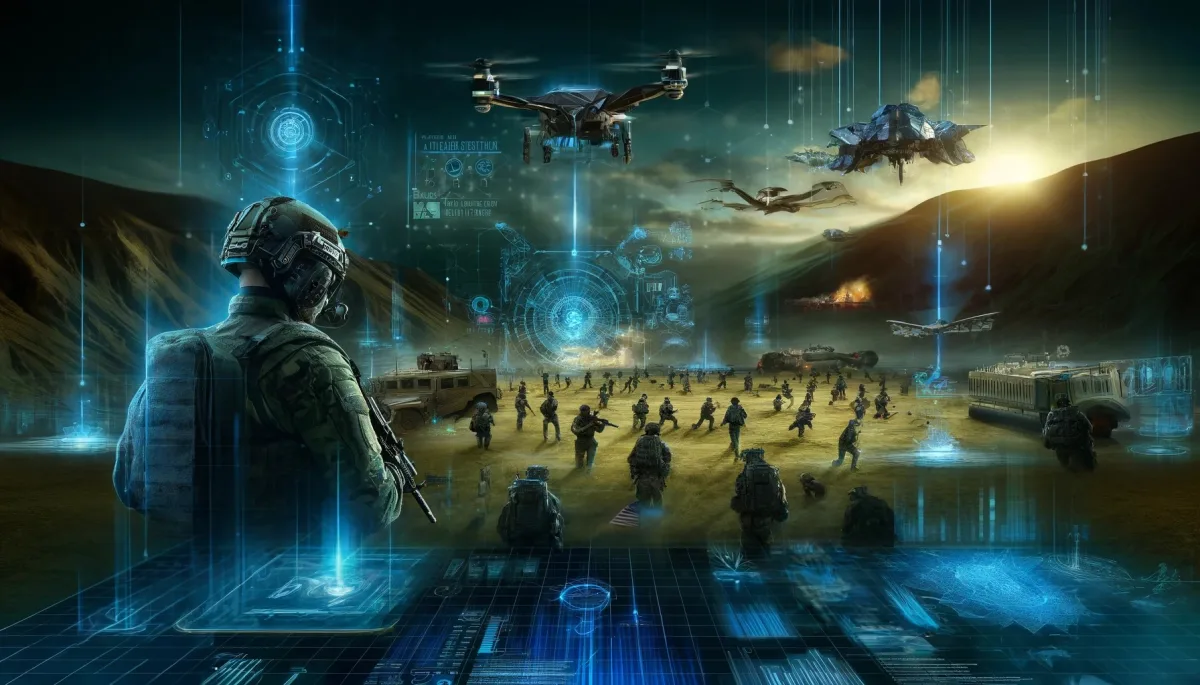

Berlin adopts new data analysis technologies inspired by lessons from the conflict in Ukraine to compress operational response times from days to mere seconds.
Faced with a volume of data from drones and sensors that has now surpassed human processing capacity, Germany has made a decisive shift in its defense strategy. Lieutenant General Christian Freuding, Chief of Staff of the Army, confirmed that the integration of Artificial Intelligence has become an absolute priority to "break the opponent's decision-making cycle."
Lessons from the Ukrainian Front
The initiative stems from direct observation of Ukrainian command posts. Kiev is using databases that collect over four years of Russian movement patterns, tactics, and responses.
- Predictive Analysis: AI analyzes how the enemy has behaved in similar past situations to suggest the most effective countermeasure.
- Efficiency: Tasks that previously required hundreds of soldiers and several days of intelligence work are now executed almost in real-time.
The Digital Brain: The Software Used
The German technological architecture rests on three fundamental pillars, combining established solutions with European innovations:
1. Palantir Maven Smart System
Germany looks with great interest at the Maven system, already employed by the United States. Developed by Palantir Technologies, this software excels in:
- Computer Vision: Automatic identification of targets (tanks, artillery) from video and satellite streams.
- Sensor Fusion: Integration of radio signals and radar data into a shared operational map.

2. MDOcore (Hensoldt & Helsing)
For technological sovereignty, Germany implements MDOcore, born from the partnership between Hensoldt and Helsing. This software allows data processing directly at the "edge" (near the sensor), drastically reducing latency.
3. Delta (Situational Awareness)
Inspired by the Ukrainian model, the concept of the Delta system is integrated, allowing each operator to input and view data on a digital map enriched by predictive analysis.
A Warning for Italy: Follow the German Example
The German evolution charts a necessary course for all NATO allies. In this scenario, Italy should urgently follow Berlin's example.
While the Bundeswehr invests in a Sovereign Cloud Infrastructure to manage large-scale data, it becomes imperative for Italy to accelerate the integration between its industrial excellences and AI startups. Adopting a similar approach would allow Italian forces not to fall behind in information processing speed, ensuring interoperability with European partners and national security in a modern war context increasingly driven by data.

The Human Factor: "Human-in-the-loop"
Despite automation, the German doctrine is categorical: AI remains a consultative tool. The final responsibility for any lethal action remains in the hands of the soldier. The goal is to free the operator from information overload so they can exercise critical judgment where it truly matters.
"Conventional methods are no longer sufficient. We must be faster than the enemy, or we risk losing before we even understand the situation." — Lt. Gen. Christian Freuding



Comments
No comments yet. Be the first!