


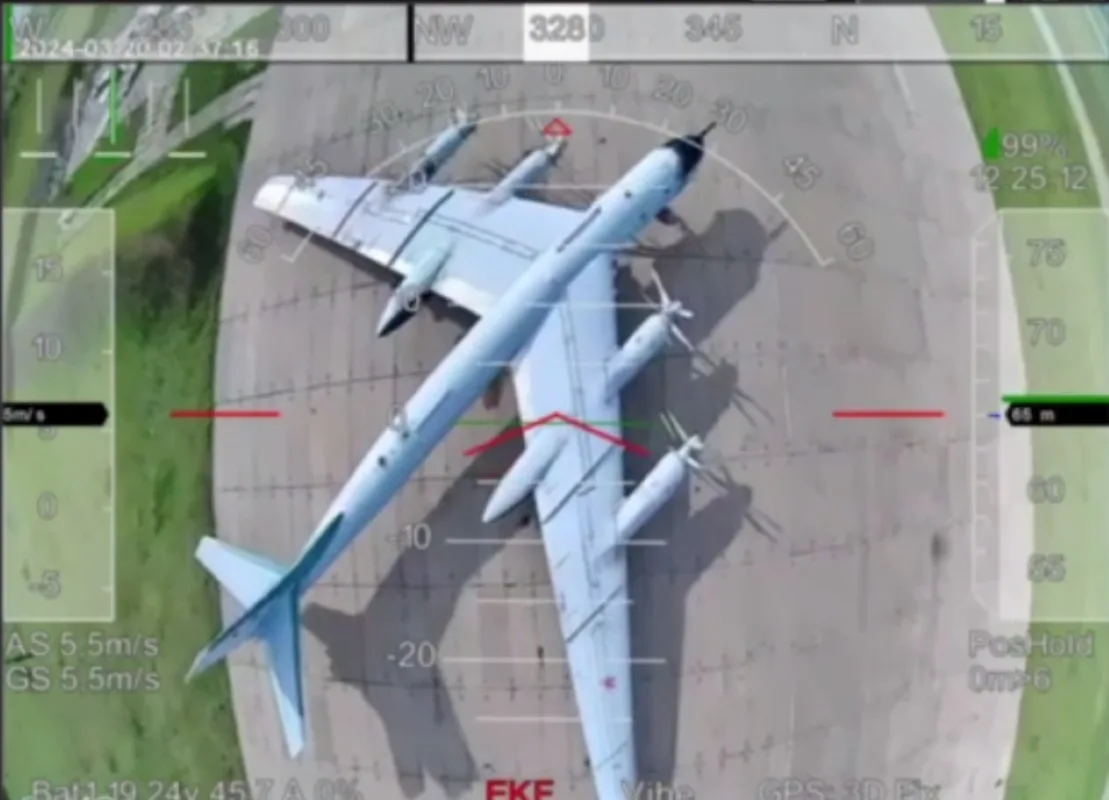

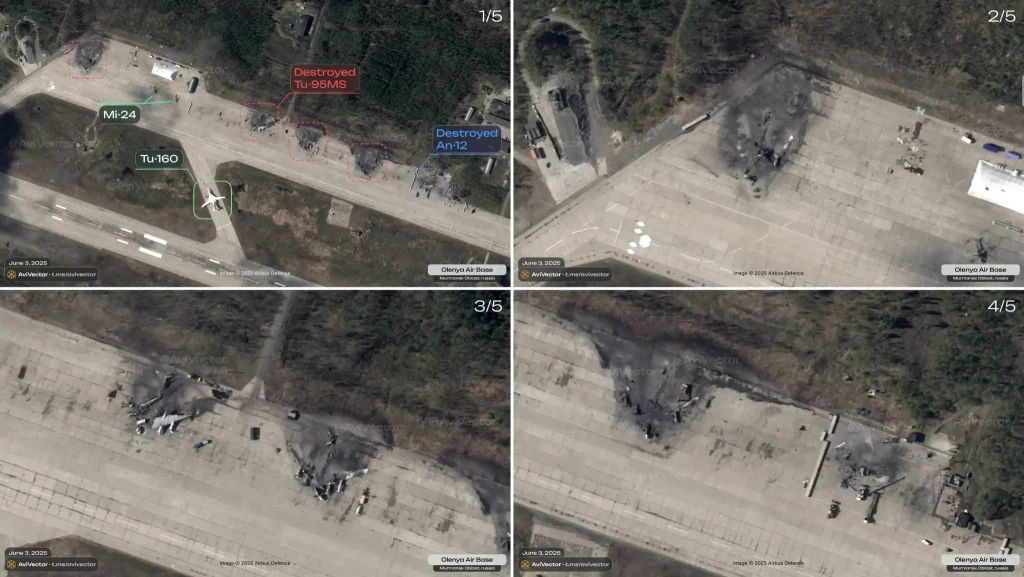
In an operation unprecedented for its complexity, audacity, and strategic resonance, the Security Service of Ukraine (SBU) struck deep into the heart of Russian strategic aviation. The “Operation Pavutyna” (Spiderweb), secretly prepared for over 18 months, led to the destruction or damage of dozens of long-range bombers, including the feared Tu-95 and Tu-160, as well as at least one valuable A-50 radar aircraft.

Coordinated Attack on Multiple Strategic Bases
According to official Ukrainian sources and NATO intelligence confirmations, the targets were simultaneously hit at four Russian air bases: Olenya (Murmansk), Belaya (Irkutsk), Diaghilevo (Ryazan), and Ivanovo Severny (Ivanovo). Some targets are located over 4,400 km from the front line, demonstrating the exceptional reach of the operation.
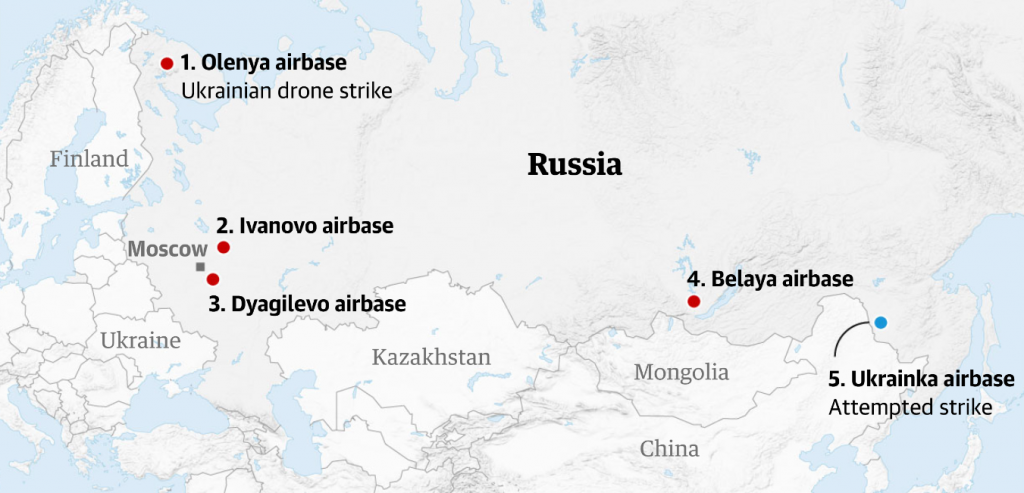
Satellite images and videos released show the launch of FPV (first-person view) drones directly from camouflaged trucks, transformed into mobile hangars. The wooden structures, seemingly innocuous, contained dozens of small armed drones, hidden under remotely activated retractable roofs.

The Strategy: Insertion and Activation Behind Enemy Lines
SBU agents first transported the drones into Russian territory, followed by the mobile structures. Once positioned near the air bases, the assault units were activated remotely. The drones were thus able to take off unnoticed, operate in real-time, and precisely hit the aircraft fuel tanks, causing devastating explosions.
A video shot at night shows an FPV drone aiming directly at the fuel bay of a Tu-95, followed by the explosion of the entire fuselage.

The Results: 34% of Russian Strategic Aviation Out of Action
NATO, in an independent assessment, estimated that the operation caused damage or destruction to about 40 aircraft. Among these, according to the Alliance:
- 15 Tu-95 strategic bombers
- 20 Tu-22M medium-range supersonic bombers
- 1 A-50 high-value operational AEW&C radar aircraft
In total, the impact on Russia's long-range missile fleet was quantified as a 34% reduction in operational capabilities, a loss deemed “critical” for the Kremlin's ability to conduct deep missile strikes against Ukraine.
According to President Zelensky, the attack was carried out with 117 drones, coordinated across three different time zones. The Ukrainian leader emphasized that all operators involved were evacuated before the action began, avoiding losses and arrests.
The Strategic and Media Value of the Operation
Operation Pavutyna marks a turning point in the technological war between Kyiv and Moscow. Ukraine, lacking conventional air supremacy, has demonstrated how the combination of intelligence, low-cost drones, and tactical innovation can strike even the most protected targets of the Russian Federation.
The economic damage is estimated at over 7 billion dollars for aviation alone, while the damage to image is incalculable: the deterrent power of Russian nuclear bombers has been seriously undermined by artisanal drones launched from hidden containers.
Conclusion
In a conflict that has transformed modern warfare, Operation Pavutyna represents the symbol of Ukrainian adaptation to a context of enemy superiority, through the creative use of limited resources and the effectiveness of special operations. It is a clear message to Moscow — and the world — that no corner of Russian territory can be considered safe.



Comments
No comments yet. Be the first!