




While drones dominate war reports as offensive tools, the Indian company SS Innovations overturns the paradigm: here is Vimana, the remote-controlled surgeon that promises to save lives where no one can reach.
Beyond Conflict: Technology at the Service of Life
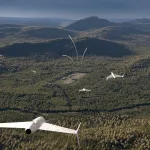
Despite the current geopolitical landscape often depicting drones as destructive machines, technological research is pushing towards decidedly nobler uses. In the medical field, the frontier has officially moved to the sky thanks to Vimana, the cutting-edge project by SS Innovations.
The goal is ambitious: to transform an unmanned aircraft into a flying extension of a surgeon's hands, capable of intervening in scenarios where immediate evacuation is precluded by geographical obstacles or the intensity of combat.
How Vimana Works: A Hospital in Flight
The drone is not limited to transporting plasma or first aid kits. Its true innovation lies in the structure, which integrates:
- Miniaturized robotic arms: Two mechanical appendages that replicate the surgeon's movements remotely.
- Micro Instrumentation: 5 mm instruments (scissors, forceps, and needle holders) designed for urgent minimally invasive surgery.
- Satellite connectivity: A low-latency system to allow the doctor to operate in real-time from a safe location.
Possible operations: The system is designed for critical maneuvers such as hemorrhage control (internal tourniquets or clamping), shrapnel extraction, suturing open wounds, and even thoracic decompression.
In emergency medicine, intervening promptly (the so-called Golden Hour) is the determining factor between life and death. Vimana acts as a bridge: it stabilizes the patient on the spot, ensuring they reach the field hospital in conditions compatible with definitive intervention.

Safety and Civil Future
Although the debut is expected in the military field, the potential for civil rescue is immense. Imagine road accidents in rugged mountainous areas or post-earthquake rescues where ambulances are blocked by debris.
However, two fundamental issues remain to be resolved before deployment:
- Cybersecurity: The system must be completely shielded against hacking attempts, a fatal risk during a surgical operation.
- Latency: The connection must be instantaneous to avoid millimetric errors.
When will we see it in action? If the final tests are successful, the first real rescue missions could take off as early as 2027.



Comments
No comments yet. Be the first!