


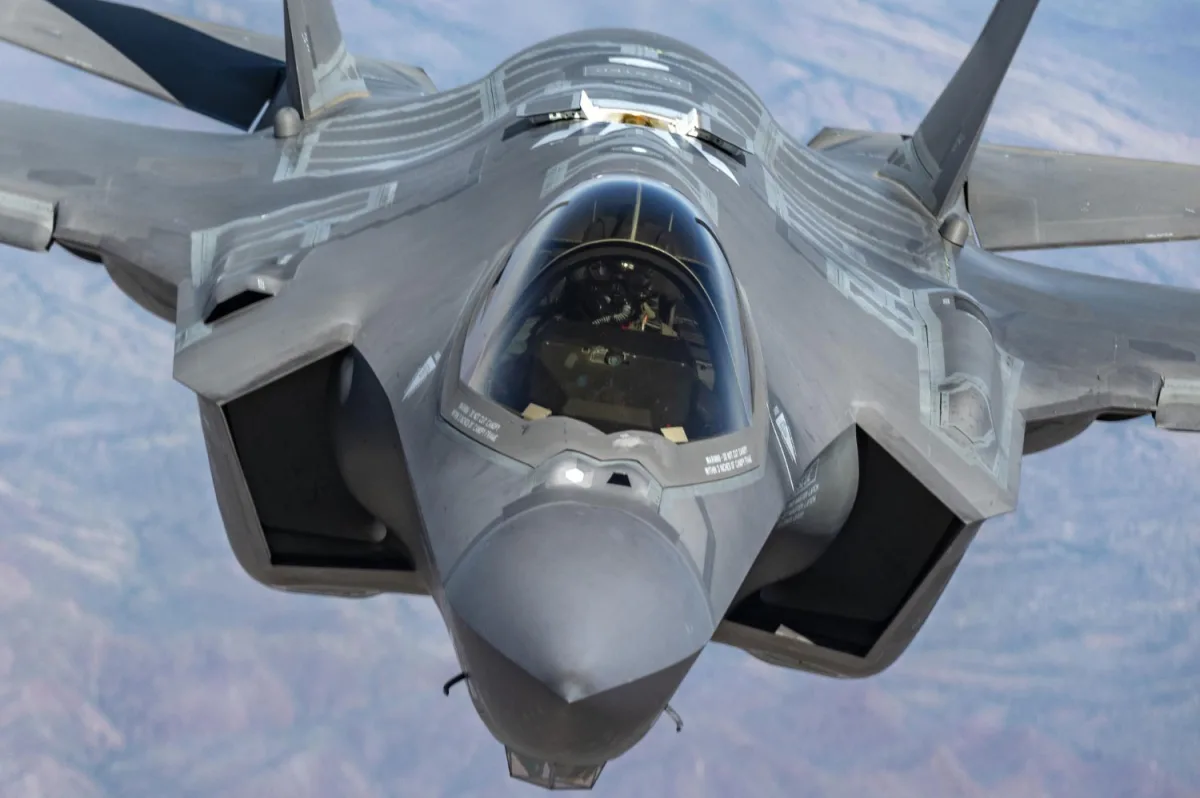

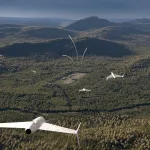
On March 24, 2025, an F-35 of the United States Air Force, based in the United Kingdom, landed at the Cameri Air Base to receive maintenance at the Italian MRO&U (Maintenance, Repair, Overhaul, and Upgrade) hub. This is the first American jet to undergo revision in Europe, marking a significant step in logistical and industrial cooperation between the United States and the F-35 program partners.
The Cameri MRO&U center is funded by Italy and managed by Leonardo S.p.A., in collaboration with Lockheed Martin and the F-35 Joint Program Office. The facility has already performed maintenance work on Italian, Norwegian, and Dutch aircraft, but the arrival of the first American jet confirms the strategic role of the Piedmont base in the global F-35 support network.
Captain Sigfrido Chiandussi, Italian representative at the Joint Program Office, stated:
“The Italian investment in this center has been significant. We are confident it will yield important results in terms of security, stability, and prosperity for the entire Euro-Mediterranean area.”
Also known as the F-35 Euro-Mediterranean Airframe Depot, the hub is located next to the final assembly line (FACO), where several F-35s have been produced for Italy and the Netherlands. At Cameri, Lockheed Martin manages the most sensitive phases of assembly, such as the application of anti-radar coatings.
Cameri is currently the only site in Europe capable of performing heavy maintenance on F-35 airframes and is expanding its capabilities in anticipation of the increase in European fleets in the coming years.
Norway Completes F-35 Order and Opens a National Center
Just as Cameri consolidates its role, Norway has reached another milestone: it has become the first F-35 partner to complete its official order with the delivery of the last two F-35As, thus reaching a total of 52 aircraft.
At the same time, a new 5,000 m² national maintenance center was inaugurated at Rygge, where activities will be carried out by Kongsberg Aviation Maintenance Services and the Norwegian Defence Materiel Agency.
Previously, intermediate maintenance was entrusted to the Cameri hub. Now Norway will be able to operate independently, strengthening its logistical chain and increasing operational availability, as stated in an official release.

The Logistics Issue
Since the Trump administration took office, concerns have emerged in Europe about the actual degree of U.S. control over F-35 fleets. Although Lockheed Martin has denied the existence of a hypothetical remote “kill switch”, the management and maintenance system remains deeply integrated with U.S. infrastructure.
A sensitive aspect of the F-35 program is the management of spare parts, the control of which largely remains in the hands of the United States. According to Endre Lunde, advisor to the Norwegian Defence Materiel Agency, the components — even those produced nationally — are supplied through centralized international contracts and remain American property until their installation on the aircraft.
Each country manages national emergency stocks to ensure operability even in crisis situations. Norway has purchased separate spare parts packages to be able to fly independently in case of unavailability of central channels. The same applies to Finland, which has purchased 64 F-35s and has included a specific clause for operational continuity in case of emergencies.
The Netherlands, which will receive over 50 aircraft, hosts at Woensdrecht one of the three global bases for parts distribution. Last year, a legal case highlighted how even Israel – although not an official partner – receives spare parts through the Dutch network.
The Netherlands, involved in the program's development since 2001, provide critical components such as frames, wiring, flight doors, power supply, and radar systems.

Conclusion
The arrival of the first U.S. F-35 at Cameri marks an important step in the industrial cooperation between Europe and the United States. While the F-35 program partner countries consolidate their autonomous maintenance capabilities, the global logistical role of the United States remains essential. Cameri, for its part, confirms itself as a technological and strategic hub for the presence of F-35s in the Mediterranean.
However, the centralized management of logistics and spare parts by Washington continues to raise questions about the real operational autonomy of the countries involved. The balance between interdependence and technological sovereignty remains one of the central issues in the future of the F-35 program in Europe.


Comments
No comments yet. Be the first!