


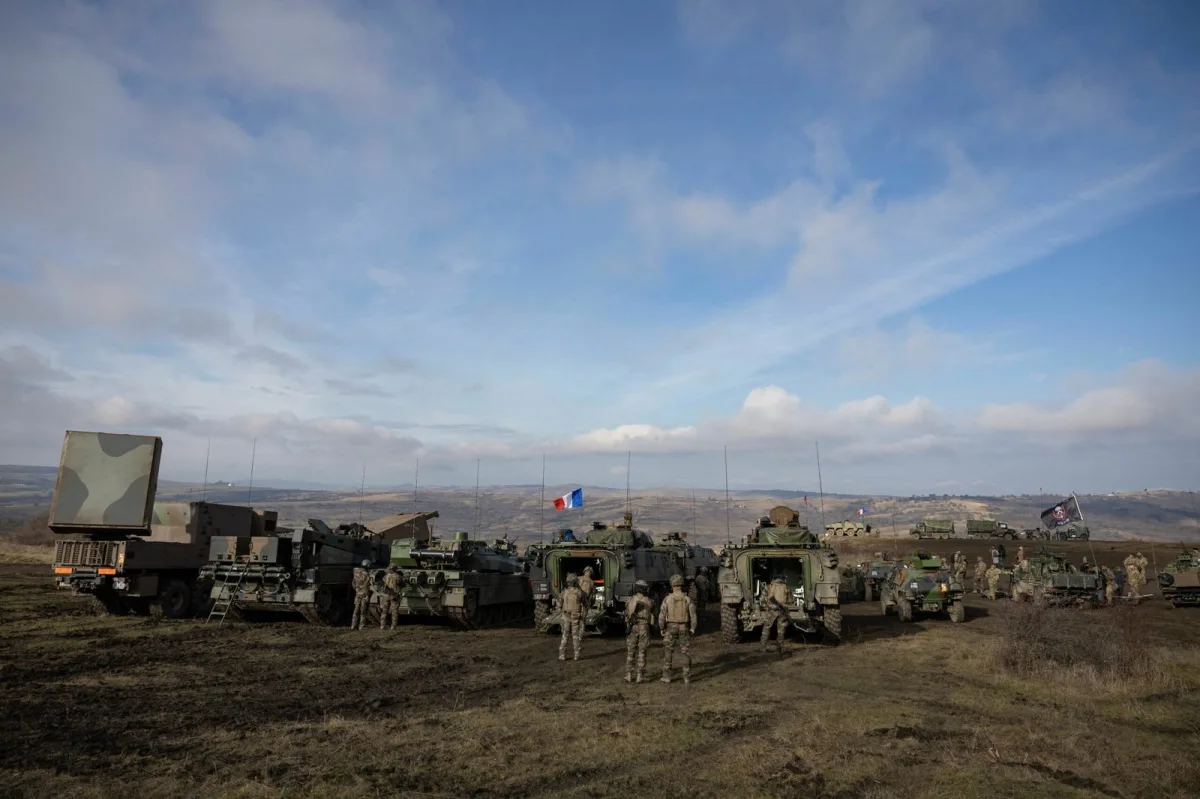

THE HAGUE, Netherlands — European Union leaders concluded an intense week for defense, approving on Thursday a historic plan to unlock a total of 800 billion euros (866 billion dollars) in European military spending, although some political fractures emerged.
The bloc hopes to mark a turning point in the continent's history in the face of Russia's war against Ukraine, seen by many here as an initial move towards broader territorial aspirations, and a feared abandonment by the United States under Trump's presidency.
The spending plan is explicitly designed to reduce dependence on America for weapons and security, with Commission President Ursula von der Leyen stating that Europe "must buy more European" and strengthen the European defense technological and industrial base. It also focuses on joint purchases, a growing trend across the continent that promises to bind countries even more closely. Under the plan, joint purchases will also be open to Ukraine and other countries within the EU's sphere of influence.
There were some squabbles over the details.
Spain would like to include cybersecurity and climate change mitigation in the definition of "defense," which top EU officials dismissed as "disguised defense."
And Italy, long a supporter of common loans and European purchases, has suddenly changed its stance on these points, now questioning the EU's plans, apparently concerned about granting more powers to the EU that were previously reserved for national governments.
Hungary, meanwhile, maintained its stated position of "weapons for Europe yes, weapons for other countries no" - reflecting Budapest's distaste for military aid to Ukraine.
Despite the atmosphere of a new self-awareness, progress, particularly support for Ukraine, has partly faltered as old divisions within the bloc have resurfaced.
At the center of those who have held back were the usual suspects of Hungary and Slovakia, whose Russia-friendly governments have often threatened to block European support for Ukraine or new sanctions against Moscow. As had already happened at an emergency summit earlier this month, precipitated by the disastrous meeting at the White House between Ukrainian President Zelensky and US President Trump, the EU was just short of consensus in emphasizing its continued support for Ukraine.
Only Hungary refused to sign the joint declaration promising Europe's continued commitment to providing military and financial aid to Ukraine.
An EU plan to mobilize 40 billion euros in additional support for Ukraine appeared impractical, and even a reduced version of 5 billion euros focused solely on artillery shells seemed in limbo entering Friday. European diplomats lamented that the initiative had been compromised by not consulting the concerned stakeholders in advance, with France - the union's main military power - hesitant to support the initiative.
To date, the EU has provided 139.2 billion euros to Ukraine, including 49.3 billion euros in military support.
Despite the obstacles, the EU has moved at lightning speed - at least by Brussels standards - to fill the power vacuum left by a US withdrawal and has shown remarkable unity in doing so.
"What has changed... is the new sense of urgency. Because something fundamental has changed," Commission President Ursula von der Leyen told journalists in Brussels earlier this month. "Our European values - democracy, freedom, and the rule of law - are under threat."




Comments
No comments yet. Be the first!