


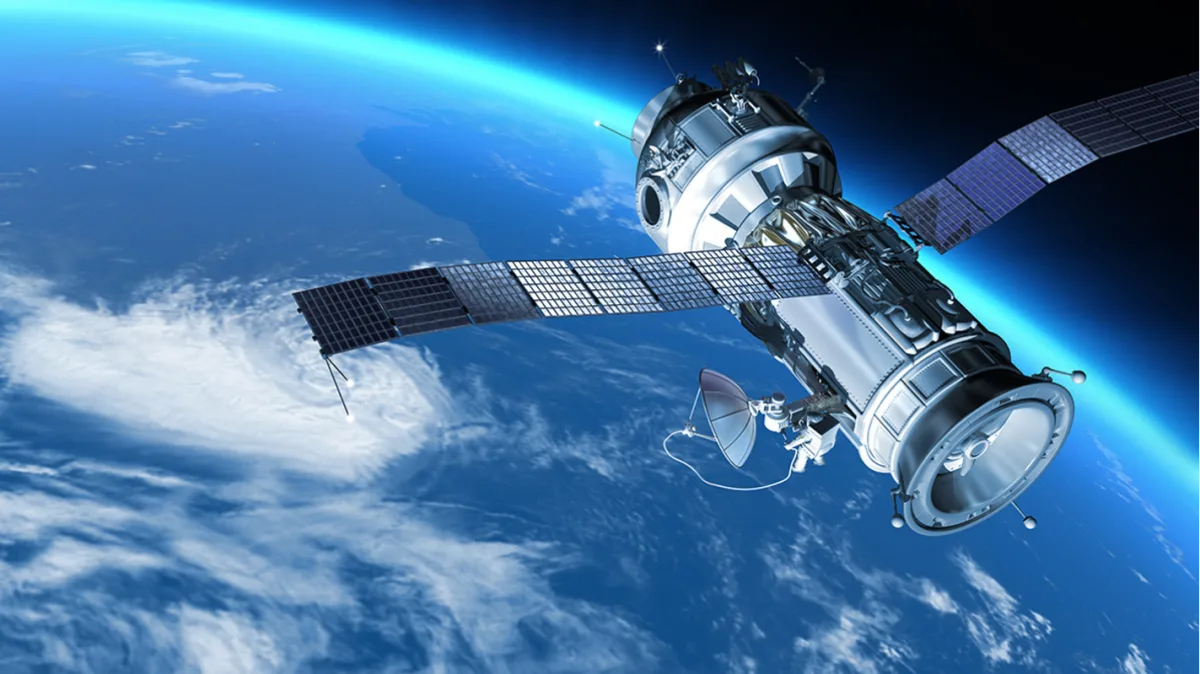

A new report from the Mitchell Institute for Aerospace Studies urges the U.S. Space Force to accelerate the development of Dynamic Space Operations (DSO). This represents a new way of thinking and managing activities in orbit, aiming to make satellites and space infrastructures more flexible, maneuverable, and resilient to attacks.
According to Charles Galbreath, the report's author, focusing solely on in-orbit satellite refueling is not enough: broader solutions are needed, including the ability to change missions, move quickly, update software in real-time, and manage Earth links in a distributed and secure manner. In other words, the Space Force wants to transition from a “static” presence in space to a system capable of moving, adapting, and reacting.
In the United States, initial experiments are focusing on in-orbit refueling, which would allow military satellites to extend their operational life and perform unpredictable maneuvers without fear of running out of fuel. But Galbreath explains that the real goal is much more ambitious: to build a space architecture capable of dynamically reacting to threats and opportunities, both physically and digitally.
Europe Needs to Catch Up
For Europe, this paradigm shift is both a challenge and an opportunity. If it wants to remain a credible partner of the United States, but also develop a strategic autonomy, it must start investing in the same areas of innovation.
A European in-orbit services program would be needed, with vehicles capable of refueling, repairing, or upgrading already operational satellites. A sector currently dominated by American companies, but where Europe can make its mark thanks to its experience in space robotics and small satellites. At the same time, it would be necessary to support research on new propulsion systems, more efficient and sustainable, and on common standards that make European satellites interoperable with each other.
Europe should also make command and control systems more flexible, moving beyond the model of a few fixed centers in favor of distributed cloud networks, controllable by multiple countries and more secure against cyberattacks.

Italy at the Forefront: Argotec and San Lorenzo
In this context, Italy can play a key role. Beyond the experience of companies like Avio and Leonardo, there is a name that is making a strong impact: Argotec, a Turin-based company specializing in micro and nanosatellites, already a key player in space missions with NASA and the European Space Agency.
Argotec could lead the development of modular and upgradable satellites, capable of changing function during the mission. One day the same satellite could switch from communications to navigation or support defense missions. This approach would reduce costs and increase flexibility, two essential elements for DSO.
Another key element is rapid access to space. Italy is considering the creation of a launch station at the San Lorenzo Interforce Range in Sardinia, which would become a strategic point for European micro and mini-launchers. The geographical location and the presence of existing infrastructures make it an ideal site for flexible and frequent launches, complementary to the Taranto Spaceport project.
With San Lorenzo, Italy could ensure autonomous and fast access to orbit, reducing dependence on foreign bases and strengthening national and industrial security.
Surveillance and Security in Space
Dynamic operations also require the ability to know what is happening above us. For this reason, the Space Force and its allies are investing in Space Domain Awareness (SDA), which involves constant surveillance of space to track satellites, debris, and potential threats.
Italy already has a solid foundation thanks to the COSMO-SkyMed constellation and its ground-based radars. By enhancing these capabilities and integrating them with optical sensors and European networks, Rome could become one of the main nodes of the European space surveillance system.
Investing in the Future
The Mitchell Institute report sends a clear message: those who do not invest now in dynamic space operations risk falling behind. For this reason, Europe should create a dedicated DSO fund, with streamlined funding rules and incentives for innovation.
Italy, for its part, could establish a “Space Readiness” Fund to accelerate technological projects and support SMEs in the space sector, aiming to bring new technologies into orbit within two years.
Dynamic Space Operations are not an abstract concept, but the next evolution of human and military presence in space. To remain competitive and autonomous, Europe and Italy must adopt a faster, modular, and flexible approach.
With the industrial leadership of Argotec and the launch of the San Lorenzo launch base, Italy can become one of the protagonists of the new European space ecosystem.
The space of the future will be dynamic, reactive, and interconnected. Those who can adapt first will lead the next race beyond the atmosphere.






Comments
No comments yet. Be the first!