


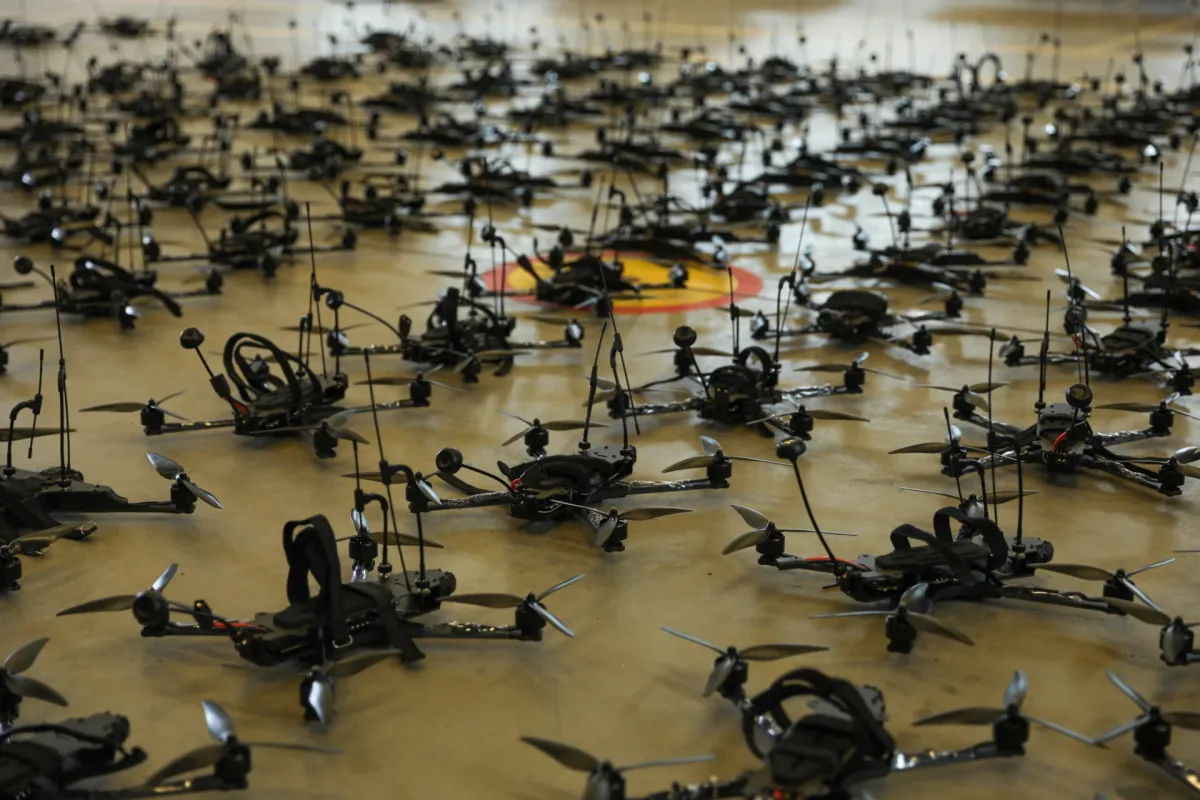

The 25th Infantry Division, a pioneer of the Transformation In Contact (TIC) program, is demonstrating in the field the strategic value of additive manufacturing. The FPV drone “Capstone”, entirely built with 3D printing techniques and equipped with a locally designed detonation system, represents the first example of self-manufactured lethal effect by an infantry division.
For Gen. Ronald Clark, commander of Army Pacific, the application of these technologies is crucial in the INDOPACOM theater, where distances and geographical dispersion complicate every supply line: “From arctic frost to tropical jungles, our ability to adapt will depend on the ability to produce locally what we need.”
The most disruptive aspect, however, emerges at the doctrinal level. Additive manufacturing allows each unit to become an operational micro-factory, capable of regenerating materials, repairing vehicles, or even producing ammunition. This evolution strengthens the concept of “distributed lethality”, already experimented by the US Navy, but now extended to ground forces.
A New Command Model
With the experimentation of systems like Next Generation Command and Control (NGC2) and C2 Fix, the 25th ID aims to integrate information flows, digital logistics, and field production into a single decision-making system. In perspective, every tactical commander could monitor in real-time the needs for parts and materials, authorizing their direct production without going through central bureaucratic chains.

The new regulation introduced by Driscoll in September 2025 goes precisely in this direction: soldiers are allowed to autonomously repair low-risk components without higher authorizations. “I’ve never seen anyone get in trouble for fixing something,” Mohan said wryly. “We need to change our way of thinking.”
This autonomy brings enormous advantages — speed, adaptability, logistical survival — but also risks of proliferation and loss of control. If every unit is capable of manufacturing lethal or sensitive parts, the line between authorized operation and local initiative becomes thin. In complex scenarios like INDOPACOM, where the presence of rival powers increases the risk of accidental escalation, controlling such processes becomes a strategic priority.
The convergence between industrial innovation and tactical autonomy transforms warfare in the Pacific into a logistical and technological competition. Printing a drone or a tire valve may seem like a minimal gesture, but it represents a new form of deterrence: the ability to continue fighting even when isolated.
Thus, 3D printing becomes not only a means of production but a symbol of operational sovereignty.



Comments
No comments yet. Be the first!