


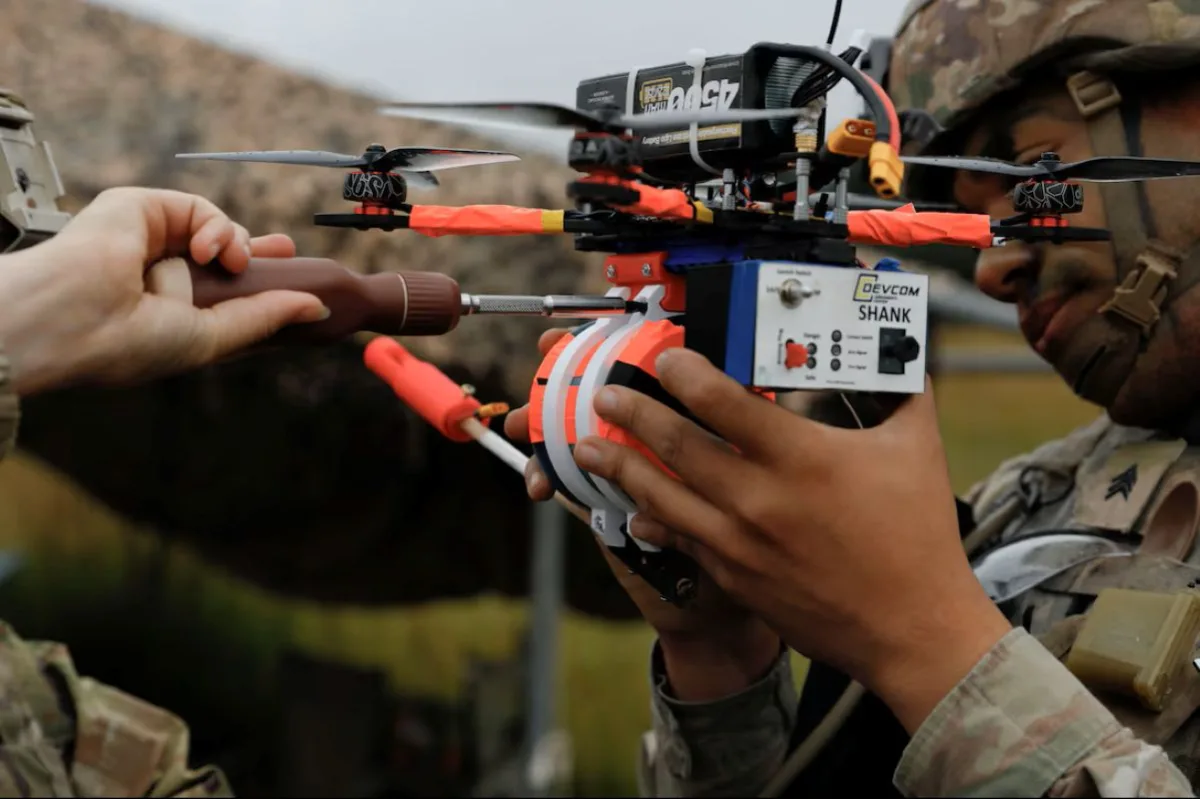

In the context of technological innovation and the modernization of the armed forces, the Italian Army could greatly benefit from adopting a similar approach to that used by the American Army for drone management, particularly concerning mini and micro drones. An example to follow is the multi-layered approach adopted by U.S. forces for the production, support, and maintenance of these devices, a strategy that could also be applied to the Italian forces, with particular attention to the employment of older personnel, over 50 years old, who can be involved in maintenance and repair activities. In this way, every soldier could be equipped with a drone, learn to use and repair it, increasing operational efficiency and self-sufficiency.

Rapid On-Site Fabrication Through Additive Manufacturing (3D Printing)
A central aspect of the American Army's strategy is the use of 3D printing for the fabrication and repair of drone components in the field, a solution that could also be implemented in Italy. Specialized units, as in the case of the American Army's Hawkeye Platoon, use mobile labs equipped with 3D printers to design, print, and repair drone components, such as rotor blades or modular parts, directly in the operational theater. This approach allows bypassing long wait times associated with external suppliers, improving rapid response capability in high-intensity scenarios. A similar initiative could be implemented at the regiment level, allowing even older soldiers, who possess extensive experience and technical skills, to handle drone maintenance and repair.
National Supplies Through Purchase Agreements and Approved Suppliers
Another aspect of drone management is the use of approved suppliers through long-term purchase agreements, such as Blanket Purchase Agreements (BPAs). These contracts allow the American Army to ensure a continuous supply of spare parts for drones, avoiding reliance on international supply chains. The Italian Army could adopt a similar strategy, collaborating with national suppliers of drone components, ensuring a constant availability of essential materials such as batteries, carbon fiber, and electronic components. This approach would reduce dependence on foreign suppliers and improve operational efficiency while reducing procurement costs.

Partnership with the Commercial Drone Industry
The American Army has forged significant alliances with emerging companies in the drone sector, such as Performance Drone Works (PDW), to acquire ready-to-use drones and related spare parts. Similarly, the Italian Army could collaborate with Italian and European companies developing small drones, promoting the production of low-cost but highly effective drones. This collaboration with the civilian industry could accelerate the introduction of drones into daily operations, providing a scalable and ready-to-use solution.
Integration with Existing Logistics Systems
The American Army integrates drone management into its traditional logistics system, such as the Global Combat Support System–Army (GCSS‑Army), which allows real-time monitoring of supply requests, stocks, and deliveries. The Italian Army could do the same, integrating drones into its existing logistics systems, thus improving inventory management and delivery speed. This approach, combined with on-site production and repair capabilities, would ensure a continuous flow of materials and constant support.
Advantages of the Proposed Approach:
- Operational Self-Sufficiency: Each regiment could become autonomous in drone management, reducing the need for external support and increasing rapid response capability.
- Involvement of Older Personnel: The skills and experience of personnel over 50 years old, who can be used for maintenance activities, could be effectively leveraged. These soldiers could receive specific training for drone repair, creating an employment opportunity for more experienced human resources who are less physically engaged in the field.
- Improvement of Reconnaissance and Attack Capabilities: The adoption of drones at the regiment level will enhance reconnaissance and attack capabilities, allowing for greater flexibility in military operations.
Conclusions
Developing an internal capability to build, repair, and manage mini and micro drones at the regiment level represents a significant step for the Italian Army, which could draw inspiration from the multi-layered approach adopted by the American Army. The integration of technologies such as 3D printing, collaboration with industry, and the adoption of an integrated logistics system would make the Italian Army more agile, efficient, and ready to face future challenges in an increasingly technological warfare context.




Comments
No comments yet. Be the first!