


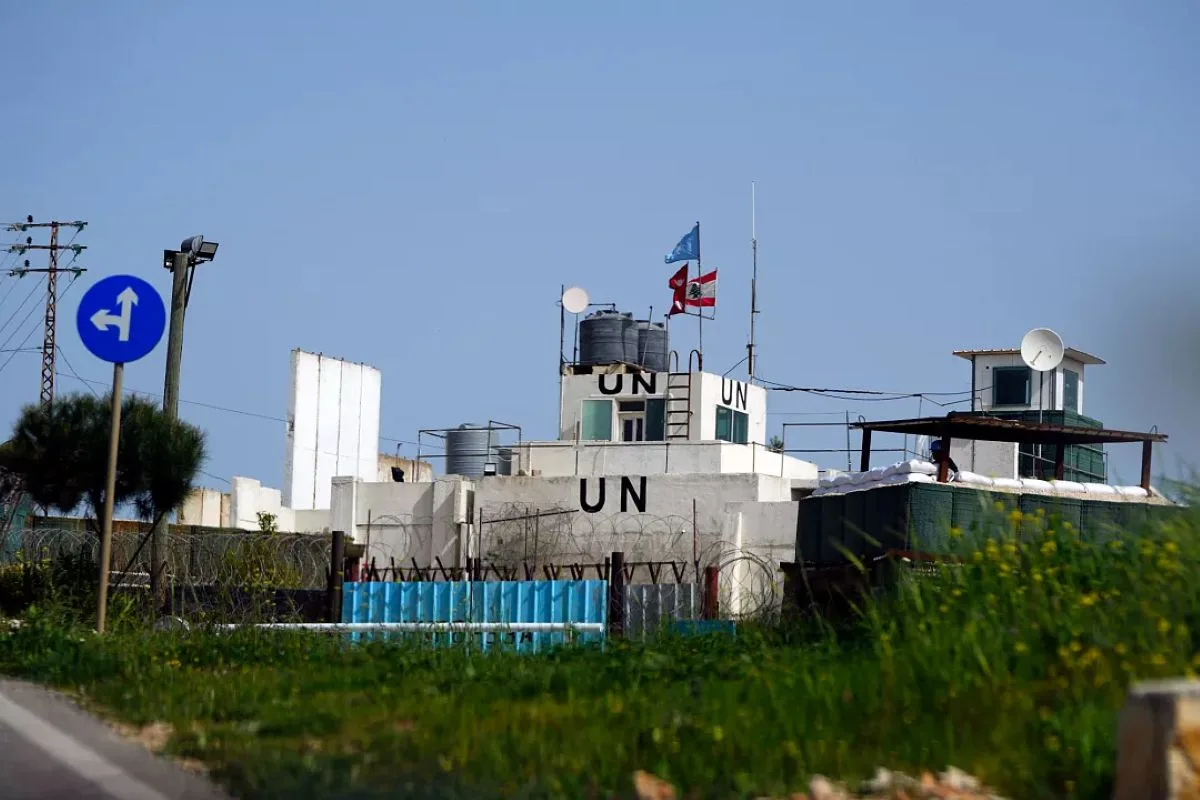

On September 24, 2025, the United Nations Interim Force in Lebanon (UNIFIL) announced that an Israeli drone crashed into the mission headquarters in Naqoura, a town located on the southern border of Lebanon. The incident, which occurred in the afternoon, caused no casualties and the device was quickly neutralized.
The UNIFIL deputy spokesperson, Kandice Ardiel, reported on X that peacekeepers skilled in explosive ordnance disposal had “immediately secured and neutralized the device.” It was confirmed that the drone was not armed, but equipped with a camera.
Ardiel recalled that, according to the UN Security Council Resolution 1701 of 2006, respect for Lebanese airspace and sovereignty is required. She added that UNIFIL takes seriously any incident involving the personnel, installations, or operations of the mission, and that an official communication on the incident will be issued.
The Israel Defense Forces (IDF) later confirmed that the drone belonged to them. UNIFIL clarified that “the device fell on its own” and posed no direct threat.
UNIFIL's Role in the Lebanese-Israeli Context
UNIFIL was established in 1978 and represents one of the longest-standing United Nations missions. Today it includes over 10,000 peacekeepers from 50 countries, engaged in maintaining stability along the Blue Line, the border drawn by the United Nations between Lebanon and Israel.

The mission's mandate, expanded over the years, includes monitoring the ceasefire, supporting the Lebanese Armed Forces, and protecting civilian communities in the areas of operation.
The activities of the peacekeepers focus on monitoring potential violations and promoting dialogue between the parties. On several occasions, the mission has played a mediating role in delicate situations, contributing to the reduction of tensions.
Incidents like the one in Naqoura demonstrate the importance of UNIFIL's presence as a stabilizing element in an area where unforeseen incidents can create uncertainty.
Recent Escalations and Current Framework
The most recent conflict between Israel and Hezbollah began in October 2023, following Hamas's attack in southern Israel. In the following months, an escalation characterized by rocket exchanges and bombings developed, which continued until November 2024, when a ceasefire was reached.
According to the World Bank, the conflict resulted in over 4,000 casualties in Lebanon, including numerous civilians, and damages estimated at about 9.3 billion euros. In Israel, at least 27 deaths were recorded, including 80 soldiers.
In this context, UNIFIL continued its monitoring activities along the Blue Line, ensuring a constant presence in support of local stability.

The Naqoura incident once again highlighted the importance of UNIFIL's presence in southern Lebanon. Although it was an event without consequences for the personnel, its management demonstrated the preparedness of the peacekeepers and the speed of security interventions.
Respect for Resolution 1701 and the continuity of monitoring operations remain central elements for maintaining stability along the border between Lebanon and Israel, in an area where international cooperation continues to play a fundamental role.



Comments
No comments yet. Be the first!