




The recent portrait that the international press dedicated to Mykhailo Fedorov, the new Ukrainian Minister of Defense, prompts a reflection that goes far beyond the chronicle of the Eastern European conflict. At thirty-five, with a solid background in tech marketing and already the architect of Kyiv's state digitalization, Fedorov represents the forced transition towards the so-called software-defined warfare.
For Italy and its top Defense structures, his figure is not just a geopolitical case study, but an indicator of where the axis of global military innovation is shifting.
The Mathematics of Friction and Technological Superiority
The paradigm introduced by Fedorov is cold, pragmatic, and data-focused: Ukraine cannot compete with Russia on sheer demographic mass or the availability of legacy artillery stock. Consequently, the only feasible asymmetry is that of speed, adaptation, and technological integration.
The strategy rests on three industrial and operational pillars:
- Low-cost and expendable autonomous systems: Massive use of modified commercial drones and loitering munitions, capable of saturating enemy defenses with production costs infinitesimal compared to traditional weapon systems.
- Contracted development cycles: Direct and real-time integration between software developers, manufacturing companies, and frontline operators. A firmware update to evade Russian electronic jamming is distributed in hours, not years.
- Data-centric warfare and Artificial Intelligence: Systematic collection of video feeds and intelligence data to train AI models (also in strategic collaboration with giants like Palantir). The goal is the automation of the target cycle (target acquisition and battle damage assessment) to maximize the effectiveness of each single vector.

The Dualism Between "Dashboard" and Trench
The Fedorov model is not without operational friction. It represents the collision between the agile mindset of startups and classical military doctrine, based on rigid command chains, heavy logistics, and long timelines. The introduction of algorithmic merit systems for drone units or the digitized management of mobilization demonstrates the willingness to optimize the operational theater as if it were a network infrastructure.
However, commanders on the ground remind us that war remains a matter of heavy logistics, morale maintenance, and physical confrontation. Technology does not replace mass but must amplify its effectiveness.
What Lessons for Italian Defense?
In the face of this acceleration, Italy cannot remain anchored to procurement processes and industrial logics conceived in the last century. The lesson from Kyiv directly touches the strategic nodes of the national military instrument:
1. The Urgency of "Software-Defined" Defense
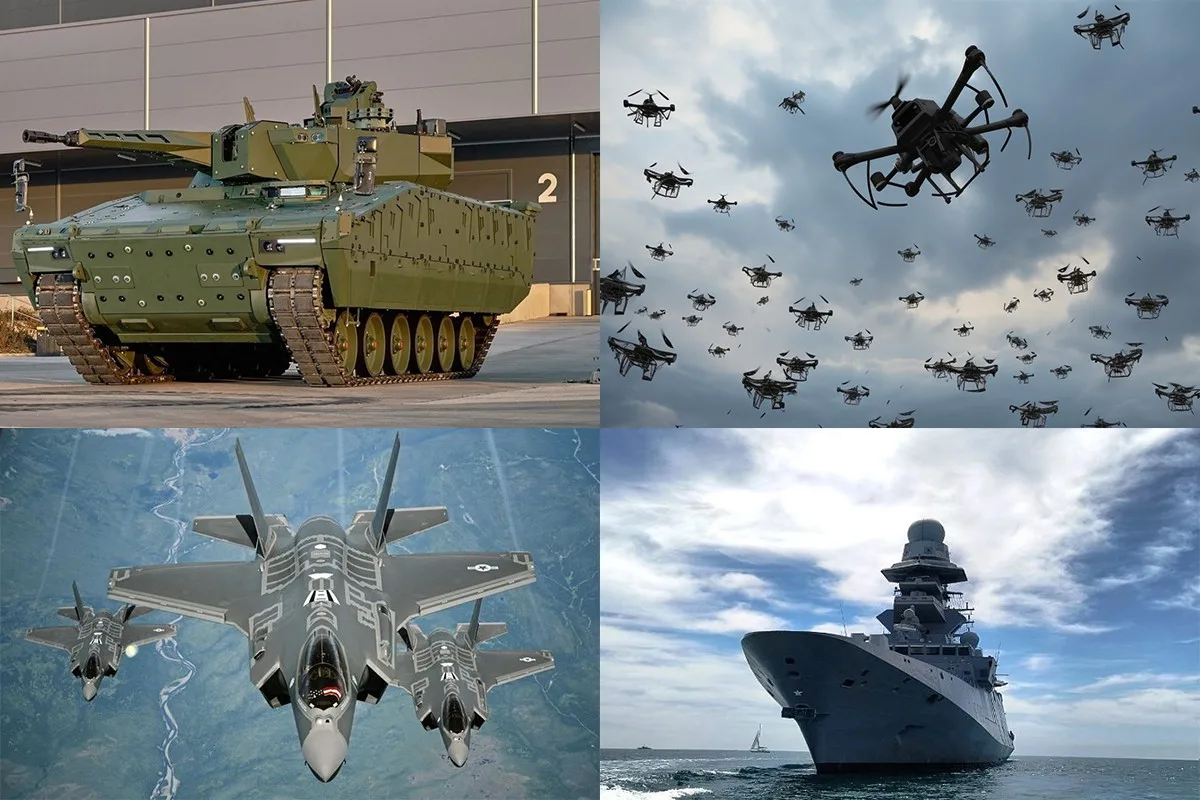
Future combat capability will depend less and less on the single hardware platform (the vehicle, the helicopter, the dart) and more and more on the software that governs it and connects it to others. Italy must accelerate the integration of common data architectures, digital command and control systems capable of operating in high electromagnetic degradation environments, and artificial intelligence algorithms for decision support.
2. Reform of Procurement and Rapid Industrial Alliances
Italian Defense acquisition programs often require ultra-specific requirements and multi-year bureaucratic processes. The Ukrainian model shows that in the drone and electronic countermeasure (C-UAS) sector, a system obsolete in six months cannot follow traditional procurement channels. A preferential line is needed for the acquisition of emerging technologies, creating an agile industrial ecosystem that includes tech SMEs, startups, and academic research centers.
3. Joint Doctrine and Advanced Simulation Centers
To assimilate these lessons, it is essential to have structures dedicated to the study and conceptual validation of modern warfare. Initiatives aimed at creating joint doctrinal and simulation centers — capable of simulating high-tech density scenarios and testing the resilience of communication networks — are the necessary step to avoid being caught unprepared.
Conclusions
The "minister in a hoodie" is not a media oddity, but the face of a Defense industry that is reconfiguring around software code and production scalability. For Italy, adopting this mindset does not mean renouncing the solidity of its military traditions or the excellence of its heavy industry, but urgently integrating them with the culture of speed, modularity, and technological sovereignty. The ability to innovate faster than the potential adversary is today, in all respects, the first deterrence factor.



Comments
No comments yet. Be the first!