


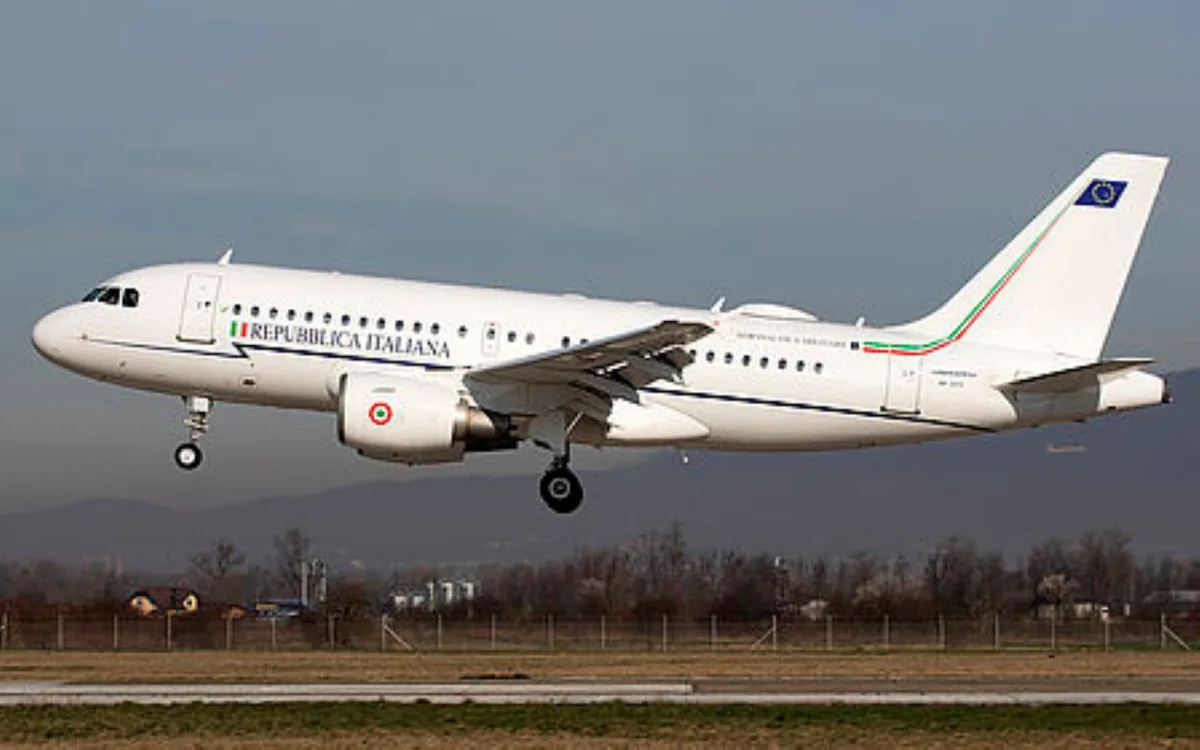

On July 8, 2025, a significant diplomatic incident occurred between the European Union and eastern Libya. The authorities based in Benghazi canceled the visit of the Interior Ministers of Italy, Greece, and Malta, along with the European Commissioner for Migration, declaring the delegation “persona non grata” and inviting them to leave the country.

The delegation – nicknamed “Team Europe” – arrived at Benghazi's Benina Airport with two military aircraft, one Italian and one Greek, while the Maltese minister arrived on a separate flight. Among the participants were the Italian Minister Matteo Piantedosi, his Greek and Maltese counterparts, and the EU Commissioner Magnus Brunner.
An official statement released by the eastern government, led by Osama Saad Hammad and supported by General Khalifa Haftar, described the arrival of the delegation as a violation of diplomatic norms and international conventions. Local authorities emphasized that the entry had not been authorized according to Libyan law and that the presence of foreign officials had not been agreed upon in the prescribed manner.
Italian Reactions and Incident Management
In Italy, the news received widespread media and institutional attention. The Ministry of the Interior attributed the incident to a “protocol misunderstanding,” clarifying that it was a mission aimed at cooperation within the framework of European migration policies. According to the Ministry, the lack of formal authorization was the cause of the mishap.

Some critical voices in the national political sphere expressed doubts about the organizational management of the mission, emphasizing the importance of careful diplomatic planning in sensitive contexts like Libya. However, the government reiterated its commitment to keeping dialogue channels open with all involved authorities, respecting sovereignty and local regulations.
A few hours after arrival, the flights carrying Ministers Piantedosi and Brunner left the country, returning to Rome and Malta, respectively.
Implications for Euro-Mediterranean Dialogue
The Benghazi episode highlights the operational difficulties that can arise in relations with Libya, currently characterized by a dual government structure. On one side is the internationally recognized Government of National Unity based in Tripoli; on the other, the parallel authority in Benghazi, which exercises effective control over vast areas of Cyrenaica and maintains autonomous relations with various regional actors.

In this context, the presence of two distinct governments requires international interlocutors to exercise particular caution in defining cooperation modalities and managing official diplomatic missions.
The July 8 episode shows the need for a realistic approach, capable of considering the political dynamics on the ground and the need for institutional coordination among the parties. Multilateral dialogue remains a strategic objective for the European Union, especially in managing migration flows, stabilizing the central Mediterranean, and combating illicit networks.
At the same time, it becomes essential to strengthen bilateral communication and authorization procedures to avoid misunderstandings that could compromise mutual trust and slow progress on the operational front.
Italy, along with other European partners, will continue to support cooperation paths that respect local sovereignties, aiming to promote shared and pragmatic solutions to common challenges in the Mediterranean.






Comments
No comments yet. Be the first!