



The new National Security Strategy 2025 signed by Donald Trump has had the effect of a resounding slap on Europe: a document that describes the Old Continent as an area in decline, marginal in global competition, even destined—in the words of the US president—to the risk of “erosion of its civilization” in the next twenty years.
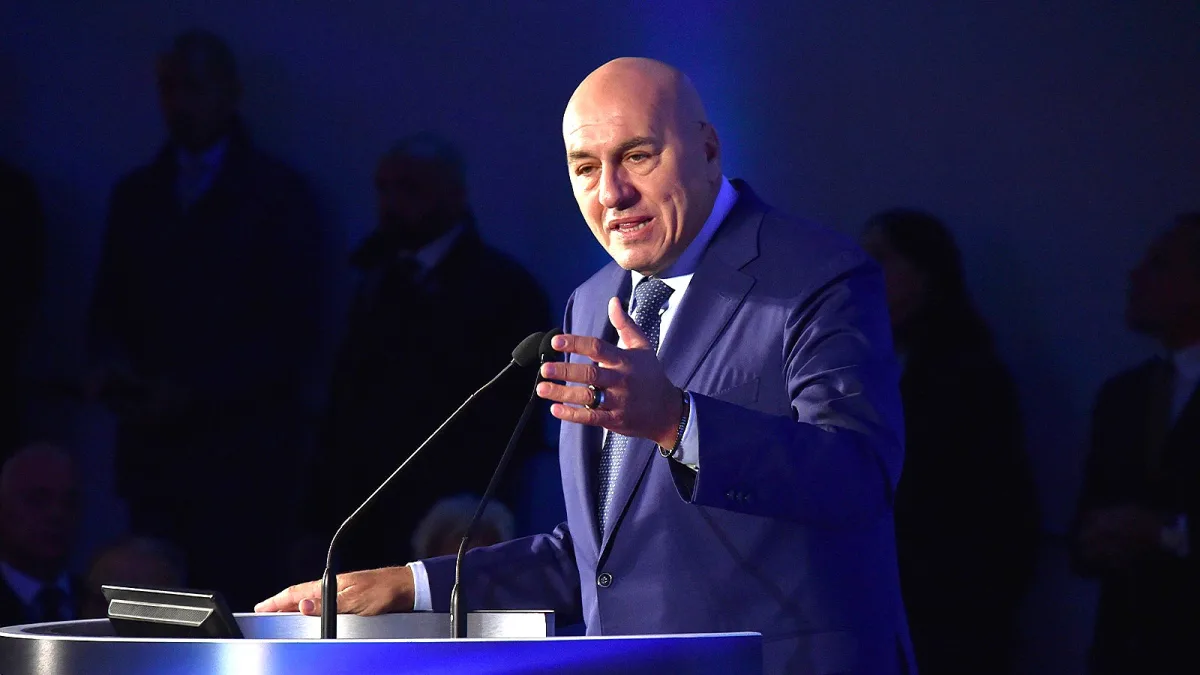
The Italian Defense Minister Guido Crosetto is not surprised, however. On the contrary, he argues that it was all written long ago: the new American strategy, for him, is just the formalization of a change that had been maturing for years and that the advent of Trump has simply accelerated.

Crosetto's interpretation: the real front is the challenge with China
According to Crosetto, the National Security Strategy 2025 should be read with a single key:
the United States is immersed in an “increasingly difficult, complex, and tough” competition with China, and every act of Washington—from trade to diplomacy, from technology to defense—is oriented towards this strategic confrontation.
In this scheme, Europe is not a decisive ally. Crosetto summarizes Trump's message as follows:
Trump has simply made it clear that Europe is of little or no use to him in this competition.
In the minister's view, it is not a sudden whim, but the culmination of a trajectory already visible for some time in American politics, well before Trump's return to the White House. The national security document merely “certifies” the progressive disengagement of the US from the defense of the Old Continent.
Why Europe is no longer central to Washington
Crosetto bluntly lists the reasons why, in American eyes, Europe has become irrelevant in the clash with China:
- It does not have particularly relevant or useful strategic natural resources.
- It is losing the competition on innovation and technology, precisely the fields where the US-China challenge is played out (chips, artificial intelligence, space, cyber).
- It does not have military power comparable to that of major global players.
- In comparison with the new protagonists of the world, Europe appears “small, slow, and old”, to use the words reported by the minister.

In other words: Europe is no longer the pivot of world security, but an area that consumes security produced by others. And in the new National Security Strategy, this is clearly seen: the American focus shifts to the Indo-Pacific, China, global value chains, and regions critical for raw materials, while Europe slips into the background.
End of the era of American “gifts”: Europe must defend itself
Crosetto insists on one point: the defense guarantees “gifted” by the United States to Europe after 1945 are ending. He has been saying this for some time, he recalls, in NATO meetings, bilateral meetings, and interviews; now that line is “codified” in an official American national strategy document.
Translated into political terms:
- Europe—and with it Italy—can no longer rely on the “American friend” to cover its military and strategic vulnerabilities;
- it will have to provide for its own security, defense, and deterrence, without expecting “gifts” from Washington.
For the minister, this is not a reason to tear one's clothes, but a dose of realism that forces Europe to take on responsibilities it has postponed for decades.

The Italian response: new Defense law and overcoming the “Di Paola model”
Crosetto's words on the US strategy intertwine with his project to reform the Italian Armed Forces.
The minister announced that at the beginning of 2026 the government will bring to Parliament a comprehensive law to redesign the Italian Defense, overcoming the law 244/2012 (the so-called “Di Paola model”), which provided for a reduction of personnel to 150,000 military and 20,000 civilians.
The fundamental points of the reform, as described by Crosetto:
- More personnel: current threats require an increase in both the quantity and quality of the armed forces;
- Multidomain armed force, capable of operating not only on land, sea, and air, but also in space and cyberspace;
- Greater technological investment: drones, cyber capabilities, electronic warfare, automated systems are now central, as demonstrated by the war in Ukraine;
- Deep revision of recruitment rules, with the idea of a “selected reserve” that integrates civilian and military skills, and a voluntary short-term conscription as a pool of trained personnel also in case of emergencies or disasters.
In this context, the American National Security Strategy functions almost as a wake-up call: if the US disengages, Italy cannot remain with a military tool built on parameters thought ten or fifteen years ago.
A more autonomous, but not isolated Europe
Crosetto does not read the new scenario as an invitation to break with Washington, but rather as an incentive to build a credible European defense pillar, within NATO but with greater own capabilities.
According to the minister:
- the more European countries invest together in Defense, the less defense costs and the more effective it is;
- the problem is not only about budgets, but about industrial fragmentation: today Europe disperses resources in dozens of different weapon systems, duplications, and lack of common standards.
For this reason, Crosetto envisions a dual strategy:
- Strengthen European cooperation on industry, standards, major programs (next-generation fighters, air defense systems, cyber, space).
- Weave bilateral and multilateral relations with key countries in Africa, the Gulf, Asia, South America, and Australia, to ensure energy, economic, and strategic supply security.
In short, Europe is described by Crosetto as too small to act alone, but still rich and advanced enough to count if it manages to pool resources, investments, and technology.



Comments
No comments yet. Be the first!