




On May 11, 2025, the South Korean news agency Yonhap announced a significant shift in South Korea's naval strategy: the Seoul government has decided to abandon the light aircraft carrier project with F-35B fighters in favor of a multi-role command ship designed for operations with unmanned aerial vehicles. This choice is a clear signal of how South Korea's military priorities are evolving in light of recent technological and tactical developments.
The new plan, supported by the Republic of Korea Navy (ROKN), reflects a broader reconsideration of how to approach modern warfare. In particular, the decision is influenced by lessons learned from the conflict between Russia and Ukraine, where drones have played a crucial role in surveillance, attack, and psychological disruption operations. It is therefore not surprising that South Korea has decided to focus on unmanned systems, recognizing their advantages in terms of cost, versatility, and reduced human risk exposure.

This choice also implies a cultural and doctrinal shift. For years, the idea of a South Korean aircraft carrier was seen as a symbolic element of the country's maritime power. However, with the evolution of warfare scenarios, investing in a more agile, resilient, and technologically advanced fleet now appears to be a more forward-looking move.
Farewell Aircraft Carrier, Welcome Multi-Role Command Ship
The original project, known as Multipurpose Large Transport Ship-II, envisioned the construction of a 30,000-ton light aircraft carrier, 260 meters long and capable of carrying up to 20 F-35B short takeoff and vertical landing fighters. The ambitious initiative was promoted during the administration of President Moon Jae-in, but then lost momentum with the new government of Yoon Suk-yeol, concerned about the high cost of the entire program and its real strategic usefulness in the current context.

The new multi-role command ship (referred to as MPF, Multi-Purpose Flagship) will maintain similar dimensions but will be almost exclusively intended for drone deployment. In addition to combat and surveillance drones, the use of loitering munitions, also known as suicide drones, is also planned. It will also be able to host a limited number of traditional helicopters for transport or attack, but the operational focus will be on unmanned systems.
From a financial perspective, the change is radical. The old plan envisaged a total expenditure of about 7 trillion won (over 4.7 billion euros), with about 2.5 trillion allocated for the ship's construction and 4.5 trillion for the purchase of F-35Bs. Each fighter, in fact, costs between 150 and 200 billion won. By focusing on drones, the South Korean Navy expects to save a considerable portion of the budget, also reducing maintenance and management costs in the long term.
As a concrete first step, the government has commissioned HD Hyundai Heavy Industries to conduct a conceptual design study of the new command ship. The plan will be officially presented to the Joint Chiefs of Staff by the end of the month, but will require further formal approval to replace the original aircraft carrier program.
A Model for Future Warfare
South Korea's choice is part of an increasingly global trend that sees the use of drones as a cornerstone of future military strategy. In many countries, armed forces are reorienting their doctrines towards more economical, flexible, and less vulnerable systems, capable of operating effectively in hostile and contested environments.
The South Korean command ship is poised to become an example of how it is possible to modernize naval capabilities without following the classic model of large aircraft carriers, which are increasingly vulnerable and costly. Instead of projecting power through manned fighters, the ROKN intends to dominate the maritime theater through the strategic use of drone swarms, capable of covering great distances, evading defense systems, and operating with autonomy and precision.
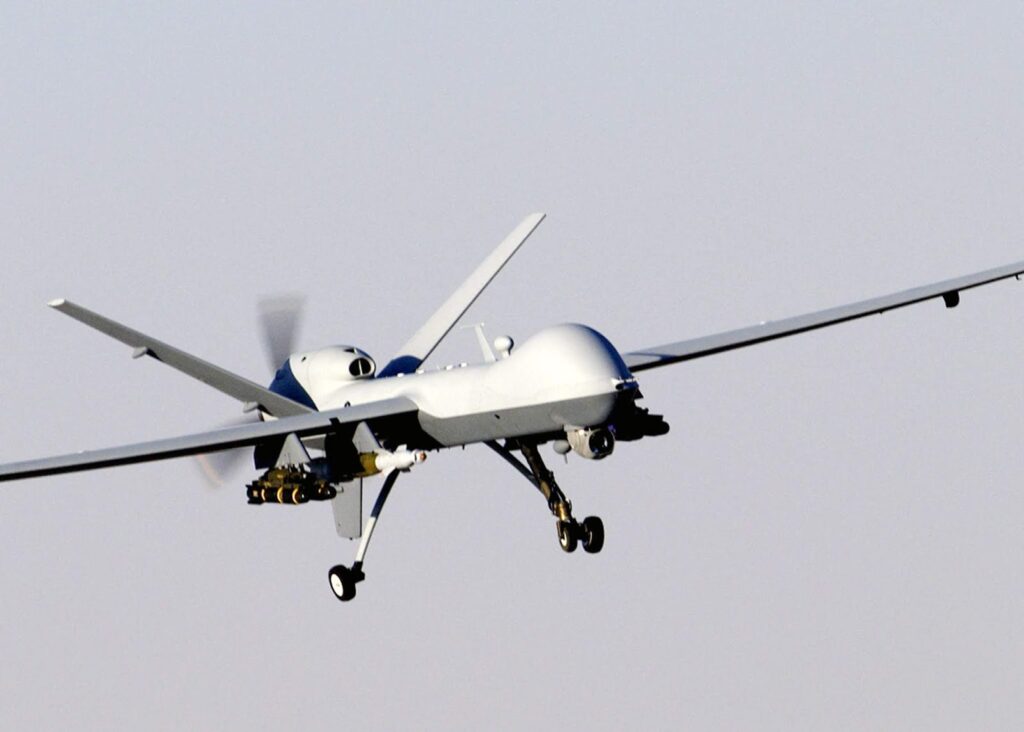
Moreover, the new doctrine reflects a greater focus on operational resilience. Drones can be produced, replaced, and upgraded more easily than advanced fighters, and do not endanger pilots' lives. In high-intensity warfare situations or asymmetric scenarios, these advantages become decisive.
With this decision, South Korea not only adapts its armed forces to the challenges of the 21st century but also positions itself as a pioneer in the transformation of naval warfare. A change that will likely be observed and followed by many other maritime powers in the near future.



Comments
No comments yet. Be the first!