


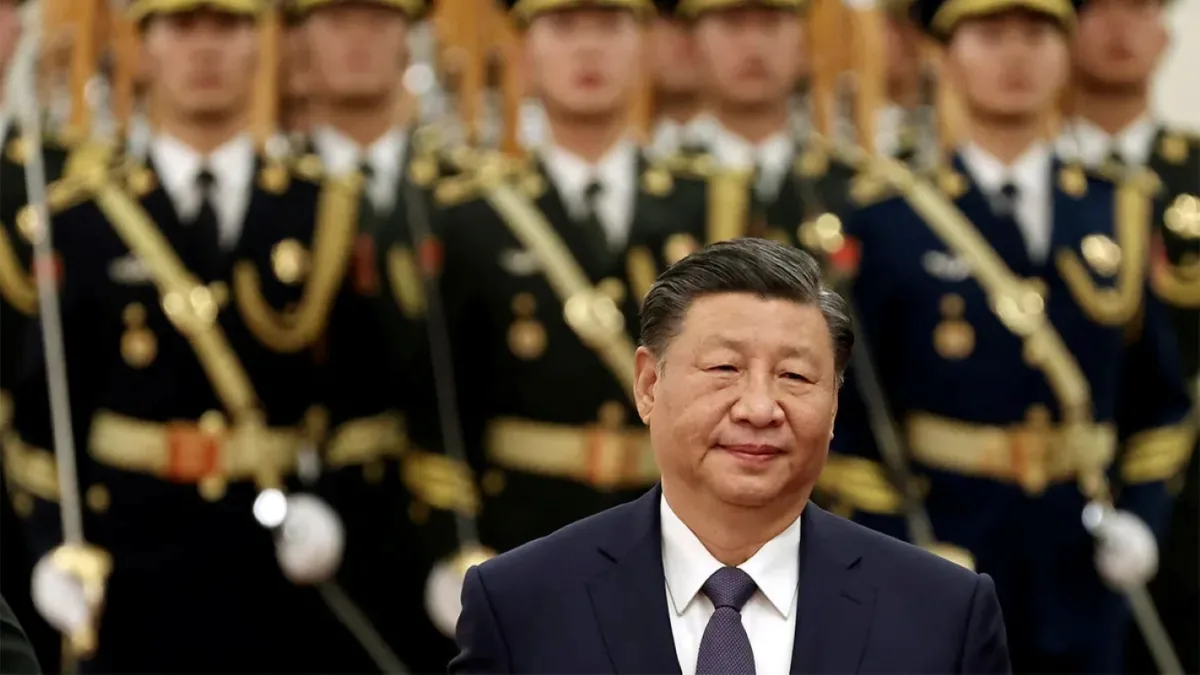

China accelerates once again on the military front. During the National People's Congress, Beijing announced a 7% increase in the defense budget, confirming its intention to strengthen the People's Liberation Army (PLA) in an increasingly tense regional context, especially in the Taiwan Strait.
Behind the accounting data lies a more complex dynamic: on one hand, the modernization of operational capabilities, on the other, the persistent internal weaknesses of the military apparatus, starting with corruption and the issue of political loyalty at the top.

Modernization and Internal Limits
It is not yet entirely clear how the new resources will be translated into concrete capabilities or new weapon systems. However, the qualitative leap made by the PLA in the last ten years is evident. The reforms desired by Xi Jinping since 2015 have transformed the military apparatus into a more modern, structured, and operationally oriented force.
Indeed, China has acquired, often in large quantities, almost all modern weapon systems available today. The result is an armed force that can no longer be considered merely a tool of political deterrence, but a credible military component.
Alongside the progress, however, deep critical issues persist. Corruption remains one of the most serious problems. It is described as a “massive” phenomenon, which has had significant effects on the chain of command. In recent months, the Chinese leadership has launched a new purge campaign at the top, drastically reducing the number of generals in key positions and leaving some territorial commands without stable leadership.
The official motivations refer to the fight against corruption, but it could be a matter of political loyalty. The PLA is not the army of the State, but rather that of the Chinese Communist Party. Loyalty to Xi Jinping thus remains a central element.
Taiwan at the Center of Chinese Pressure
The strengthening of the defense budget fits into a framework of increasing pressure on Taiwan. Part of the additional resources could be allocated to military exercises around the island and the enhancement of cyber operations.
The situation in the Strait has become increasingly critical. Beijing's strategy aims not only to discourage any hypothesis of formal independence for Taiwan but also to influence its internal political debate and reduce its diplomatic space.
In recent years, PLA exercises around the island have multiplied, often in response to statements by the Taiwanese president or decisions by the United States regarding military supplies. Beijing's message is clear: to demonstrate credible operational capabilities and firmly reiterate its red lines.

A Long-Term Trajectory
On the economic front, the 7% increase fits into Beijing's trend of aligning military spending with GDP growth. The decision thus confirms a long-term trajectory: the People's Republic intends to consolidate its regional and global military role, developing an increasingly modern and ready-to-use military instrument.
On the eve of the current annual political session, Xi Jinping also removed numerous high-ranking officers. A fact that shows how the modernization of the PLA is not a linear process: the modernization of equipment is accompanied by a continuous restructuring of command.
The essential point is that today the PLA represents a force to be taken seriously. The progress made is real, although questions remain about the quality of command and internal cohesion. For international security observers, the signal is clear: China continues to invest in its military power, while Taiwan remains the most sensitive front of this strategy.



Comments
No comments yet. Be the first!