


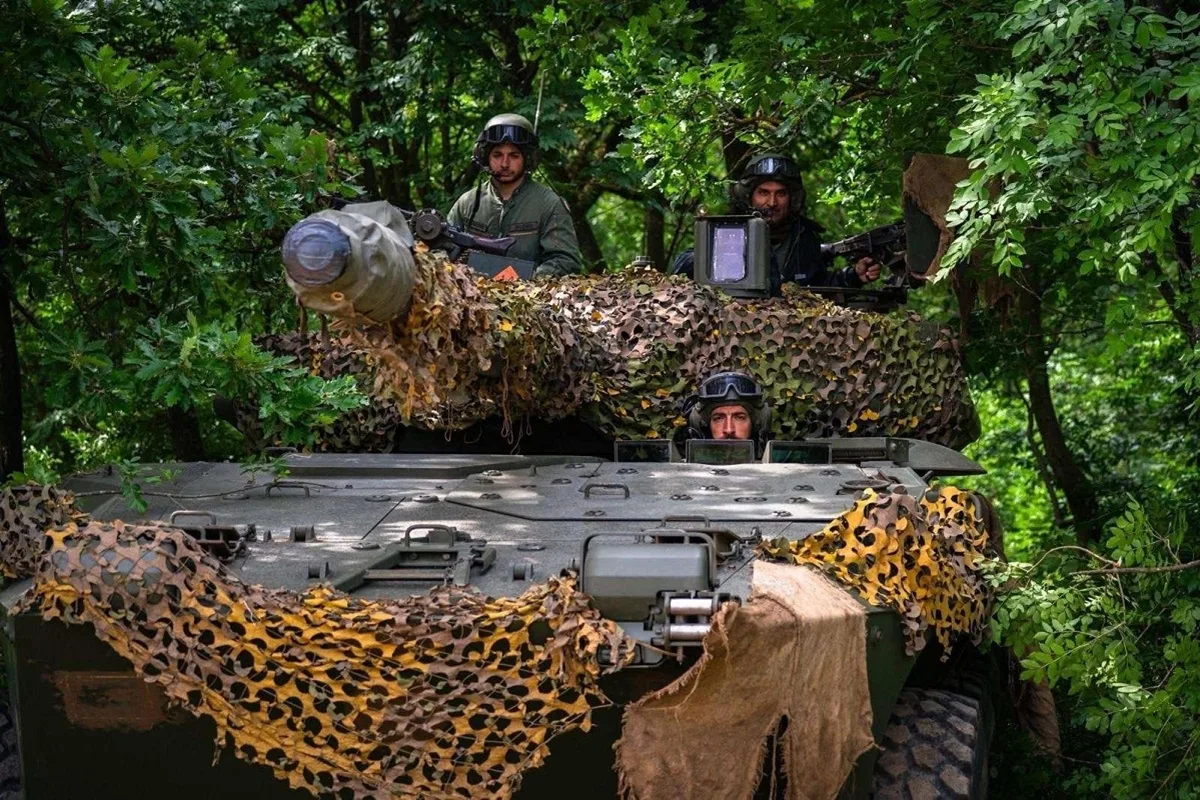

On June 17, 2025, the exercise “Brave Warrior” concluded in Hungary, one of the key moments in the training path of NATO units engaged in Operation Forward Land Forces (FLF). The final phase, called “Rising”, took place in the Bakonykuti area, a few kilometers from Camp Croft base (Veszprém), and represented the culmination of months of technical and operational preparation.
The objective of the activity was to achieve Full Operational Capability (FOC), meaning the full operational capability of the multinational Battle Group according to the rigorous standards of the Atlantic Alliance. To reach this milestone, an extremely realistic Field Training Exercise (FTX) was conducted, during which the forces involved engaged in an intense 72-hour consecutive combat simulation.
The use of the MILES system (Multiple Integrated Laser Engagement System) was crucial, an advanced laser simulation technology that allows real-time evaluation of the effects of tactical actions in the field. Thanks to this system, the exercise could take place in a dynamic “warfighting” environment, where every movement, mistake, or success had concrete simulated consequences, offering an operational experience of high educational value.
The Italian contribution: Aosta Brigade at the center of the action
At the heart of the “Brave Warrior” exercise also operated the Italian maneuver company, framed within the NATO Battle Group and based on the Mechanized Brigade “Aosta”. This unit brought to the field a complex tactical composition, including: two infantry platoons, a heavy mortar platoon, a sniper team, an engineer platoon, an artillery section equipped with FH-70 howitzers, a JTAC (Joint Terminal Attack Controller) unit, and a reconnaissance platoon equipped with “Centauro” armored vehicles.

The Italian contribution proved crucial in ensuring the flexibility and effectiveness of the Battle Group. During the 72 hours of the exercise, Italian troops operated side by side with units from the Hungarian Mechanized Brigade and the Croatian Military Police. The operations required perfect synergy between fire and movement, as well as smooth and coordinated communication along the entire chain of command.
The soldiers of the “Aosta”, strengthened by the experience gained in previous training cycles, faced complex scenarios simulating conventional attacks, articulated defenses, and emergency situations, demonstrating a mature operational capability consistent with the mission's objectives.
This ability to adapt and cooperate proved essential for tackling the “warfighting” scenario designed for the FTX, which placed the participating forces in operational stress conditions similar to those of a real conflict, with offensive maneuvers, territory control, and real-time communication management.
A step forward for NATO: interoperability and collective security
The activity took place under the direct observation of NATO validation personnel, tasked with verifying the operation's compliance with the required standards. At the end of the exercise, NATO officially certified the achievement of the Full Operational Capability of the multinational Battle Group deployed in Hungary.
This success not only represents a training milestone but also a clear example of the validity of NATO's approach to military cooperation. The adoption and concrete application of common technical-tactical procedures, developed at national and international levels, allowed Italian, Hungarian, and Croatian forces to operate as a single, integrated unit.
In a global geopolitical context characterized by uncertainty and instability, the rapid and coordinated response capability of Alliance forces becomes an essential element to ensure deterrence and collective security. Operation Forward Land Forces – of which “Brave Warrior” is a crucial moment – fits fully into this paradigm, providing NATO with a credible and prepared presence in the Central European area.

For Italy, the participation of the “Aosta” Brigade represents not only an international commitment but also a confirmation of its skills and capabilities in the field of multilateral operations. The lessons learned in Hungary will further strengthen the operational posture of our armed forces, increasing their readiness in increasingly complex and interconnected contexts.






Comments
No comments yet. Be the first!