


The President of the Council Giorgia Meloni and the German Federal Chancellor Friedrich Merz signed in Rome, at Villa Doria Pamphilj, an “Agreement on Enhanced Cooperation in Security, Defense, and Resilience” with the aim of making bilateral coordination more structural and strengthening the European defense industrial base.
In the chapter dedicated to industry, the text clarifies that cooperation can build on existing projects – without being limited to them – and indicates a range of programs: from land systems (Panzerhaubitze 2000, Vulcano munitions, armored platforms) to aeronautical programs (Eurofighter, Eurodrone, NH90, F-35), up to the maritime domain (class 212 submarines, including the Near Future Submarine) and some projects within OCCAR.

Key Points
- Panzerhaubitze 2000
- Vulcano munitions
- Eurofighter jets
- Eurodrone
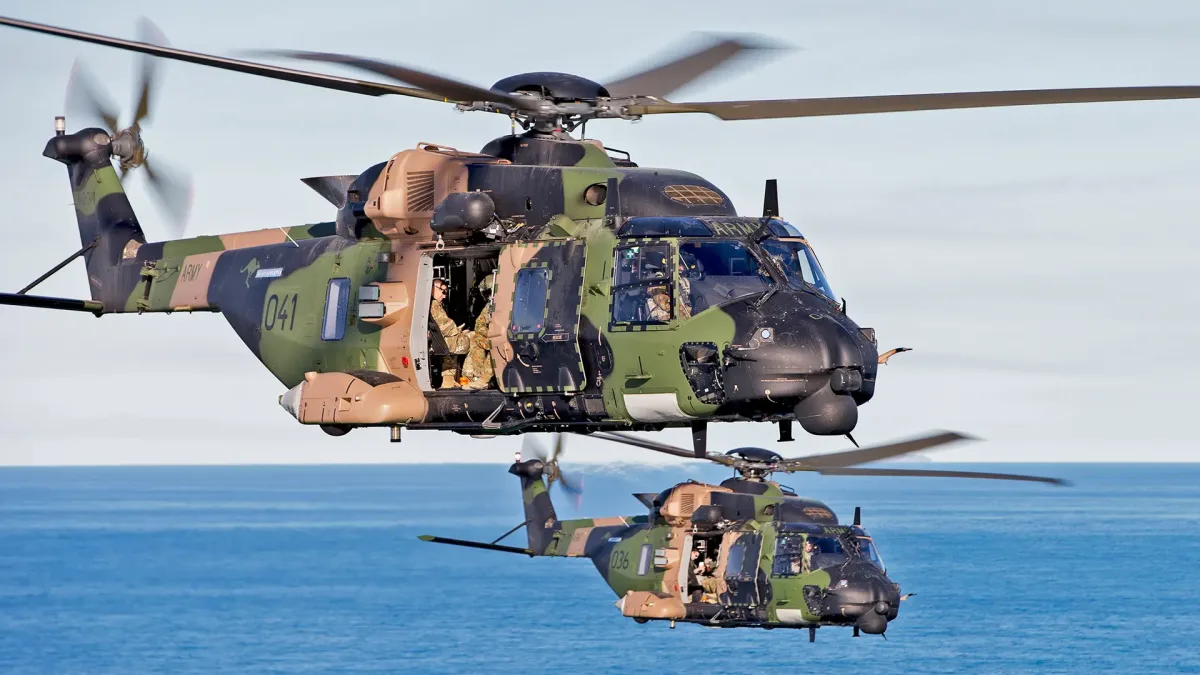
- NH-90 multirole helicopter
- U-212 submarine (also NFS)
- OCCAR projects (REACT and ESSOR)
A “multi-domain” perimeter, aiming for interoperability
The agreement links industrial cooperation to standardization, interchangeability, and interoperability: more aligned requirements, more common logistics, and, where possible, joint development, shared updates, and coordinated procurement. The text also provides for a regular “Industry Defence Roundtable” between governments and businesses, to align operational priorities and production capacities.
1) Panzerhaubitze 2000: the “old” artillery as common ground
Among the land systems mentioned is the Panzerhaubitze 2000, a 155/52 self-propelled howitzer in service in Germany and Italy. In a European phase where firepower capability and volume issues are central again, convergence on a common system can mean integrated support chains, harmonized training and maintenance, and, above all, full compatibility with advanced ammunition families.

2) Vulcano Munitions: the guided family already crossing the Italian-German axis
The document explicitly mentions the VULCANO family. These are extended-range munitions and, in some versions, guided, usable on widespread calibers (land and naval). The natural area of cooperation is the alignment between requirements, acquisition batches, and production to increase volumes, shorten times, and consolidate compatibility between platforms.
3) Eurofighter: a European consortium where Italy and Germany are already “system shareholders”
The Eurofighter Typhoon is indicated as a base on which to build further cooperation. Here the bilateral leverage is not to “create” a new project, but to accelerate the evolution of capabilities: common updates, more convergent packages (sensors, electronic warfare, armaments), and a shared line on the future roadmap of the system.
4) Eurodrone: the EU drone program as a litmus test of industrial sovereignty
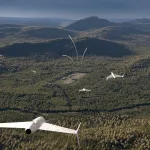
Among the most symbolic projects is the Eurodrone (MALE RPAS), born to equip Europe with a common capability in the medium-altitude, long-endurance drone segment. For Rome and Berlin, enhanced cooperation can become the tool to transform an industrial program into a fully deployable capability: training, usage doctrines, airspace integration, and shared governance on evolutions and acquisitions.
5) NH-90: common platform and fleet updates
The NH-90 is another platform mentioned. Here bilateral cooperation can yield immediate results, especially in the life cycle: availability, retrofit, software, maintenance standards, and updates. In a context of limited resources, “mass” on support and updates is often more effective than isolated new acquisitions.

6) U-212: submarines and Near Future Submarine, an already structured cooperation
In the maritime domain, the text includes class 212 submarines and the Near Future Submarine. It is an area where industrial and technical-operational cooperation between Italy and Germany already has solid roots. The political framework can facilitate common decisions on technological updates, critical components, training, and support, with increasing attention also to the protection of submarine infrastructures and resilience in the maritime domain.
7) OCCAR projects: REACT and ESSOR, from the electromagnetic spectrum to software-defined radios
The list includes two initiatives within OCCAR:
- REACT: focused on electronic attack and jamming capabilities in complex scenarios.
- ESSOR: initiative for software-defined radios and interoperable waveforms, for more secure and compatible communications among European forces.
These are less visible programs than fighters or submarines, but often decisive: without secure communications and without superiority in the electromagnetic spectrum, even the best platforms struggle to express their full potential.
Beyond the list: the political framework and industrial impacts
The text leaves room for “additional areas” and emphasizes the intention to systematize existing projects to achieve faster results: greater interoperability, more robust supply chains, greater production capacity, and reduction of European fragmentation. In the background, the agreement signals the desire to make the Rome-Berlin axis in defense more stable: not as a substitute for EU and NATO programs, but as a pragmatic accelerator to transform already initiated cooperations into more solid operational and industrial capabilities.



Comments
No comments yet. Be the first!