




Artificial intelligence (AI) has promised to revolutionize the battlefield, improving the efficiency of systems and weaponry, reducing human presence in military operations, and accelerating the decision-making process. After years of theoretical development and research, in 2024 AI has finally become an operational reality. Recent military operations in various conflict areas, such as in Ukraine and Gaza, show how AI is changing the warfare landscape.
In Ukraine, for example, a field test was conducted that saw the use of autonomous drones to identify and destroy hidden targets without the direct control of a human pilot. Reconnaissance drones, coordinated through AI algorithms, autonomously tracked flight paths and, once the target positions were identified, another group of drones executed the attack. This type of operation marks a significant step towards the automation of military missions, reducing the risk for soldiers and increasing the effectiveness of interventions.
Other examples are found in the use of AI for managing air strikes, where systems that automatically identify targets have been employed, as occurred with a military program in Israel. In these contexts, AI has the ability to select individuals to strike without direct human supervision, sparking debates on the need for greater ethical and human control in the use of autonomous technologies for lethal decisions.
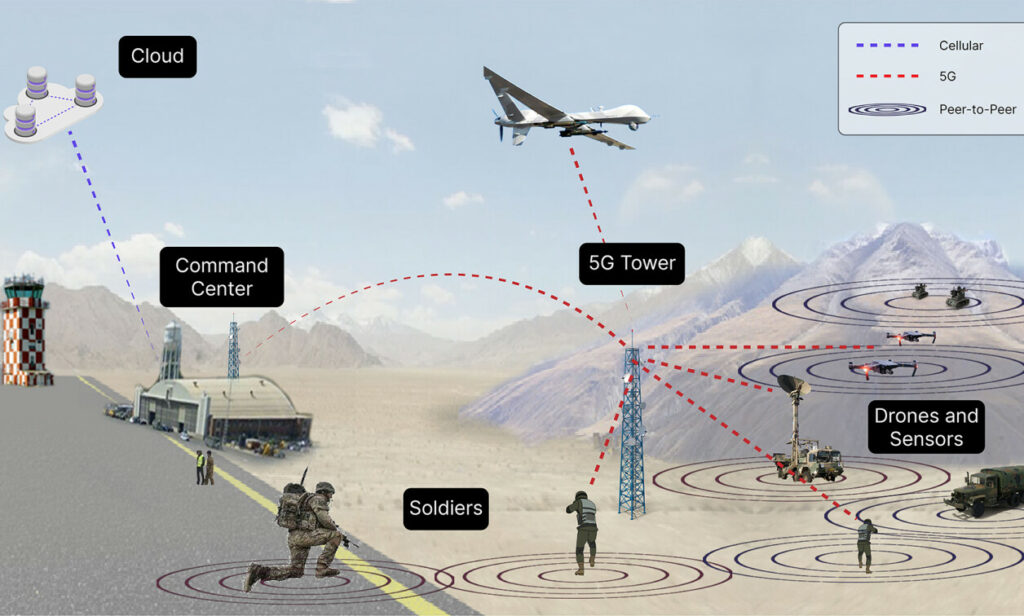
AI for Defense: Drones and Autonomous Systems
In addition to improving attack operations, artificial intelligence plays a fundamental role in managing data on the battlefield. The United States Army, for example, has developed algorithms that allow for rapid analysis of collected data to provide decisive information to commanders in the field. AI is also proving crucial for the creation of autonomous drone swarms that can operate in a coordinated manner to carry out specific missions. These swarms are designed to address specific operational problems, such as aerial surveillance, target destruction, and defense against other enemy swarms.
The United States Department of Defense has announced initiatives like the "Replicator" project, aimed at developing autonomous drones capable of operating quickly and efficiently. These drones are part of a broader infrastructure that also includes defense against enemy swarm attacks, using AI to detect, analyze, and respond to threats in real time. The ability of these drones to operate autonomously or in collaboration with human resources offers an important strategic advantage, creating a dynamic ecosystem that can quickly adapt to enemy attacks.
The integration of autonomous systems, such as unmanned aerial vehicles (UAS) and robots, is rapidly becoming the norm, marking a fundamental change in battle strategies. Operations conducted by autonomous systems reduce the risk for soldiers and increase operational continuity, even in the presence of threats such as swarm attacks.

Ethical Reflections and Concerns on the Use of AI for Lethal Force
Despite the progress, the introduction of AI in combat contexts raises important ethical issues, particularly regarding the use of autonomous technologies to make lethal decisions. Although AI can improve efficiency, some experts raise concerns about the possibility that decisions made by autonomous systems may not be properly monitored, with the risk of causing collateral damage or hitting erroneous targets. The lack of direct human supervision, as in the case of programs that select targets for air strikes, is an aspect that requires attention to prevent technology from making wrong or unjust decisions.
Moreover, the increasing reliance on AI capabilities could reduce soldiers' ability to exercise their critical judgment, creating a dependency on technology for decisions that should be made by humans in complex and variable contexts. The risk of delegating to an automated system decisions that concern life and death is a theme that requires thorough reflection.
The discussion on the use of AI in military contexts is not only about the technology's ability to improve operations but also about the need to establish clear limits and ethical guardrails, ensuring that AI supports the human decision-making process without completely replacing it. It is essential that the international community and defense industries work together to develop guidelines that ensure responsible use of AI, especially when it comes to lethal applications.
Artificial intelligence is radically changing the landscape of military operations, offering new opportunities to improve efficiency, safety, and responsiveness on the battlefield. However, it is necessary to address the ethical challenges and risks associated with the automation of lethal decisions. The future of the armed forces will be increasingly interconnected with AI technology, but it is essential that this evolution occurs with caution and adequate human oversight.



Comments
No comments yet. Be the first!