




Artificial Intelligence (AI) is no longer a futuristic prospect: it is a technological reality that is redefining the foundations of advanced economies and global security architectures. For Italy, the integration of AI in the defense, industry, and public administration sectors represents not only an opportunity but a strategic necessity. Just as space and cyberspace were in the past, AI is today the new "strategic domain" where competition between global powers will be played out.
Why AI is crucial for national security
In today's geopolitical context, characterized by hybrid threats, high-tech conflicts, and widespread use of drones, AI emerges as a force multiplier. Intelligent weapon systems, real-time predictive analysis, autonomous electronic warfare, and AI-powered combat simulations offer defense capabilities that can decide the outcome of a conflict.

A concrete example is provided by the use of advanced generative models like GPT-NeoX, FLAN-T5, or Dolly-v2 by companies like Palantir, to support real-time tactical decisions. However, these tools require careful use, as language models can generate incorrect responses ("hallucinations") with disastrous outcomes in operational contexts.
The war in Ukraine has made it clear how decisive AI can be on the field. The use of autonomous drones, intelligent targeting systems, and predictive analysis has allowed Kyiv to compensate for the numerical disparity with Russia, demonstrating how even non-dominant actors can, thanks to AI, achieve asymmetric advantages. In this context, the question arises: when will Italy adopt a clear and operational strategy on artificial intelligence for Defense?
Italy and AI in Defense: a scientific ecosystem yet to be integrated
Italy has a solid academic tradition in AI. Over 160 university courses in 53 universities, a national PhD in AI with 61 entities involved, and the FAIR project with over 350 researchers, testify to the vitality of our scientific ecosystem.
However, the ability to transfer research and innovation to the productive fabric remains limited. Only 15% of Italian SMEs have activated AI projects, and the number of startups in the sector is among the lowest in Europe.
Yet, some realities are trying to bridge the gap. According to Anitec-Assinform, more than 50% of the over 600 ICT "digital enabler" companies in Italy employ AI, albeit often marginally. Wired Italia has selected some of the most promising Italian startups:
- Heero – AI platform for multilingual personalized coaching.
- Algor Education – Transforms texts into interactive maps for students.
- Small Pixels – Optimizes compressed video quality with AI.
- Aiko – Solutions for autonomous spacecraft.
- Neurality – Visual quality control through AI analysis.
- Aindo – Synthetic data for privacy protection.
- Point-out – AI for advanced media relations management.
- AIM – Predictive industrial maintenance with AI analytics.
- PatchAI – Empathetic support for patients in clinical trials.
- N.I.Te. – Automatic handwriting recognition.
- Focoos AI – Optimized neural networks for edge devices.
- VoiceMe – Secure payments through voice recognition.
- IdentifAI – Detection of AI-generated content.
- Indigo AI – Advanced chatbots for customer service.
- Clearbox – Synthetic data solutions for industry.
- iGenius – "Modello Italia" language model for business.
- Asc27 – Vitruvian-1 14B, Italian LLM for businesses and PA.
Some of these startups have potentially relevant applications for Defense, such as video analysis (Small Pixels), onboard data processing for space missions (Aiko), biometric authentication (VoiceMe), anomaly detection (Neurality), and decision support with advanced language models (iGenius, Asc27). However, there is a lack of a national infrastructure that allows these excellences to collaborate directly with the defense sector in structured and continuous programs. In fact, to have decisive developments, these realities need a national ecosystem that supports them with investments, public outlets, access to data, and advanced digital infrastructures.
A military strategy still absent: the comparison with NATO and global countries
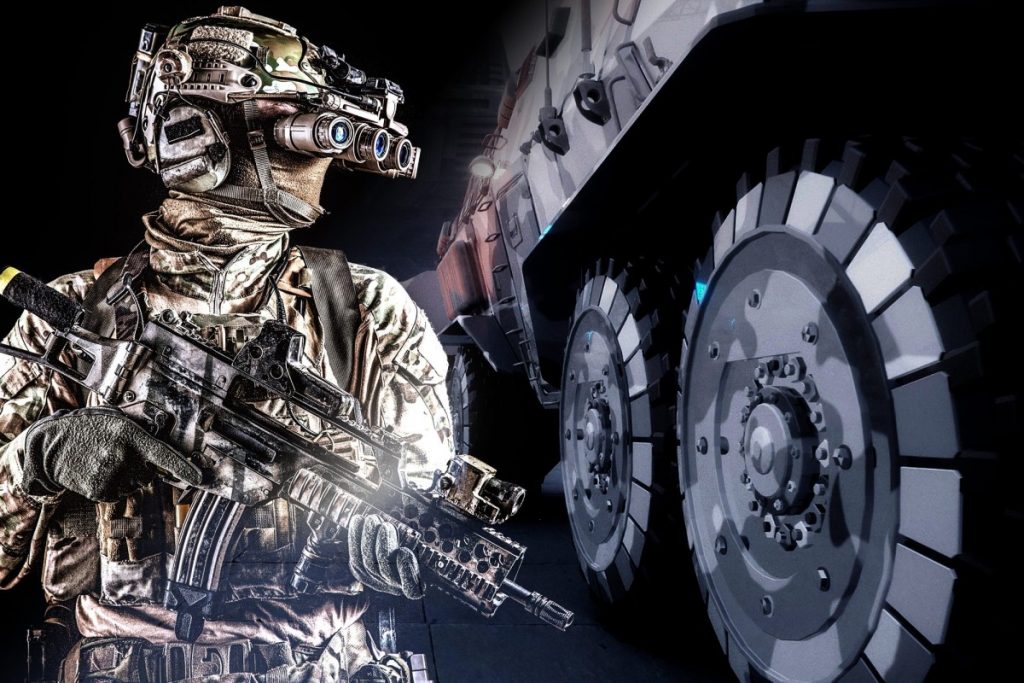
Unlike countries like the United Kingdom, France, the United States, China, and Israel, which have developed structured strategies for the integration of AI in Defense, Italy does not yet have a dedicated plan. The National Strategy for Artificial Intelligence 2024 recognizes the value of AI for national security but remains vague on the timing and operational tools in the military field.
In the United Kingdom, for example, the Defence AI Centre already works in synergy with industry and academia to accelerate the adoption of AI solutions on the field. The United States has created a unified structure (CDAO) to ensure military decision-making advantage through data. Israel founded in 2025 a dedicated AI & Autonomy Directorate at the Ministry of Defense.
Faced with a global race for military AI, the Italian delay risks turning into vulnerability. The absence of a strategy, a dedicated national center, operational guidelines, and a specific procurement program for AI technologies represents a gap that must be urgently filled.
Towards a national strategy for artificial intelligence in Defense
The "Strategic Program for Artificial Intelligence" 2022-2024 laid important foundations, but today an updated strategy is needed, which includes Defense as a central pillar. It is necessary to:
- Train talents with specialized paths on a national scale.
- Support applied research and national platforms for data.
- Encourage AI startups with simplified access to capital and public contracts.
- Integrate AI in key sectors: defense, health, justice, industry, PA.
- Create a national center for AI in Defense, as done by the UK and USA.
The safe adoption of AI also involves technical tools such as:
- Federated Learning – Allows collaborative training of AI models on distributed data without centralizing them, preserving user privacy.
- Adversarial Training – Makes AI models more robust by training them with examples designed to deceive them, improving resistance to attacks.
- Differential Privacy – Introduces noise into data to prevent the identification of personal information, protecting individual privacy.
- Secure Enclaves – Protected areas of the CPU that isolate data and code to prevent unauthorized access and external attacks.
- Model Watermarking – Inserts invisible digital signatures into AI models to trace their origin, discourage illicit use, and protect intellectual property.
Conclusions
Artificial Intelligence is today a strategic asset as much as energy, space, and cyberspace were in the last century. For Italy, it means choosing whether to remain on the sidelines of global competition or to become a protagonist in the development of a technology that will define the future of security and productivity. The potential exists, as do the skills. A clear political vision and coordinated mobilization between the Ministry of Defense, General Staff, national industry, universities, and high-potential startups are needed. It is also necessary to include AI in the Multi-Year Defense Program Documents and in military procurement, encouraging public-private partnerships that make dual-use AI solutions operational. AI can be the engine of a new Italian technological sovereignty. But without a strategy for Defense, we risk remaining spectators in a world that is moving fast.



Comments
No comments yet. Be the first!