




Anduril Industries, a US company specializing in advanced defense technologies, has announced the start of large-scale production of its interceptor drone Roadrunner-M, marking a breakthrough in the field of protection against aerial threats. The decisive step came with the awarding of a major contract by the United States Department of Defense, valued at nearly 250 million dollars. The contract provides for the supply of over 500 Roadrunner-M units, accompanied by Pulsar electronic warfare systems, to strengthen defense against drones and unmanned aerial systems (UAS) in the most sensitive operational areas.
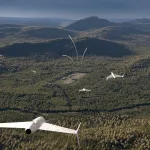
The news was accompanied by the release of images showing numerous already assembled units, confirming that the system has moved from the development phase to production in record time. Roadrunner-M is a VTOL (vertical take-off and landing) drone, supervised by an operator but equipped with autonomous capabilities. It is powered by two turbojet engines and can take off vertically without the use of boosters, reaching high subsonic speeds, qualities that make it extremely responsive against emerging aerial threats.
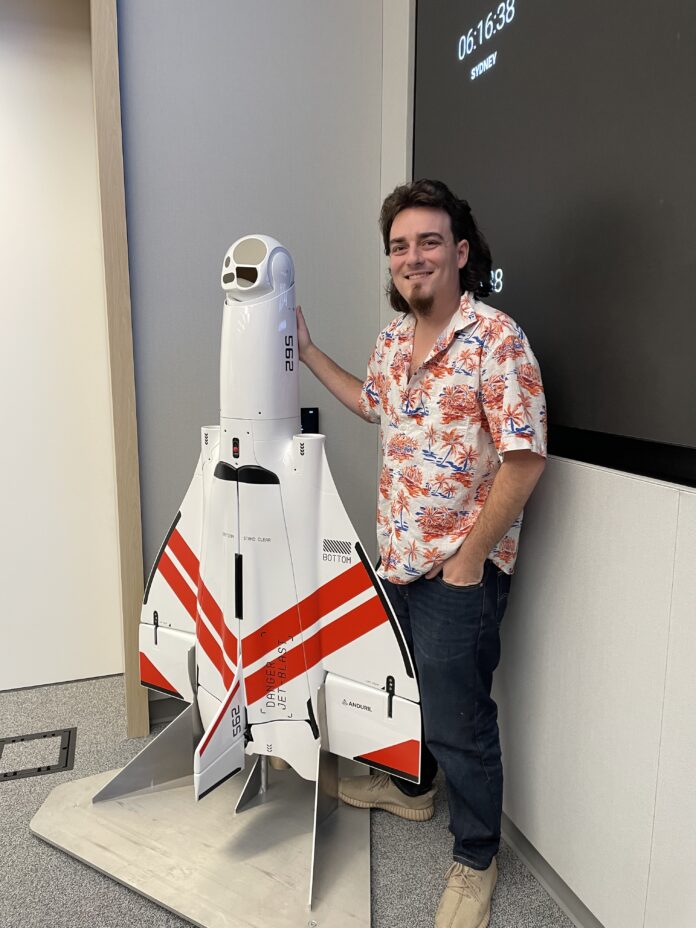
Reusable, modular, and already in operational field
One of the most innovative features of the Roadrunner-M is its reusability. In the configuration with a fragmentation explosive warhead, it is designed to destroy airborne targets such as enemy drones or missiles, but if the interception misses, the drone can land vertically in a controlled manner, ready to be reused. This approach drastically reduces operational costs and introduces a tactical sustainability logic never seen before in systems of this type.
The drone has passed operational evaluations in real conditions starting from January 2024, while the Pulsar system has been active in various areas since 2023. Together, they represent a new generation defensive architecture based on artificial intelligence, modularity, and rapid response capability. Both systems are designed to integrate with existing radars and sensors, facilitating deployment in operational contexts already used by the US armed forces.
This interoperability, combined with continuously updatable software, allows Roadrunner to quickly adapt to new threat scenarios. Its modular architecture also allows for alternative missions to kinetic interception, making it a flexible and multifunctional tool.
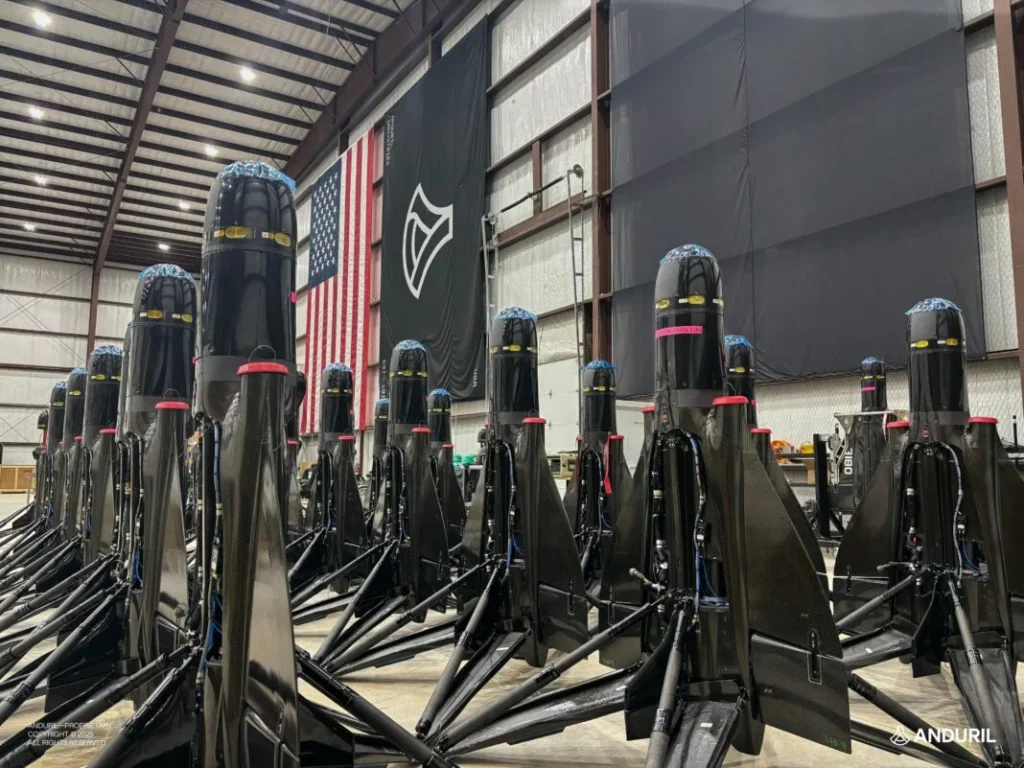
Anduril's new industrial model: fast, private, and scalable
The nearly 250 million dollar contract signed with the US Army is a strong signal of the effectiveness of the industrial model chosen by Anduril. Founded in 2017 by Palmer Luckey, the company stands out for its innovative and self-financed approach to military technology development. Unlike traditional programs, often slow and costly, Anduril has brought Roadrunner from design to operational field in less than two years.
The deliveries expected between the end of 2024 and 2025 will provide the US armed forces with an immediately available and highly scalable air defense capability, particularly in operational areas where the drone threat has become more pressing. Roadrunner-M is indeed designed to operate precisely in those contexts: able to launch in seconds, intercept targets with high precision, and, if necessary, return to be relaunched.
With this contract, Anduril reaches nearly 350 million dollars in agreements signed with the Department of Defense for advanced air defense systems, demonstrating that innovation and speed are no longer the privilege of civilian big tech, but a concrete resource for national security. Roadrunner and Pulsar therefore represent not only a new generation of defensive tools but also a new way of conceiving the production, integration, and use of military technology.



Comments
No comments yet. Be the first!