


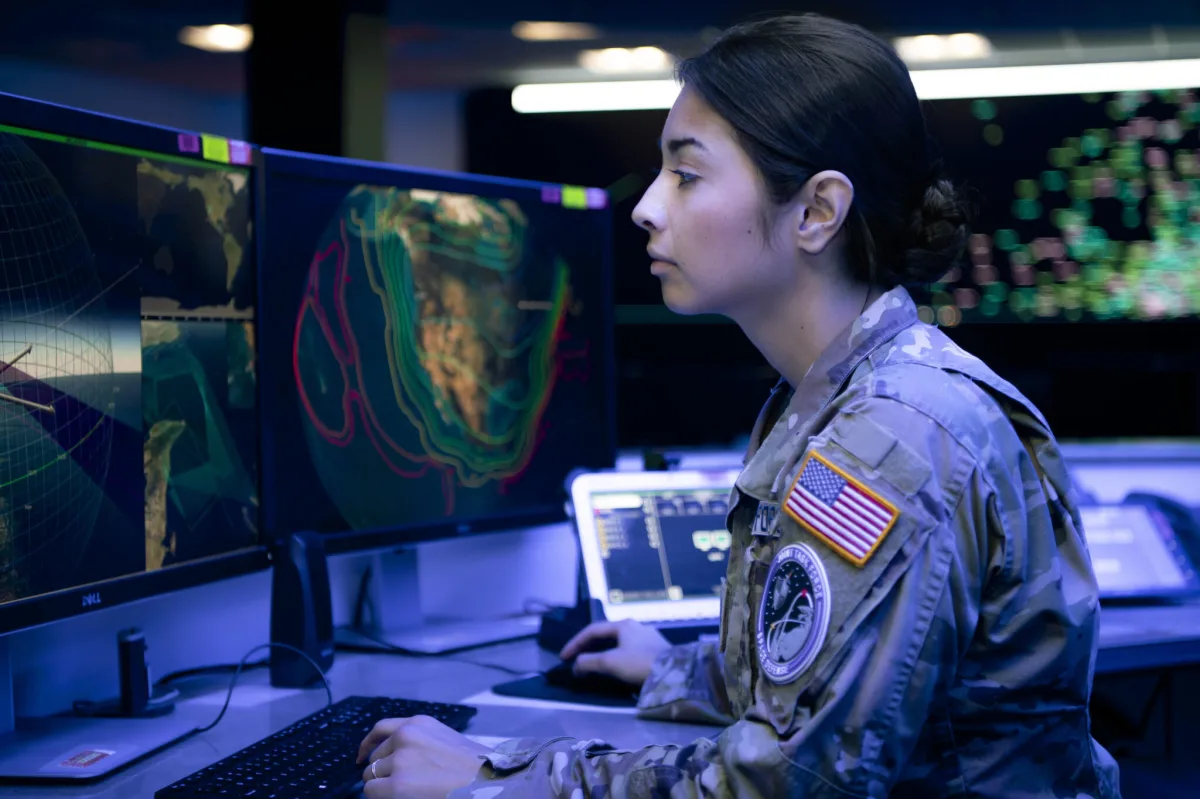

EL SEGUNDO, California – In a context of increasing congestion and competition in Earth's orbit, the U.S. Space Force has taken a decisive step to secure the safety of its orbital assets. The Department of Defense has officially awarded contracts worth a total of $1.843 billion for the Andromeda program, the ambitious initiative aimed at revolutionizing American Space Domain Awareness (SDA).
The program, previously known by the code name RG-XX, aims to create a network of next-generation sensors and satellites for constant monitoring of objects in orbit, acting as a true "Area Watchman" for the protection of national interests in space.
A Paradigm Shift: Farewell to GSSAP
The heart of the Andromeda mission is the gradual replacement of the Geosynchronous Space Situational Awareness Program (GSSAP). Operational since 2014, the GSSAP has so far been the cornerstone of military surveillance, but the Space Force now aims for more agile, cost-effective, and technologically advanced systems.
Unlike its predecessors, the new satellites of the Andromeda program will be designed to be:
- More maneuverable: to approach and inspect suspicious objects.
- Refuelable in orbit: drastically extending the operational life of missions.
- Resilient: based on a distributed constellation that reduces the risk of a single point of failure.

The 14 Protagonists: A Mix of Giants and New Space
The selection made by the Space Systems Command (SSC) reflects the Pentagon's new strategy: integrating the solidity of historical contractors with the innovation of "New Space" startups. Out of 32 proposals received, 14 companies secured a place in the framework agreement:
| Type | Selected Companies |
| Defense Giants | Lockheed Martin, Northrop Grumman, L3Harris, BAE Systems, Boeing (Millennium Space) |
| Innovators & Startups | Anduril Industries, True Anomaly, Turion Space, Astranis, Quantum Space |
| Mission Specialists | Sierra Space, Intuitive Machines, Redwire Space, General Atomics |
Contract Structure and Timeline
The contract uses the IDIQ (Indefinite-Delivery/Indefinite-Quantity) formula, which allows the government to issue specific orders quickly as technological needs evolve, without having to call for new tenders for each phase.
- Timeline: Work will continue until April 2036.
- Initial funding: At the time of award, $1.4 million in Research, Development, Test, and Evaluation (RDT&E) funds were committed.
- Operational headquarters: The program management will be based at El Segundo, California.
Why is Andromeda vital today?
Space is no longer a peaceful and empty environment. With the multiplication of space debris and the development of anti-satellite weapons by adversary nations, the ability to "see" and "characterize" every movement in geosynchronous orbit has become a national security priority.
Andromeda will not only track the position of objects but will provide real-time data on their behavior, allowing political and military decision-makers to distinguish between a normal orbital maneuver and a potential hostile threat.




Comments
No comments yet. Be the first!