


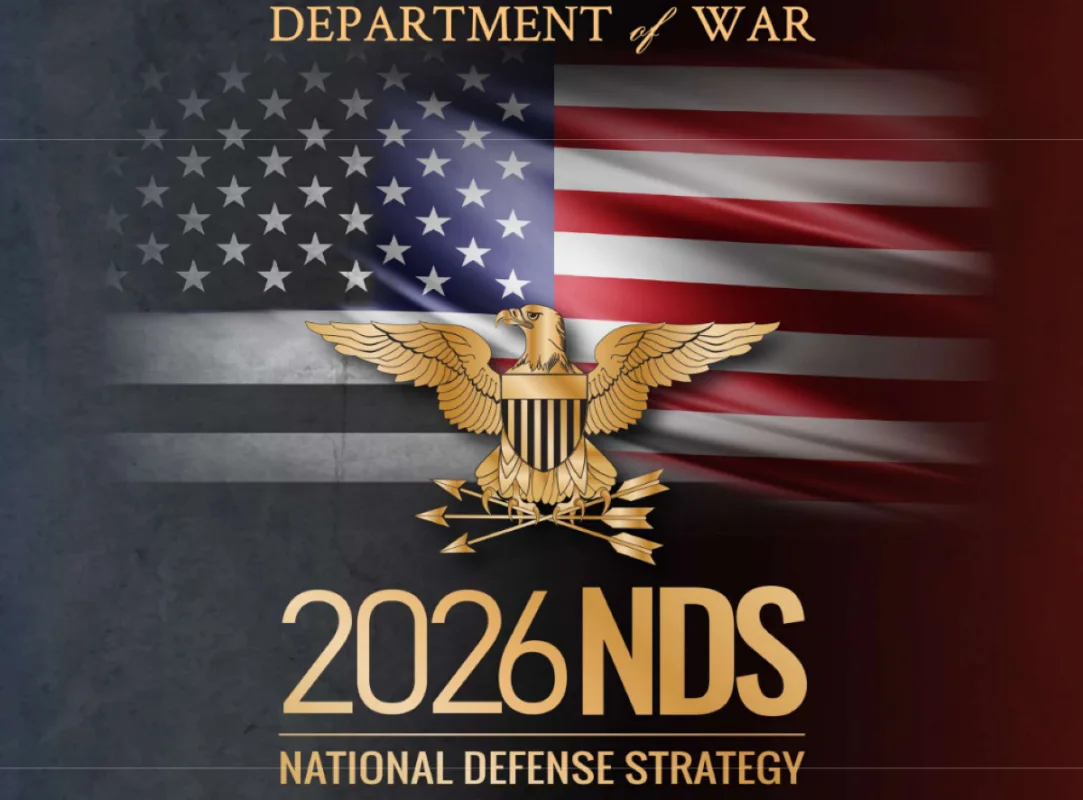

Below is an analysis of the content of the PDF “2026 National Defense Strategy (NDS)” and the main impacts on Italy and Europe, with a conclusion on the prospects (interpretation and possible reactions) of Russia and China.
The NDS sets a very clear hierarchy of priorities:
- Defense of the USA territory and the Western Hemisphere (borders, anti-narco-terrorism, “key terrain” like Panama/Greenland, “Golden Dome” air-missile defense, cyber, nuclear deterrence).
- China as the “main challenge”: “by denial” deterrence in the Indo-Pacific along the First Island Chain, with more military communication channels for stability and de-escalation, but postures and capabilities aimed at making any aggression fail.
- Burden-sharing: allies must assume primary responsibility in theaters “less severe for the USA but more severe for them”, with USA support “critical but more limited”.
- Strengthening the USA defense industrial base (DIB), but also “leveraging allied and partner production” and industrial cooperation as a lever to accelerate rearmament and readiness of allies.
This architecture leads to a central message for Europe: the USA remains in NATO, but prioritizes the Indo-Pacific and homeland, and asks Europe to take charge of the continent's conventional defense.
Impacts on Europe (NATO and EU)
A. Political and financial pressure: “new standard” of spending
The NDS calls for a commitment to a total target of 5% of GDP (3.5% “core military” + 1.5% “security-related”). Even without delving into feasibility, the effect is clear: the European discussion shifts from ‘how much to increase’ to ‘how quickly and with what capabilities’.
EU/NATO implication: risk of intra-European frictions (countries with different fiscal margins) but also acceleration of:
- readiness plans, munitions, air/missile defense, and resilience (cyber, critical infrastructures);
- standardization and procurement with more emphasis on “capabilities that matter now”.
B. More European responsibility on Russia and Ukraine
The document defines Russia as a “persistent but manageable threat” for eastern NATO members and argues that Europe “dwarfs” Russia in economic capacity and latent military potential (chart: non-USA NATO GDP vs Russia).
Hence the consequence: support for Ukraine and conventional deterrence in Europe as a “European responsibility” with more limited USA support.
Implication: strong incentive towards a “Europeanisation” of the posture on the eastern front (forces, stocks, logistics, C2, air defense, ISR), to reduce the risk that a realignment of USA assets towards the Indo-Pacific leaves gaps.
C. Defense industry and trade barriers
The NDS insists on:
- USA industrial mobilization,
- but also transatlantic industrial cooperation and reduction of barriers in defense trade to maximize collective production and readiness.
EU implication: dual track:
- opportunities for co-production and transatlantic supply chains;
- tension with EU agendas of “industrial autonomy”/European preference: the text pushes for an “output-first” logic (munitions, systems, timelines) rather than “European origin”.

D. NATO: “rewarding” cooperation and conditionality
The strategy declares its intention to favor “model allies” (visible spending and contributions) with incentives like arms sales, industrial collaboration, and intelligence-sharing.
Implication: access to programs/technologies/agreements may become more “performance-based”, increasing intra-allied competition.
Specific impacts on Italy
1) Spending and capabilities: not just “more”, but “different”
If the political benchmark rises (5% total), Italy risks being under pressure on:
- readiness and stocks (munitions, spare parts, sustainability);
- air/missile defense and anti-drone (consistent with the NDS emphasis on defense against air/missile and UAS attacks).
Practical effect: even without immediately reaching that level, it will be important to demonstrate a “credible trajectory” and measurable contributions (ready, deployable forces, munitions, C2).
2) Role in Europe: “focus on Europe” and posture on the eastern flank
The NDS explicitly tells Europeans that resources and energies “are best focused on Europe”.
For Italy, this implies:
- more demand for contributions to deterrence/defense missions in Europe (particularly east and northeast), in addition to the traditional priorities of the southern flank.
3) Industry: opportunities (and constraints) for the Italian industrial base
Given the emphasis on “supercharge DIB” and “leveraging allied production”, Italy can:
- enter co-production programs, maintenance, supply chain, and munitions to shorten timelines and increase volumes;
but must manage: - supply chain security requirements and possible USA “preferences” for re-shoring (the NDS is explicitly re-industrializing).
4) Political-diplomatic plan: balance between NATO and EU “strategic autonomy”
The NDS pushes towards a more “transactional” NATO (accountability and burden-sharing).
For Italy, which often aims for mediation and cohesion, the impact is:
- greater need to align narrative + results (spending, readiness, contributions) to preserve influence and access to sensitive cooperations.

Russia's perspective: how it might interpret the NDS and what it might try to do
The NDS argues that Moscow cannot aim for European hegemony and that Europe has superior resources; therefore, the USA can calibrate its posture in Europe to prioritize homeland and China.
How Russia might react (plausible interpretation):
- Testing European cohesion: if responsibility shifts to Europe, Moscow might look for signs of political/budget hesitation, using informational pressure, cyber, and “gray zone” (the document explicitly cites Russian capabilities including cyber/space/undersea and nuclear).
- Betting on timing: Europe can “dwarf” Russia in potential, but converting this into ready military capabilities takes time; Russia might aim for windows of opportunity before European investments mature.
- Emphasizing nuclear as leverage: the NDS highlights the modernization of Russia's largest nuclear arsenal; this suggests that nuclear deterrence/coercion remains a central vector for Moscow.
China's perspective: how it might interpret the NDS and what it might try to do
China is described as a growing power and a priority target; the NDS talks about:
- wider communications with the PLA for stability and de-escalation,
- but above all building a “strong denial defense” along the First Island Chain to prevent regional domination.
How China might react (plausible interpretation):
- Accelerating A2/AD countermeasures and saturation capabilities (missiles, sensors, EW, cyber) to erode the effectiveness of a “by denial” deterrence. The NDS itself emphasizes the scale/quality of the Chinese buildup.
- Diplomacy to divide allies: the USA strategy wants to “urge and enable key regional allies” to do more; Beijing might aim to dissuade them through economic pressures and anti-containment narratives.
- Courtship of Europe: if Europe is pushed to “focus on Europe” and the USA concentrates on the Indo-Pacific, Beijing might seek more economic-political space in the European continent (not because the NDS favors it, but because the priority setup might create negotiation margins).
The NDS builds a paradigm: USA = homeland + China, while Europe = primary responsibility on Russia/Ukraine, with a NATO more conditioned to results (spending/capabilities). For Italy, this means pressure on spending and readiness, greater demand for contributions in Europe, and an industrial opportunity window within supply chains and co-productions, but within a more competitive and “performance-based” framework.



Comments
No comments yet. Be the first!