


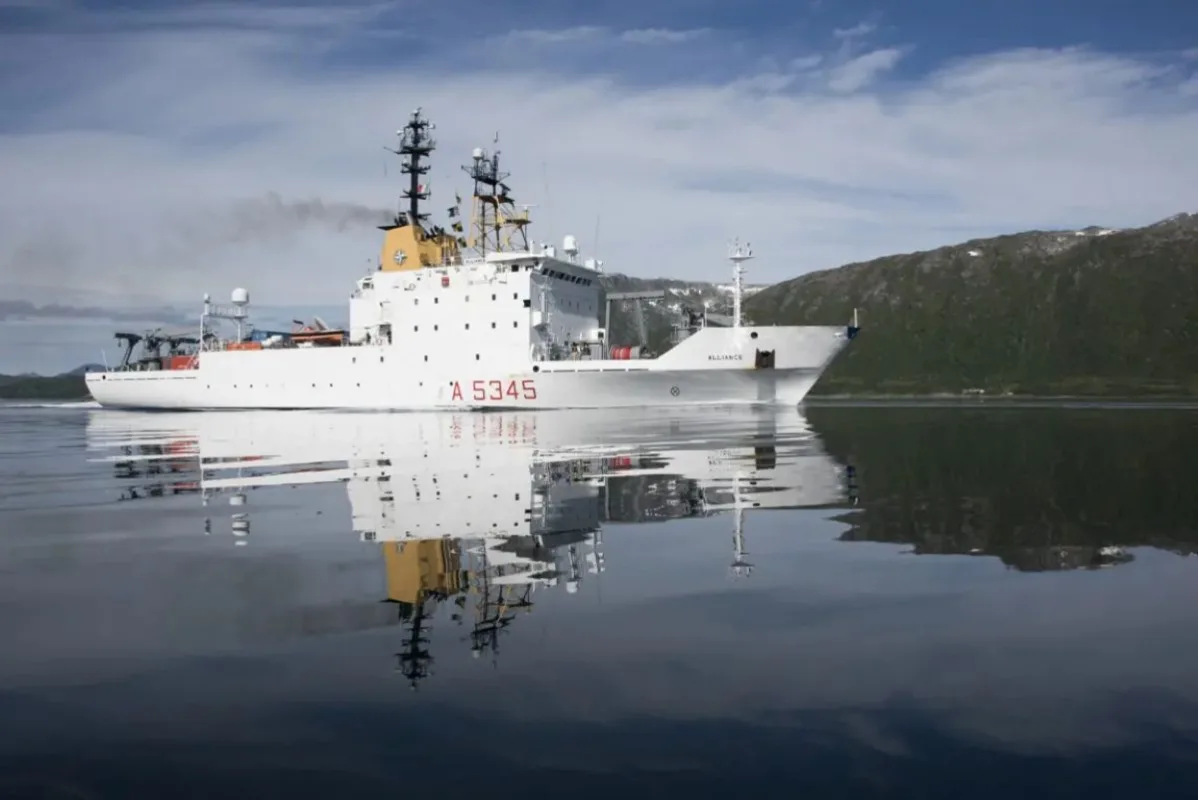

In the Baltic Sea, amidst intricate seabeds and a rapidly changing geopolitical context, NATO has launched an important scientific-military mission aimed at protecting underwater infrastructures from possible acts of sabotage. At the center of this operation is an Italian excellence: the NRV Alliance of the Italian Navy, the most advanced research ship of the Atlantic Alliance.
Built by Fincantieri and entrusted to the Centre for Maritime Research and Experimentation (CMRE) of NATO based in La Spezia, Alliance is not just a ship: it is a sophisticated floating laboratory, designed to test cutting-edge technologies and develop solutions for maritime security.
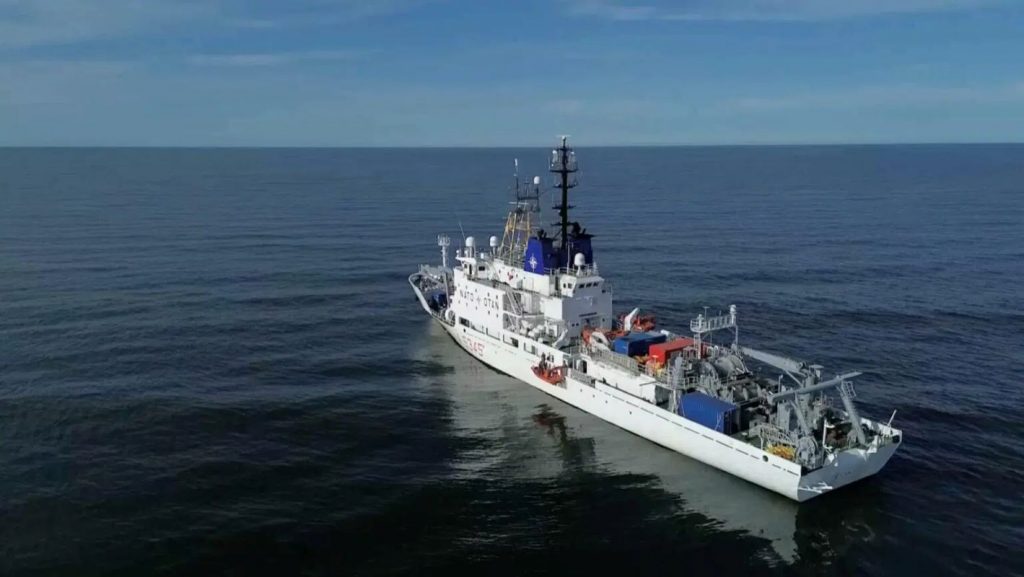
The mission, taking place in Swedish waters off Gotland, aims to counter a new kind of hybrid threats. Gas pipelines, data cables, and optical networks are essential but also vulnerable infrastructures. NATO has recorded suspicious episodes of underwater interference in recent years, and the risk of intentional sabotage is now considered real.
“There have been acts of sabotage against critical infrastructures under the sea,” explained Robert Been, chief scientist at CMRE. “We are trying to understand how to tackle this new type of threat.”
Between technology and simulation: Italy leads NATO innovation underwater
During the mission, the Alliance conducted pioneering experiments for the acoustic detection of anomalous activities on the seabed. Among these, the simulation of an anchor drop — a method considered possibly responsible for damage to underwater pipelines — allowed testing of the sensors installed on board.
“For the first time, we managed to acoustically detect the drop of an anchor on the seabed,” Been stated. “We used a ballast to recreate the specific noise of the impact, and it was very interesting to see how our system reacted.”
Alongside acoustic sensors, the mission utilized autonomous underwater vehicles (AUV) like the Slocum Glider from Teledyne Webb Research, smart buoys, low-frequency sonar, radar, and interfaces for real-time data analysis. The Baltic Sea, rich in natural obstacles and civilian infrastructures, represents a complex operational environment, but ideal for testing advanced solutions.

The work of the Alliance is not limited to data collection. A robust computational component allows the use of the same data for prevention, immediate decision-making support, and post-event forensic analysis, enhancing the Alliance's response capabilities.
“Working in these waters is particularly challenging,” Been emphasized, “not only because of the geography but also due to the political context, which pushes us to rethink and adapt existing technologies to new threats. It is an act of true innovation.”
The NRV Alliance: silent, precise, Italian
The NRV Alliance (optical distinctive A5345, international call sign IALL) is a multipurpose research unit of the Italian Navy. Since 1988, it has served NATO's scientific program — first with SACLANT, then with NURC, and now with CMRE — consolidating Italy's role as a reference point in acoustic-submarine and environmental research.
In 2016, the ship was entrusted to Italian military personnel thanks to an agreement between the Ministry of Defense and NATO. Today it operates under the Mine Countermeasures Forces Command (MARICODRAG), part of the Italian Naval Squadron.
One of the most extraordinary features of the Alliance is its very low acoustic level: it is one of the quietest ships in the world, a condition essential for the passive detection of underwater movements. It boasts 400 square meters of scientific laboratories, state-of-the-art communication and navigation equipment, and a stern designed for launching and recovering marine instrumentation.
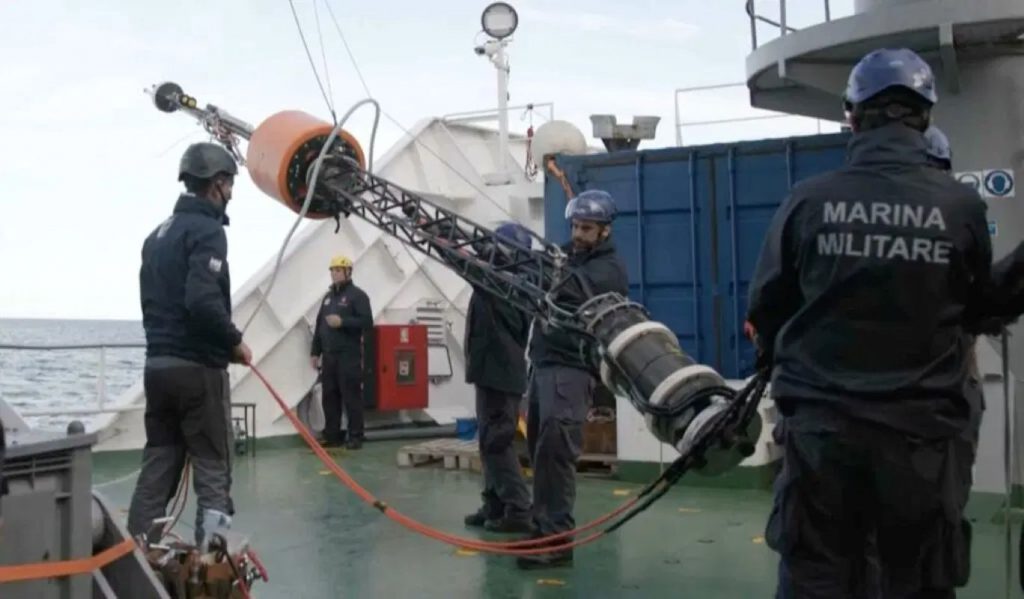
That an Italian vessel leads this mission is no coincidence. Italy, through CMRE and thanks to the professionalism of the Italian Navy, has been at the center of NATO's maritime technological research for decades. Italian crews ensure high operational competence even in challenging environments like the Baltic, providing ideal working conditions for scientists.
With the entry of Sweden and Finland into NATO, the northern dimension of the Alliance is gaining increasing strategic importance. In this scenario, the NRV Alliance represents not only a symbol of scientific-military cooperation but a true bulwark against the new threats of the “invisible sea,” on which the security, energy, and communications of millions of European citizens now depend.



Comments
No comments yet. Be the first!