


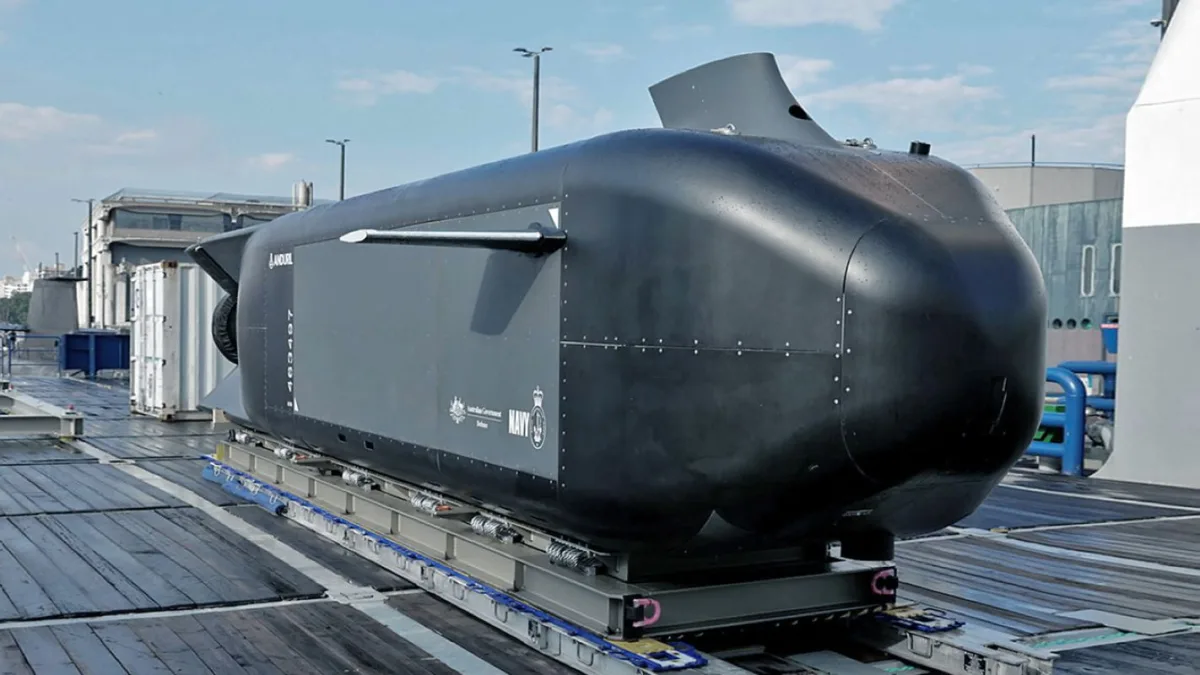

Amidst the geopolitical transition marked by conflicts at the continent's borders and pressing U.S. demands to strengthen Euro-Atlantic security, Europe is undergoing a radical transformation in the defense sector. In this scenario, the demand for advanced military technologies is growing at a steady pace: from drones to missile systems, including land platforms and fighter jets. One of the emerging areas, but so far less explored with a modern approach, is the underwater domain.
And it is precisely here that the ambitious strategy of Anduril Industries, a U.S. company born in the heart of Silicon Valley, comes into play, having revolutionized the defense sector with a model oriented towards the integration of artificial intelligence, software, and automation. After consolidating its presence in Europe in the field of drones and land systems, Anduril has now turned its radar (and sonar) towards the seabed. The goal? To offer autonomous, modular, and scalable solutions capable of meeting the multiple operational needs of European navies, with a particular focus on production speed and operational readiness.
While traditional defense giants mainly operate through institutional channels like FMS (Foreign Military Sales), Anduril has chosen a faster and more flexible path. Its strength lies in its ability to develop and deploy emerging technologies in extremely short times. It is no coincidence that the company managed to transform the Seabed Sentry sensor from concept to operational prototype in less than a year.
New Technologies for an Increasingly Crowded Seabed
The core of Anduril's offering in the underwater domain is based on a trio of autonomous and interconnected technologies. Seabed Sentry is an intelligent sensor capable of being quickly positioned on the seabed, where it can monitor any underwater activity in real-time, acting as a permanent sentinel. Alongside this, Anduril offers the autonomous underwater vehicles Dive-LD and Dive-XL, designed for ISR (Intelligence, Surveillance, and Reconnaissance) operations and logistical support in hostile or congested environments. The picture is completed with the Copperhead, an "attritable" underwater drone – that is, expendable – designed to saturate the underwater environment and provide coverage in case of threats.

All these systems are integrated through Lattice, Anduril's proprietary software platform that enables multi-domain management, already successfully adopted in land and air scenarios. This software-first approach represents a paradigm shift from the traditional hardware-centric design of underwater warfare. The idea is to build a modular technological ecosystem, adaptable to different operational theaters, and capable of real-time communication with other military assets.
“We want to produce thousands of Copperhead every year,” said Shane Arnott, vice president of maritime systems at Anduril. Words that reveal an industrial vision devoted to seriality and efficiency, two fundamental elements to ensure the operational resilience of European fleets in the context of prolonged crises or high-intensity conflicts.
One Domain, Many Geographical Challenges
There is no single “European sea” and, consequently, no single way of thinking about underwater security. The operational needs of Northern European navies differ significantly from those of the Mediterranean or the Atlantic. In the Baltic Sea, for example, low salinity water, stratified currents, and shallow seabeds significantly complicate acoustic detection operations. The sabotage of the Nord Stream 2 pipeline has demonstrated how urgent it is to strengthen seabed surveillance in an area as delicate as it is congested with civilian infrastructure.
In the North Sea and the Northeastern Atlantic, the situation is even more complex: deep waters, intense commercial traffic, and strong currents require continuous and persistent surveillance capabilities, especially along the Sea Lines of Communication (Sloc) and the transatlantic digital backbones, essential for global connectivity.
Different, but equally delicate, is the context of the Eastern Mediterranean, a theater of growing conflict over energy, military, and migratory interests. The saltier waters and variable depths offer an acoustic advantage but also an ideal ground for geopolitical disputes. Here, countries like Italy and Greece are increasingly attentive to the protection of offshore infrastructure, submarine pipelines, and transit routes in sparsely patrolled areas.

In this operational mosaic, Anduril's proposal presents itself as a flexible and adaptable response: a system of systems designed to operate independently of local conditions, but ready to integrate into the various European maritime defense ecosystems. A gamble that combines technology, production speed, and strategic vision, with the ambition to make the underwater domain a new terrain of operational superiority for the Europe of the future.






Comments
No comments yet. Be the first!